

Nearly 80 percent of American healthcare practices now rely on digital communication to manage remote workflows. Staying HIPAA-compliant while supporting staff across Arizona and Colorado is a constant challenge for IT managers. Understanding softphones and their role in modern clinical communication gives you the knowledge to select secure, flexible solutions that protect patient privacy and boost efficiency for your practice.
Table of Contents
- What Are Softphones and How They Work
- Types of Softphones for Business Use
- Key Features Enhancing Healthcare Workflows
- HIPAA Compliance and Security Requirements
- Costs and Comparing Alternatives
- Common Pitfalls When Adopting Softphones
Key Takeaways
| Point | Details |
|---|---|
| Softphones Enhance Communication | Softphones utilize VoIP technology for flexible and clear audio communication, allowing healthcare professionals to connect through various devices. |
| Integration with Existing Systems | Advanced softphones offer key features such as EHR integration and secure messaging, improving workflow efficiency and patient care. |
| Focus on HIPAA Compliance | When adopting softphones, prioritize security measures such as encryption and user authentication to ensure compliance with healthcare regulations. |
| Evaluate Total Cost of Ownership | Consider all factors, including implementation, maintenance, and potential productivity gains, when assessing softphone solutions for healthcare organizations. |
What Are Softphones and How They Work
A softphone represents a revolutionary communication technology transforming how healthcare professionals connect remotely. Unlike traditional telephone hardware, softphones are software programs that enable voice calls and messaging directly through internet-connected devices like computers, tablets, and smartphones. Softphone technology leverages internet protocols to deliver flexible telecommunications without requiring dedicated telephone equipment.
At their core, softphones function similarly to traditional phone systems but with significant technological advantages. They use Voice over Internet Protocol (VoIP) technology to transmit voice data digitally, enabling crystal-clear audio communication across diverse networks. Healthcare professionals can integrate softphones into their existing workflows, switching seamlessly between devices while maintaining consistent communication channels. The software typically mimics physical phone interfaces, providing familiar features like call transfer, voicemail, conference calling, and contact management.
The technical architecture of softphones relies on sophisticated internet communication protocols, primarily Session Initiation Protocol (SIP). These protocols establish secure connections between devices, allowing real-time voice transmission with minimal latency. Security research indicates that softphone technologies introduce unique communication opportunities while also requiring advanced cybersecurity considerations, especially in sensitive environments like healthcare.
Key advantages of softphone technology include:
- Device flexibility (desktop, mobile, tablet)
- Lower communication infrastructure costs
- Enhanced mobility for remote workers
- Advanced call routing and management
- Integrated messaging and presence features
Pro tip: When selecting a softphone solution for healthcare, prioritize platforms with robust HIPAA-compliant encryption and secure authentication mechanisms.
Types of Softphones for Business Use
Softphone technology offers healthcare and business professionals multiple implementation strategies tailored to specific organizational needs. VoIP software encompasses diverse communication solutions ranging from web-based applications to sophisticated desktop platforms, each designed to address unique communication challenges.
Web-based softphones represent the most accessible category, offering platform-independent communication without complex software installations. These browser-based solutions enable instant connectivity across different devices and operating systems, making them ideal for organizations with distributed workforces. In contrast, desktop softphone applications provide more robust features, including advanced call routing, comprehensive contact management, and deeper integration with existing enterprise communication systems.
VoIP configurations support multiple implementation strategies that businesses can leverage. Healthcare organizations can choose between pure softphone solutions or hybrid approaches that integrate traditional phone infrastructure with internet-based communication technologies. Some advanced softphone platforms offer specialized features like:
- Unified communications integration
- Presence management systems
- Advanced call recording capabilities
- Multi-device synchronization
- Secure messaging functions
Businesses can select softphone solutions based on their specific technological infrastructure, budget constraints, and communication requirements. Larger enterprises might opt for comprehensive unified communication platforms, while smaller practices could benefit from more lightweight, flexible web-based solutions.
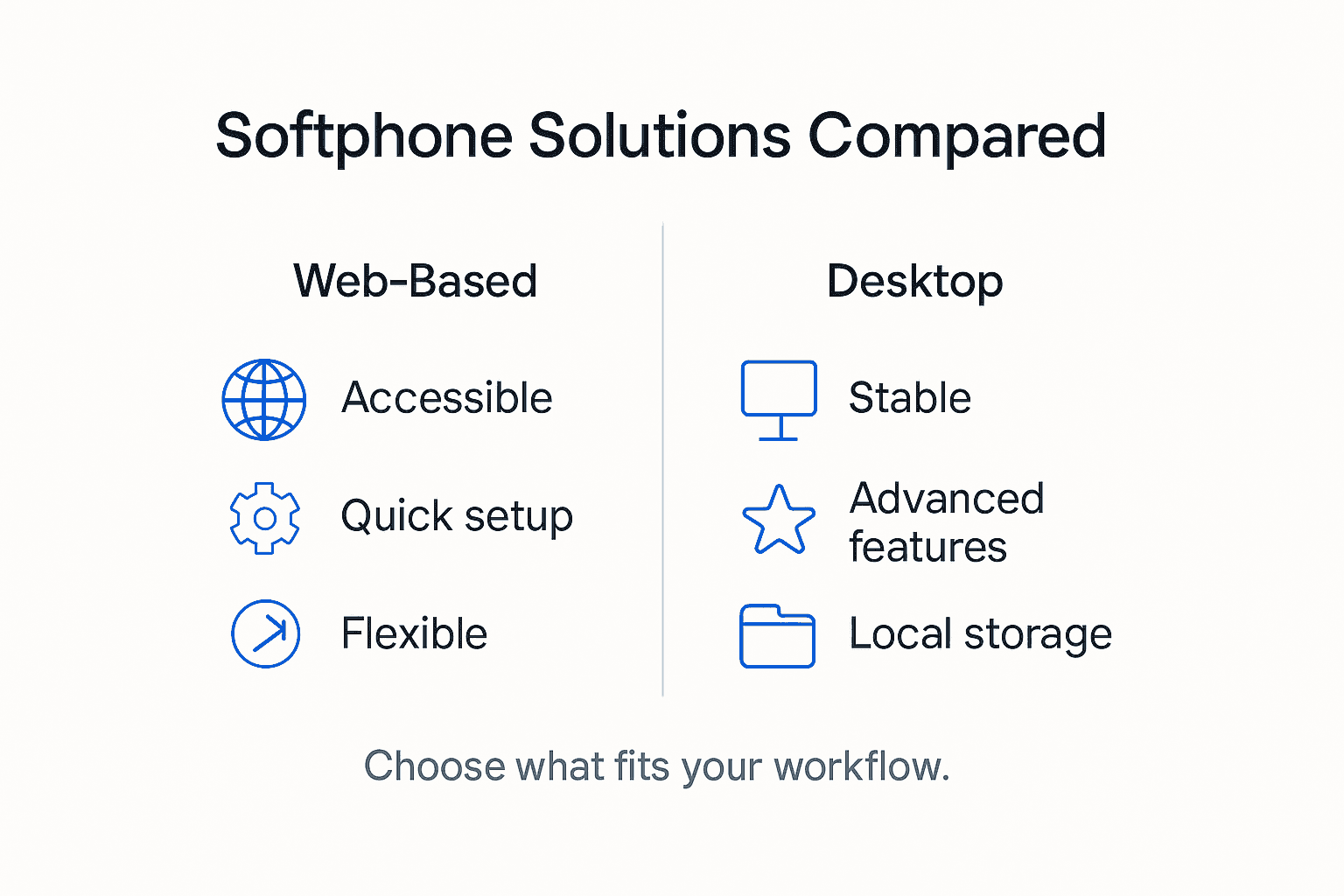
Here is a comparison of web-based and desktop softphone solutions for healthcare organizations:
| Aspect | Web-Based Softphones | Desktop Softphones |
|---|---|---|
| Accessibility | Works in any browser | Needs software installation |
| Feature Depth | Basic calling and messaging | Advanced call management |
| Integration Level | Limited EHR connectivity | Deep integration options |
| Maintenance | Handled by provider | Local IT team involvement |
Pro tip: When evaluating softphone solutions, conduct a thorough assessment of your organization’s specific communication needs and test multiple platforms before making a final selection.
Key Features Enhancing Healthcare Workflows
Softphone technologies are transforming healthcare communication by introducing advanced workflow automation capabilities that streamline clinical and administrative processes. These sophisticated communication tools go beyond traditional phone systems, offering integrated features designed to improve efficiency, reduce errors, and enhance patient care delivery.
Electronic Health Record (EHR) Integration represents a critical feature for modern healthcare communication platforms. Telehealth workflow planning requires seamless communication capabilities that allow healthcare professionals to access patient information, schedule appointments, and communicate securely across multiple devices. Advanced softphone systems can synchronize with existing clinical management systems, enabling real-time information exchange and supporting more coordinated patient care.
Key features that distinguish advanced healthcare softphone solutions include:
- Secure messaging with end-to-end encryption
- Automatic call routing and prioritization
- Integrated voicemail-to-text transcription
- Multi-device synchronization
- Patient communication tracking and management
- Compliance monitoring for HIPAA regulations
Healthcare organizations can leverage these advanced communication technologies to create more responsive, efficient workflows. By selecting softphone solutions with robust integration capabilities, medical practices can improve communication speed, reduce administrative overhead, and ultimately enhance patient care quality. The ability to seamlessly transition between different communication channels while maintaining comprehensive documentation is crucial in modern healthcare environments.
Below is a reference table highlighting how core softphone features impact healthcare workflows:
| Feature | Impact on Workflow | Benefit to Patient Care |
|---|---|---|
| EHR Integration | Streamlines data access | Supports accurate treatment |
| Secure Messaging | Protects sensitive info | Maintains privacy standards |
| Voicemail Transcription | Speeds up follow-up tasks | Reduces response delays |
| Compliance Monitoring | Ensures regulation adherence | Prevents legal complications |
Pro tip: Conduct a comprehensive workflow analysis before implementing a new softphone system to ensure the selected solution aligns precisely with your organization’s specific communication needs and existing technological infrastructure.
HIPAA Compliance and Security Requirements
Healthcare organizations must navigate complex regulatory landscapes when implementing communication technologies, particularly ensuring comprehensive protection of Protected Health Information (PHI) through advanced softphone security measures. The HIPAA Privacy Rule establishes rigorous national standards that mandate specific technical, administrative, and physical safeguards for electronic health information transmission.

Technical Security Protocols form the foundation of HIPAA-compliant softphone systems. Compliance requires sophisticated electronic information protection strategies that incorporate multiple layers of security, including end-to-end encryption, secure user authentication, and comprehensive audit trail capabilities. Healthcare providers must implement robust access controls that restrict sensitive information to authorized personnel while maintaining detailed logs of all communication interactions.
Key HIPAA compliance requirements for softphone technologies include:
- Mandatory user authentication protocols
- Advanced data encryption for voice and messaging
- Comprehensive access logging and monitoring
- Secure transmission of Protected Health Information
- Regular security vulnerability assessments
- Detailed incident response planning
Successful HIPAA compliance demands a holistic approach that combines technological solutions with organizational policies. Healthcare organizations must develop comprehensive training programs, implement strict access management procedures, and continuously evaluate their communication technologies to ensure ongoing regulatory adherence. The goal is creating a secure communication ecosystem that protects patient privacy while enabling efficient, seamless healthcare delivery.
Pro tip: Conduct quarterly comprehensive security audits of your softphone communication systems to identify and address potential vulnerabilities before they become compliance risks.
Costs and Comparing Alternatives
Healthcare organizations must carefully evaluate softphone technologies through a comprehensive lens that balances financial considerations with operational effectiveness. Comprehensive cost assessments require analyzing multiple factors beyond initial investment, including implementation expenses, ongoing licensing, support costs, and potential productivity gains.
Total Cost of Ownership represents a critical evaluation metric for softphone solutions. Interoperability investments can significantly impact long-term operational efficiency by reducing redundant communication expenses and streamlining workflow processes. Healthcare administrators must look beyond immediate pricing structures to understand the comprehensive financial implications of their communication technology selections.
Key cost comparison factors for softphone technologies include:
- Initial setup and implementation expenses
- Monthly/annual licensing fees
- Integration costs with existing healthcare systems
- Technical support and maintenance charges
- Training and workforce adaptation expenses
- Potential productivity and efficiency gains
- Compliance-related investment requirements
Successful softphone technology selection demands a holistic approach that weighs financial constraints against technological capabilities. Small to medium-sized healthcare practices should prioritize solutions offering scalable pricing models, robust feature sets, and clear upgrade pathways. The most cost-effective solutions provide comprehensive communication tools that enhance operational efficiency while maintaining strict security and compliance standards.
Pro tip: Request detailed, multi-year total cost of ownership projections from potential softphone vendors to understand the complete financial landscape beyond initial implementation expenses.
Common Pitfalls When Adopting Softphones
Healthcare organizations frequently encounter complex challenges when implementing softphone technologies, requiring strategic planning and proactive risk management. VoIP deployments introduce multiple potential implementation pitfalls that can significantly disrupt communication workflows if not carefully addressed during the initial adoption process.
Network Infrastructure Limitations represent one of the most critical barriers to successful softphone implementation. Many healthcare practices underestimate the bandwidth and technical requirements necessary for high-quality voice communication. Poor network configurations can result in dropped calls, audio distortion, and inconsistent communication experiences that directly impact patient care and professional effectiveness.
Key pitfalls healthcare organizations must anticipate include:
- Inadequate network bandwidth and performance
- Insufficient cybersecurity protections
- Incomplete user training and adoption strategies
- Lack of comprehensive system integration planning
- Overlooking compatibility with existing communication infrastructure
- Neglecting scalability and future technological requirements
- Underestimating total implementation and maintenance costs
Successful softphone adoption demands a holistic approach that combines technological assessment, strategic planning, and comprehensive staff training. Healthcare organizations must conduct thorough infrastructure evaluations, develop robust implementation strategies, and create ongoing support mechanisms to ensure smooth technological transitions. Proactively addressing potential challenges can transform softphone adoption from a potential source of disruption into a significant operational enhancement.
Pro tip: Conduct a comprehensive network assessment and pilot test with a small team before full-scale softphone implementation to identify and mitigate potential technical challenges.
Elevate Your Remote Healthcare Communication with Voipcom
Softphones offer powerful solutions to overcome common challenges in healthcare communication such as network limitations, security compliance, and complex workflows. If your organization struggles with outdated phone systems that hinder mobility, compromise HIPAA compliance, or lack seamless integration with Electronic Health Records, Voipcom has you covered. Our cloud-based phone and communications services deliver scalable, flexible softphone solutions designed specifically for modern healthcare needs.
Experience the benefits of reliable, secure, and easy-to-manage VoIP telephony combined with expert managed IT and cybersecurity support. With features like HIPAA-compliant encryption, AI-powered calling, mobile softphone apps, and unified messaging, Voipcom helps you boost patient care efficiency and protect sensitive information.

Ready to replace costly legacy systems with a seamless cloud phone solution? Visit Voipcom today and explore our comprehensive Voice & Telephony services. Discover how our all-inclusive pricing, live local support, and managed setup enable you to confidently modernize healthcare communication without hidden fees. Take the first step to simplify your healthcare communication workflows now.
Frequently Asked Questions
What is a softphone and how does it work?
A softphone is a software program that enables voice calls and messaging over the internet using devices like computers, tablets, and smartphones. It uses Voice over Internet Protocol (VoIP) technology to transmit voice data, allowing healthcare professionals to communicate flexibly without traditional phone hardware.
What are the key advantages of using softphones in healthcare communication?
Key advantages of softphones include device flexibility, lower communication costs, enhanced mobility for remote workers, advanced call routing, and integrated messaging features. These benefits help healthcare professionals maintain consistent communication regardless of their location.
How do web-based softphones differ from desktop softphones?
Web-based softphones are accessible through any browser without complex installations, making them ideal for remote teams. In contrast, desktop softphones offer more advanced features like call management and deeper integration with existing systems but require software installation on local devices.
What should healthcare organizations consider when selecting a softphone solution?
When selecting a softphone solution, organizations should prioritize HIPAA compliance, evaluate integration capabilities with existing systems, consider total costs of ownership, and ensure that the solution meets their specific communication needs and workflows.