

Over 80 percent of businesses depend on modern phone systems to stay connected with clients and teams. In today’s fast-paced work environment, a reliable communication platform is more than just a convenience. The right system can handle multiple calls, support remote work, and integrate seamlessly with digital tools. Knowing the basics means you avoid costly mistakes and choose features your business actually needs.
Table of Contents
- Defining Business Phone System Basics
- Types of Business Phone Systems Explained
- Key Features And How Systems Operate
- Benefits Of Modern Cloud-Based Solutions
- Cost, Integration, And Migration Considerations
Key Takeaways
| Point | Details |
|---|---|
| Advanced Features of Business Phone Systems | Modern business phone systems offer essential functionalities like call routing, multi-line management, and integrated voicemail for enhanced communication. |
| Types of Business Phone Systems | Organizations can choose from traditional PBX, VoIP, or virtual systems to meet their specific communication needs. |
| Benefits of Cloud-Based Solutions | Cloud-based phone systems provide cost efficiency and scalability while supporting remote work and advanced communication features. |
| Careful Migration Planning | Businesses must evaluate costs, integration challenges, and training requirements when migrating to a new phone system for seamless implementation. |
Defining Business Phone System Basics
A business phone system is a sophisticated communication infrastructure designed to manage and streamline voice communications within an organization. Unlike traditional residential phone lines, these systems offer advanced features that transform how businesses interact internally and externally. According to csuohio.edu, business phone systems provide essential functions such as call transfer, volume control, and message waiting indicators, facilitating effective communication.
Modern business phone systems typically encompass several core components that differentiate them from standard phone setups. These include:
- Multi-line Capabilities: Ability to handle multiple simultaneous calls
- Call Routing: Directing incoming calls to appropriate departments or individuals
- Interactive Voice Response (IVR): Automated menu systems for caller navigation
- Conference Calling: Enabling multiple participants to join a single call
- Voicemail to Email: Transforming voice messages into digital communications
The evolution of business phone systems has been dramatically shaped by technological advancements, particularly the rise of Voice over Internet Protocol (VoIP). These internet-based systems offer unprecedented flexibility, allowing businesses to integrate voice communications with digital platforms, support remote work, and reduce traditional telephony infrastructure costs. Unlike legacy systems bound by physical hardware, modern business phone systems can be entirely cloud-based, providing scalability and advanced features that adapt to changing business needs.
Understanding these fundamental characteristics helps businesses make informed decisions about their communication infrastructure.
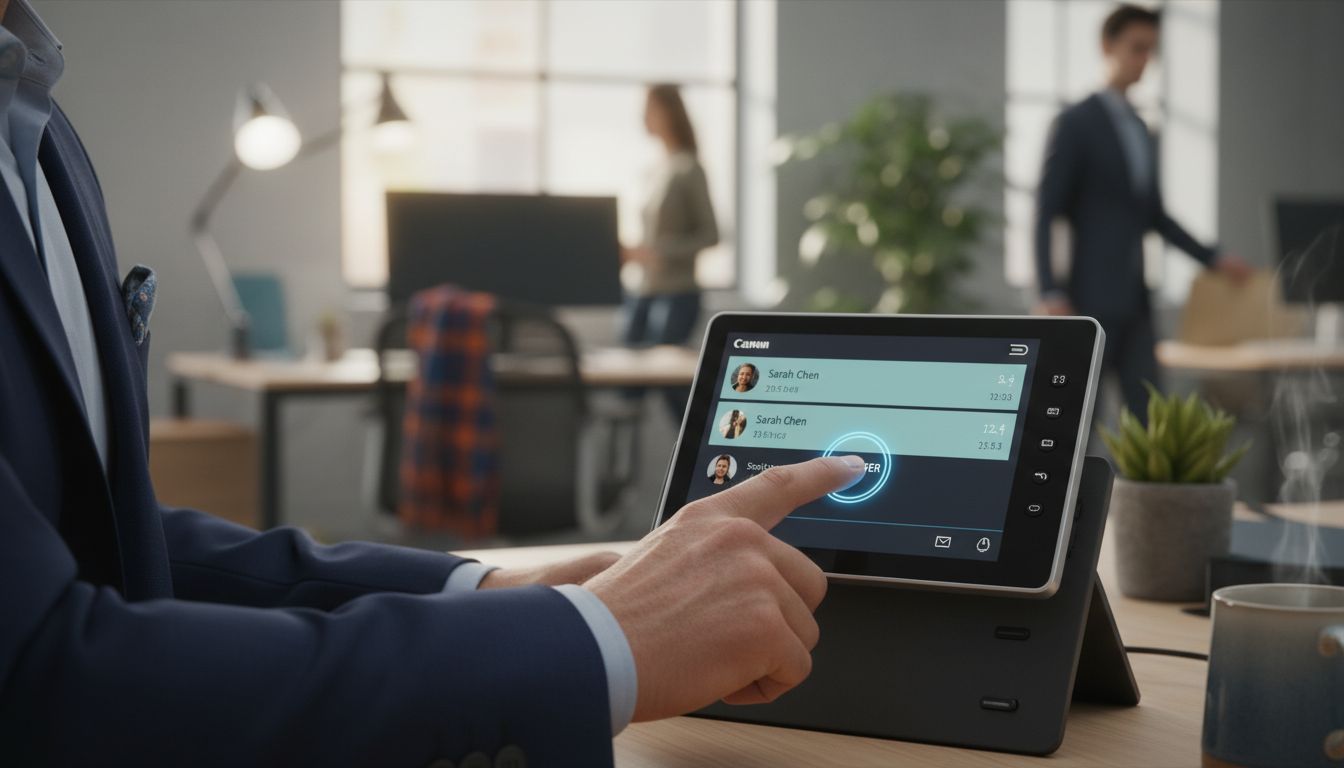 Explore our comprehensive guide to business phone systems to dive deeper into how these technologies can transform your organizational communication strategy.
Types of Business Phone Systems Explained
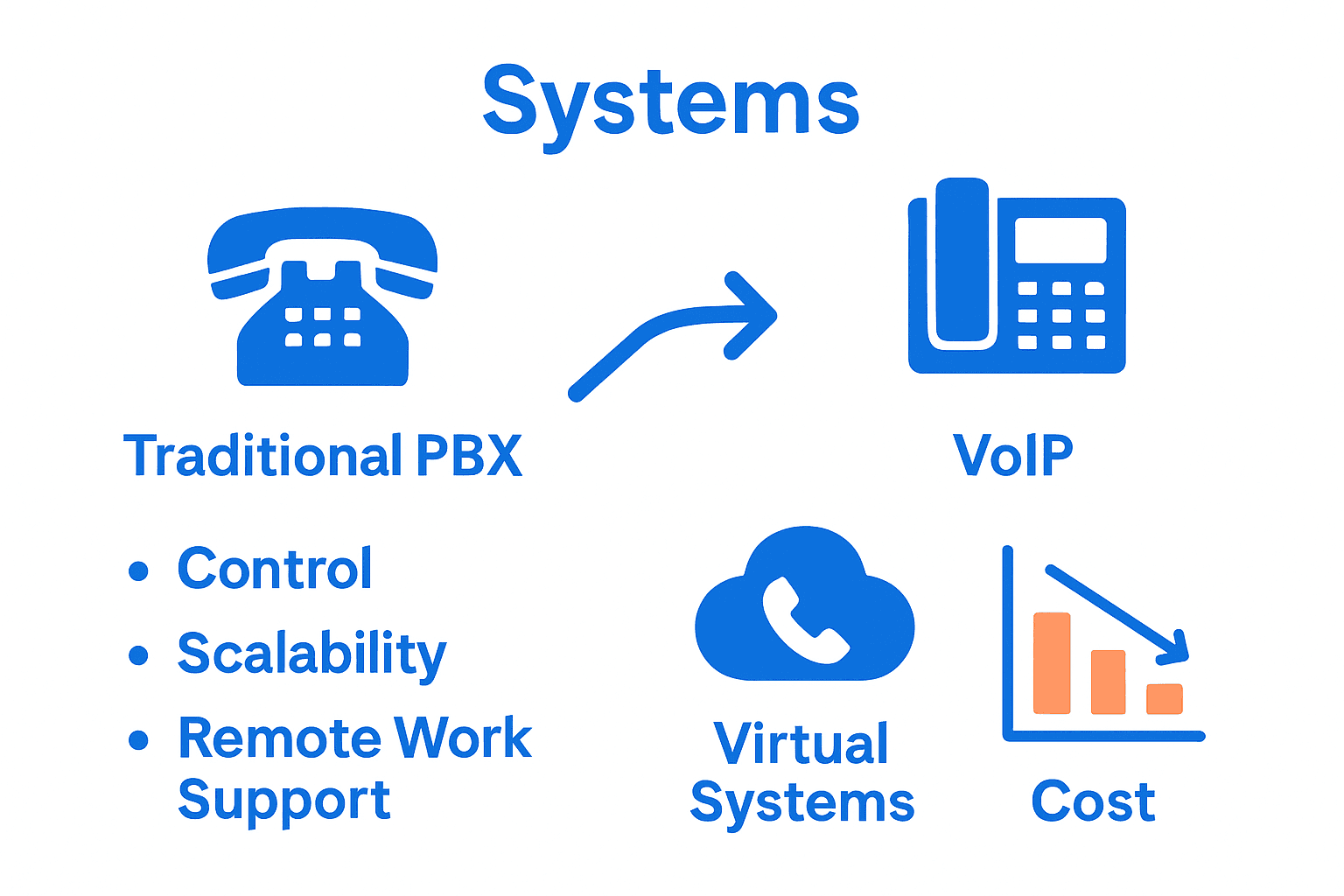
Business phone systems have evolved significantly, offering organizations multiple communication solutions tailored to their unique needs. According to business.org, business phone systems are categorized into three primary types: traditional PBX, VoIP, and virtual systems, each with distinct characteristics and advantages.
The three main types of business phone systems include:
- Traditional PBX (Private Branch Exchange): Relies on physical hardware for call routing and internal communication
- VoIP (Voice over Internet Protocol): Leverages internet connections for digital communication
- Virtual Phone Systems: Integrates cloud technology for maximum flexibility and remote accessibility
According to usitc.gov, small businesses predominantly use key systems, which provide fundamental multi-line communication capabilities. Key systems allow businesses to manage multiple phone lines efficiently, enabling features like hold, transfer, and intercom communication. Each system type offers unique benefits: traditional PBX provides robust on-premise control, VoIP delivers cost-effective scalability, and virtual systems enable seamless remote work integration.
Learn more about VoIP versus legacy phone systems to understand how modern communication technologies can transform your business communication strategy.
Key Features and How Systems Operate
Business phone systems are sophisticated communication networks designed to streamline organizational interactions. According to consumersadvocate.org, key features of modern business phone systems include Computer Telephony Integration (CTI), Interactive Voice Response (IVR), and robust conference calling capabilities that transform how businesses communicate.
The core operational features of business phone systems include:
- Call Routing: Automatically directing incoming calls to appropriate departments
- Multi-Line Management: Handling multiple simultaneous communication channels
- Call Transfer: Seamlessly moving calls between extensions
- Voicemail Systems: Recording and managing missed call messages
- Call Queuing: Organizing incoming calls during high-traffic periods
As highlighted by students.aiu.edu, basic telephone functions encompass critical elements like data lines for transmitting sound and information, priority call handling for important customers, three-way conferencing, and automatic call sequencers. These features enable businesses to manage communication efficiently, ensuring no critical call goes unanswered and maintaining professional interaction standards.
Explore our complete explanation of business phone systems to understand how these advanced communication technologies can revolutionize your business interactions.
Benefits of Modern Cloud-Based Solutions
Cloud-based phone systems represent a technological revolution in business communications, offering unprecedented flexibility and efficiency. According to business.org, these modern solutions provide remarkable advantages such as seamless remote employee connectivity, comprehensive mobile device compatibility, and adaptable payment structures that transform traditional communication paradigms.
The key benefits of cloud-based phone systems include:
- Cost Efficiency: Elimination of expensive on-premise hardware
- Scalability: Easy addition or reduction of communication lines
- Remote Work Support: Seamless integration for distributed teams
- Advanced Feature Sets: Comprehensive communication tools
- Automatic Updates: Continuous system improvements without manual intervention
As thetechedvocate.org highlights, cloud-based VoIP systems offer sophisticated features like auto attendants, customized greetings, conference calling, and voicemail-to-email services. These capabilities dramatically enhance communication efficiency, enabling small to medium-sized businesses to present a professional communication infrastructure without significant capital investment.
Explore our comprehensive guide to cloud phone system benefits to discover how these innovative solutions can revolutionize your business communication strategy.
Cost, Integration, and Migration Considerations
Implementing a new business phone system requires careful strategic planning and comprehensive cost analysis. According to business.org, businesses can expect varying cost structures, with VoIP solutions averaging between $15 to $20 per user monthly, presenting a significantly more affordable alternative to traditional communication infrastructure.
Key considerations for business phone system migration include:
- Initial Investment: Evaluating upfront hardware and setup costs
- Ongoing Expenses: Monthly per-user licensing and maintenance fees
- Integration Complexity: Assessing compatibility with existing business software
- Training Requirements: Budgeting for employee learning and adaptation
- Scalability Potential: Planning for future business growth and communication needs
Successful migration involves a methodical approach that balances technological capabilities with financial constraints. Organizations must conduct thorough assessments of their current communication infrastructure, identifying potential integration challenges and mapping out a comprehensive transition strategy. This includes evaluating current communication workflows, understanding staff technological proficiency, and selecting a solution that provides seamless operational continuity.
Learn more about navigating business phone system transitions to ensure a smooth and strategic implementation for your organization.
Upgrade Your Business Communication with Voipcom
Understanding the complexities of business phone systems can feel overwhelming especially when managing costly legacy setups or struggling with limited flexibility for remote work. The article highlights critical pain points such as the need for scalable solutions, seamless integration, and cost-effective cloud-based features like call routing and voicemail-to-email. These challenges can slow down your team and limit your growth.
Voipcom offers modern cloud-based phone systems designed to simplify your communication landscape while empowering your business with advanced features. Experience fully managed hosted PBX solutions that grow with you and deliver mobile-friendly functionality, AI-powered calling, and Microsoft Teams integration. With transparent pricing and responsive local support, you gain control and peace of mind.
Ready to transform your business phone system? Explore how our solutions align with the business phone system basics to see the difference a modern system makes.
Don’t let outdated phone systems hold your business back. Visit Voipcom today and take the first step toward a scalable, reliable communication platform tailored for your needs. To dive deeper into VoIP benefits and migration strategies, check out VoIP versus legacy phone systems and the complete explanation of business phone systems. Start boosting productivity and lowering costs now.
Frequently Asked Questions
What is a business phone system?
A business phone system is a communication infrastructure designed to manage voice communications within an organization, offering features like multi-line capabilities, call routing, and voicemail to email.
How do VoIP systems differ from traditional PBX systems?
VoIP systems use internet connections for digital communication, providing greater flexibility and cost-effectiveness, while traditional PBX systems rely on physical hardware for call routing.
What are the advantages of using a cloud-based phone system?
Cloud-based phone systems offer benefits such as cost efficiency, scalability, remote work support, advanced features, and automatic updates, streamlining communication for organizations.
What should businesses consider when migrating to a new phone system?
When migrating to a new phone system, businesses should evaluate initial investment costs, ongoing expenses, integration complexities, training requirements, and scalability potential to ensure a smooth transition.