

Most American small business owners in Arizona and Colorado discover that traditional communication methods fall short when fast customer engagement is critical. With nearly 98 percent open rates, SMS messaging delivers unmatched immediacy and impact compared to phone calls or email. As digital transformation reshapes local businesses, finding cost-effective solutions that enhance customer relationships and simplify day-to-day communication becomes essential. Learn how SMS platforms can help your company respond quickly, personalize outreach, and boost operational efficiency.
Table of Contents
- What Is Business SMS Messaging?
- Types of SMS Solutions for Companies
- Key Features and Integration Methods
- Top Business Use Cases for SMS
- Compliance and Security Requirements
- Comparing SMS With Other Channels
Key Takeaways
| Point | Details |
|---|---|
| Effective Communication Tool | Business SMS messaging streamlines interactions, allowing for immediate engagement with customers and employees through high open rates and direct messaging. |
| Diverse Solutions Available | Companies can choose from various SMS solutions, including Direct-to-Mobile Gateways, SMS Aggregators, and Enterprise SMSC Interfaces, tailored to their needs. |
| Integration and Automation | Modern SMS platforms seamlessly integrate with existing systems, enabling automated workflows and enhancing operational efficiency. |
| Compliance is Crucial | Organizations must adhere to regulations like the Telephone Consumer Protection Act (TCPA) and implement robust data protection protocols to ensure communication security. |
What Is Business SMS Messaging?
Business SMS messaging represents a strategic communication method enabling organizations to send and receive text messages through mobile networks, transforming how companies interact with customers and employees. SMS messaging capabilities have evolved from simple person-to-person exchanges to sophisticated business communication platforms that support critical operational functions.
At its core, business SMS involves two primary communication models: person-to-person (P2P) and application-to-person (A2P) messaging. These models allow businesses to send targeted notifications, transactional alerts, promotional content, and critical updates directly to mobile devices. Unlike traditional communication channels, SMS provides immediate, direct engagement with near-instantaneous message delivery and high open rates.
The technological infrastructure behind business SMS includes specialized SMS gateways that connect business applications to cellular networks, ensuring reliable message transmission. These gateways manage complex routing protocols, compliance requirements, and message delivery across diverse mobile carrier networks. Key features typically include message tracking, delivery confirmation, template management, and integration with existing customer relationship management (CRM) systems.
Businesses across industries leverage SMS messaging for various purposes including customer support, appointment reminders, marketing campaigns, two-factor authentication, and emergency communications. The technology provides a cost-effective, scalable solution that bridges digital communication gaps and enhances customer engagement strategies.
Pro tip: When implementing business SMS, always obtain explicit customer consent and provide clear opt-out mechanisms to maintain compliance and build trust.
Types of SMS Solutions for Companies
Enterprise SMS solutions represent a sophisticated spectrum of communication technologies designed to meet diverse business messaging requirements. SMS gateway technologies enable organizations to implement flexible messaging strategies across multiple operational domains, supporting everything from customer engagement to internal communication protocols.
Businesses can leverage several primary types of SMS solutions, each tailored to specific organizational needs:
- Direct-to-Mobile Gateways: Hardware-based systems that install SIM cards directly on company networks, enabling immediate message dispatch
- SMS Aggregators: Third-party service providers routing messages through multiple carrier networks
- Enterprise SMSC Interfaces: Centralized messaging platforms allowing comprehensive message management and tracking
The technological backbone of these solutions involves sophisticated SMS communication protocols like Short Message Peer-to-Peer (SMPP), which facilitate large-scale message delivery across complex network infrastructures. These protocols support various message types, including transactional alerts, marketing communications, authentication notifications, and customer service interactions.

Modern SMS solutions integrate seamlessly with existing business systems through Application Programming Interfaces (APIs), allowing companies to embed text messaging capabilities directly into customer relationship management (CRM) platforms, help desk software, and enterprise communication tools. This integration enables automated messaging workflows, real-time notifications, and scalable communication strategies that adapt to evolving business requirements.
Pro tip: When selecting an SMS solution, prioritize platforms offering robust API documentation, carrier network reliability, and comprehensive compliance features.
Key Features and Integration Methods
Business SMS platforms provide a comprehensive suite of communication capabilities designed to transform how organizations engage with customers and manage internal workflows. SMS gateway technologies enable businesses to implement sophisticated messaging strategies that go far beyond traditional communication channels.
Key features of modern business SMS solutions encompass a wide range of powerful capabilities:
- Message Volume Management: Ability to send high-volume messages simultaneously
- Protocol Flexibility: Support for multiple communication protocols like SMPP and HTTP
- Advanced Routing: Intelligent message queuing and scheduling
- Tracking Capabilities: Real-time delivery status monitoring
- Security Protocols: Encrypted message transmission
Integration methods are equally critical, allowing seamless connectivity across various business systems. Business SMS platforms typically offer multiple integration approaches, including:
- Web portal interfaces
- Comprehensive Application Programming Interfaces (APIs)
- Direct connections with Customer Relationship Management (CRM) systems
- Third-party marketing platform integrations
Companies can leverage these integration methods to create automated messaging workflows that support diverse communication needs. From sending transactional alerts and marketing campaigns to facilitating customer service interactions, SMS solutions provide a flexible and efficient communication infrastructure.
Pro tip: Prioritize SMS platforms with robust API documentation and comprehensive compliance features to ensure smooth implementation and regulatory adherence.
Top Business Use Cases for SMS
Business SMS has transformed communication strategies across multiple industries, offering a direct and immediate channel for engagement. Bulk messaging technologies enable organizations to leverage text-based communication for diverse operational needs, creating unprecedented opportunities for customer interaction and internal coordination.
Key business use cases for SMS span multiple functional domains:
- Customer Communication
- Appointment reminders
- Order status notifications
- Shipping and delivery updates
- Payment confirmations
- Service alerts
- Marketing and Promotions
- Flash sale announcements
- Personalized promotional offers
- Event invitations
- Customer loyalty program updates
- Product launch notifications
- Operational Notifications
- Security alerts
- Fraud prevention communications
- Employee scheduling updates
- Emergency communications
- System maintenance announcements
The versatility of SMS communication strategies allows businesses to create targeted, time-sensitive messaging workflows that enhance customer engagement and operational efficiency. From financial institutions sending transaction alerts to healthcare providers scheduling patient reminders, SMS bridges communication gaps with unprecedented immediacy.
Here’s a summary of how popular SMS business use cases map to different industries:
| Use Case Category | Example Industries | Strategic Value |
|---|---|---|
| Customer Updates | Retail, Logistics, Healthcare | Improves satisfaction and retention |
| Promotions | E-commerce, Hospitality, Events | Drives revenue and customer action |
| Operational Alerts | Finance, Manufacturing, Services | Boosts security and coordination |
Pro tip: Design SMS communications with brevity and clarity, ensuring each message delivers maximum value within the 160-character constraint.
Compliance and Security Requirements
Business SMS compliance represents a critical framework for organizations navigating complex legal and regulatory landscapes. Corporate messaging regulations mandate rigorous standards for communication management, data protection, and legal accountability.
Key compliance and security requirements encompass several critical domains:
-
Regulatory Adherence
- Telephone Consumer Protection Act (TCPA) guidelines
- Data privacy regulations
- Industry-specific communication standards
-
Message Governance
- Comprehensive message retention policies
- Secure communication platform selection
- Audit trail maintenance
-
Data Protection Protocols
- Encryption standards
- Access control mechanisms
- Personal device (BYOD) management
Businesses must develop comprehensive electronic communication oversight strategies that address technological complexity and legal requirements. This involves implementing robust systems that can securely capture, store, and retrieve business communications while protecting sensitive information from unauthorized access.
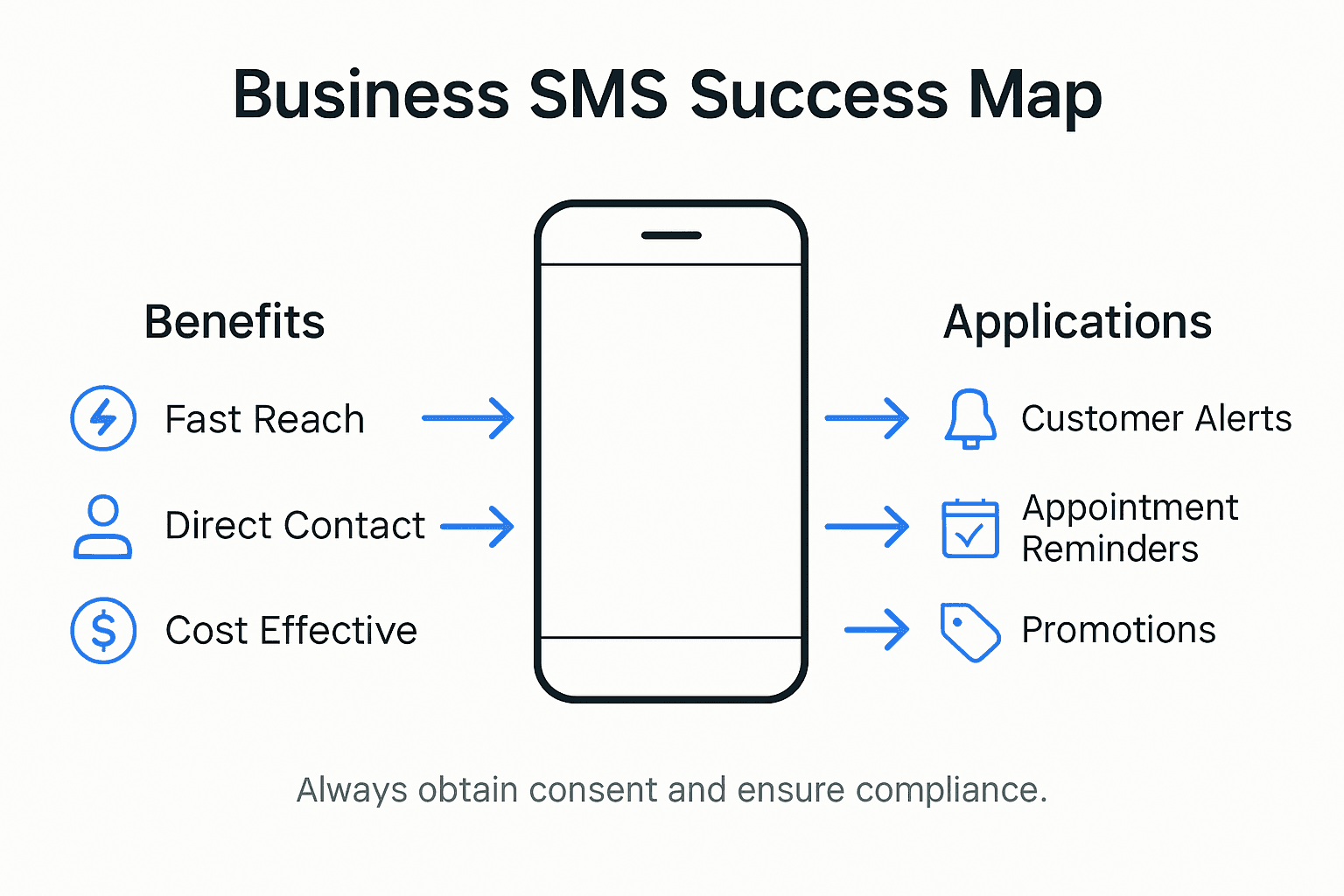
Effective compliance strategies require continuous monitoring, regular policy updates, and employee training to ensure alignment with evolving regulatory landscapes. Organizations must balance operational efficiency with stringent security measures, creating communication frameworks that protect both business interests and individual privacy.
Pro tip: Conduct quarterly compliance audits and maintain detailed documentation of your SMS communication policies to proactively mitigate potential regulatory risks.
Comparing SMS With Other Channels
Communication channels vary dramatically in their effectiveness and reach, with each medium offering unique advantages and limitations. Business communication technologies present organizations with multiple strategies for engaging customers and managing internal interactions.
A comprehensive comparison reveals distinct characteristics across communication platforms:
SMS Advantages:
- Near 98% open rate
- Immediate message delivery
- Low cost per communication
- Universal device compatibility
- High engagement potential
Comparative Channel Characteristics:
- Email: Rich multimedia support, slower response
- Social Media: Broad reach, algorithm-dependent visibility
- Phone Calls: Personal touch, time-consuming
- Instant Messaging: Multimedia capabilities, platform-specific
Unlike other communication channels, SMS provides unparalleled directness and personal engagement. While platforms like email and social media offer complex multimedia experiences, SMS maintains a critical advantage in immediacy and guaranteed visibility.
Below is a side-by-side comparison of SMS and other major business communication channels:
| Channel | Delivery Speed | Engagement Rate | Ideal For |
|---|---|---|---|
| SMS | Instant | Very high | Urgent updates, short messages |
| Minutes to hours | Moderate | Detailed content, documents | |
| Social Media | Varies | Medium to high | Broad announcements, brand engagement |
| Phone Call | Real-time | Personalized | Complex issues, relationship building |
Strategic communication requires understanding each channel’s strengths and selecting the most appropriate medium based on specific organizational objectives, audience preferences, and message complexity.
Pro tip: Implement a multi-channel communication strategy that leverages SMS for time-sensitive and critical communications while utilizing other channels for detailed, multimedia-rich interactions.
Accelerate Your Business Growth with Voipcom’s SMS and Cloud Communication Solutions
The article highlights the powerful role of SMS messaging in driving business success through instant customer engagement and streamlined operational alerts. If you are struggling with outdated phone systems, complex communication setups, or the need for a modern, scalable SMS platform integrated with your business workflows, Voipcom offers the perfect solution. Our cloud-based communication services include reliable SMS and MMS messaging, seamless Microsoft Teams integration, and AI-powered calling features to boost productivity and customer satisfaction.

Take full control of your business communications today. Explore Voipcom’s all-inclusive, fully managed phone and messaging services designed specifically for growing small- to medium-sized businesses. Visit Voipcom Solutions to learn how our scalable, secure, and flexible platforms can transform your customer interactions and operational communications. Don’t wait to upgrade your communications when you can get transparent pricing, local support, and cutting-edge features now.
Frequently Asked Questions
What is business SMS messaging?
Business SMS messaging is a communication method that enables organizations to send and receive text messages through mobile networks, facilitating direct interaction with customers and employees for various purposes like alerts and promotions.
How do SMS solutions integrate with existing business systems?
SMS solutions often integrate with business systems through APIs, allowing companies to embed messaging capabilities directly into platforms such as CRM systems and marketing tools for automated messaging workflows.
What are the key features of modern business SMS platforms?
Key features of business SMS platforms include high-volume message management, advanced routing, real-time tracking capabilities, security protocols, and support for multiple messaging protocols like SMPP and HTTP.
Why is compliance important for business SMS communications?
Compliance is crucial for business SMS communications as it ensures adherence to legal regulations, protects customer data, and maintains communication governance to mitigate potential risks associated with corporate messaging.
Recommended
- What Is SMS for Business? Complete Overview – Voipcom
- Business SMS Explained: Key Benefits and Functionality – Voipcom
- Understanding Business SMS vs MMS Communications – Voipcom
- Unleashing the Power of SMS Marketing Services – Voipcom
- Understanding the Importance of Customer Communication – My WordPress