

Over 60 percent of American companies now rely on internet-based communication tools to stay connected as workplaces shift rapidly toward remote collaboration. Softphones are at the heart of this transformation, making it easier and more affordable for teams to handle calls from anywhere. For any American business aiming to improve flexibility while reducing costs, learning how softphones work can open the door to smarter, more secure connections in today’s fast-changing environment.
Table of Contents
- What Are Softphones And How They Work
- Essential Features Of Modern Softphones
- Softphones Vs. Desk Phones For Businesses
- Cost Savings And Flexibility Advantages
- Security, Compliance, And Remote Work Benefits
Key Takeaways
| Point | Details |
|---|---|
| Softphones Transform Business Communication | Softphones allow voice communication through internet-connected devices, offering flexibility and cost-effectiveness over traditional phone systems. |
| Advanced Features and Integrations | Modern softphones include features like call routing, voicemail-to-email, and integration with CRM platforms, enhancing productivity. |
| Significant Cost Savings | Implementing softphones reduces hardware investments and maintenance costs, leading to overall lower operational expenses. |
| Support for Remote Work | Softphones enable secure communication from any location, making them ideal for remote and hybrid work models while ensuring compliance. |
What Are Softphones and How They Work
A softphone is a revolutionary communication tool transforming how businesses handle phone calls. Unlike traditional hardware telephones, softphones are software applications that enable voice communications directly through internet-connected devices like computers, tablets, and smartphones. Softphones leverage internet protocols to provide flexible, cost-effective calling solutions that adapt to modern workplace dynamics.
At its core, a softphone mimics a traditional telephone interface, complete with digital buttons, dial pad, and contact management features. Users can make calls using a computer’s microphone and speakers or by connecting a headset. The software integrates seamlessly with business communication platforms, allowing professionals to handle calls from anywhere with internet connectivity – whether working from home, traveling, or stationed in a corporate office.
The technical mechanism behind softphones involves converting voice audio into digital data packets transmitted over internet networks. This process, known as Voice over Internet Protocol (VoIP), enables high-quality, real-time communication without traditional phone line infrastructure. Key advantages include:
- Significantly lower communication costs compared to traditional phone systems
- Ability to make calls from multiple devices
- Advanced features like call recording, voicemail-to-email, and instant messaging
- Professional call routing and management capabilities
Businesses increasingly adopt softphones as remote and hybrid work models become standard. By supporting remote workers through flexible phone solutions, companies can maintain communication efficiency regardless of physical location. Modern softphone technologies offer enterprise-grade security, crystal-clear audio quality, and seamless integration with existing business communication ecosystems.
Essential Features of Modern Softphones
Modern softphones have evolved far beyond simple communication tools, offering robust features that transform business communication strategies. Contemporary softphone technologies provide a comprehensive suite of advanced communication capabilities, enabling businesses to streamline their communication infrastructure with unprecedented flexibility and efficiency.
Key features that distinguish modern softphones include powerful communication management tools. Local and toll-free number support allows businesses to establish professional communication channels across different regions. Advanced audio and video conferencing capabilities enable seamless remote collaboration, while sophisticated noise suppression technologies ensure crystal-clear communication regardless of the user’s environment.
The most sophisticated softphones integrate intelligent communication management systems. VoIP features designed for small businesses typically include:
- Automatic call routing and Interactive Voice Response (IVR)
- Voicemail-to-email transcription services
- Advanced caller ID with enhanced contact management
- Multi-device synchronization capabilities
- Real-time call analytics and reporting
Enterprise-grade softphone solutions go beyond basic communication, offering intelligent workflow integrations. By connecting with Customer Relationship Management (CRM) platforms, enterprise resource planning systems, and collaboration tools, modern softphones transform from simple communication devices into strategic business productivity tools. These intelligent systems help organizations optimize communication processes, reduce operational costs, and create more responsive, connected workplace environments.
Softphones vs. Desk Phones for Businesses
The landscape of business communications has dramatically transformed, creating a pivotal choice between traditional desk phones and modern softphone technologies. Comparing VoIP systems against legacy phone infrastructure reveals significant advantages for businesses seeking more flexible and cost-effective communication solutions.
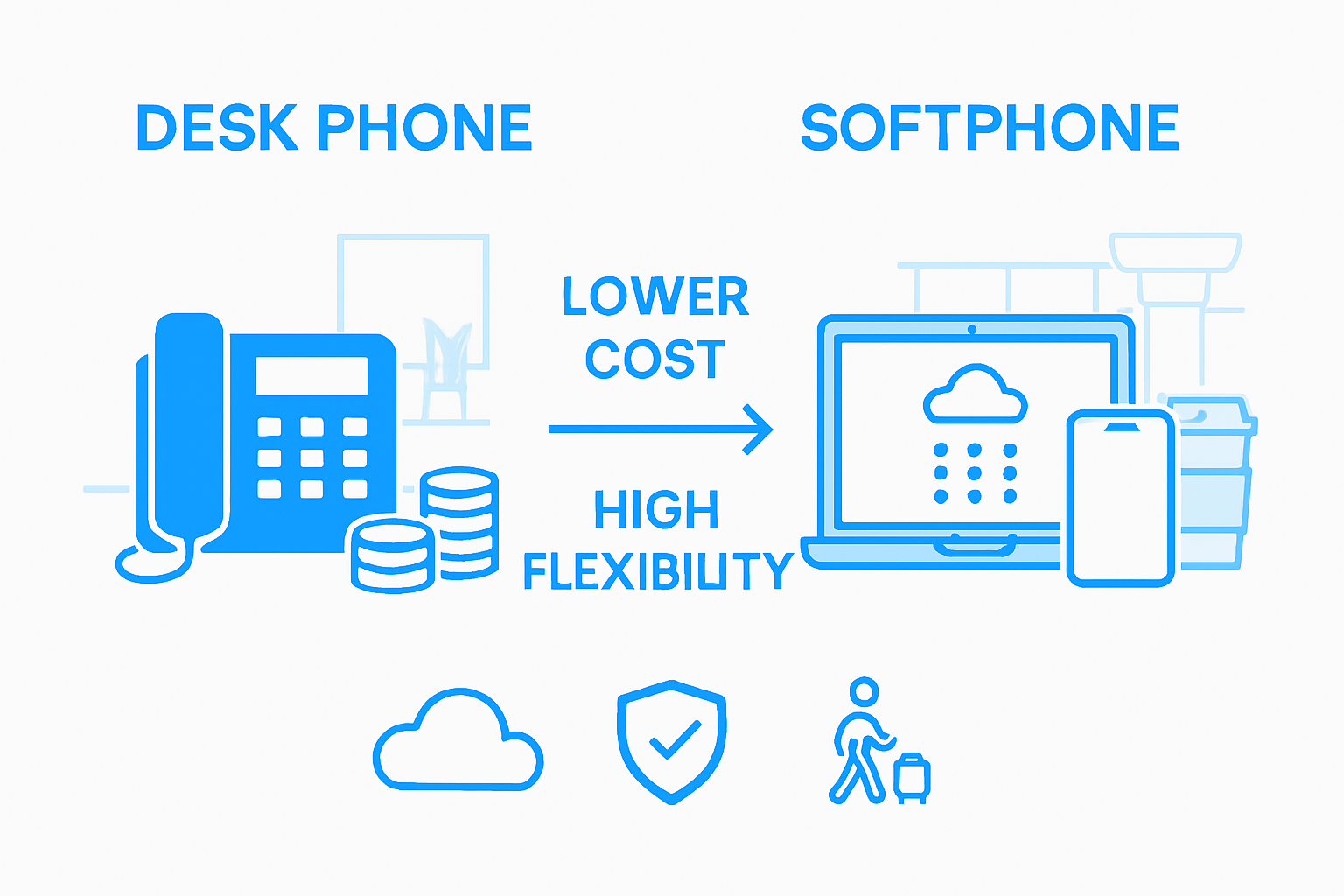
Desk phones represent the traditional communication model – hardware-based devices hardwired to specific locations, typically limited in functionality and mobility. In contrast, softphones are software applications that enable communication from any internet-connected device, offering unprecedented flexibility for modern workforce dynamics. While desk phones require physical installation and maintenance, softphones can be instantly deployed across multiple devices with minimal infrastructure investment.
Key differences between softphones and desk phones include:
- Cost: Softphones dramatically reduce hardware and maintenance expenses
- Mobility: Softphones support seamless communication from anywhere
- Scalability: Easy to add or remove users without physical phone infrastructure
- Integration: Softphones connect directly with business productivity tools
- Advanced Features: Built-in analytics, recording, and collaboration capabilities
Small businesses benefit significantly from choosing VoIP providers over traditional communication methods. The ability to consolidate communication platforms, reduce operational costs, and provide employees with flexible work options makes softphones an increasingly attractive option for organizations looking to modernize their communication infrastructure and support dynamic workplace environments.
Cost Savings and Flexibility Advantages
Softphones represent a revolutionary approach to business communication, delivering substantial financial and operational benefits that traditional phone systems cannot match. Cloud phone systems offer transformative advantages for organizations seeking to optimize their communication infrastructure while maintaining significant cost control.

Direct cost savings emerge through multiple channels with softphone technologies. Traditional phone systems require expensive hardware installations, ongoing maintenance contracts, and complex infrastructure investments. Softphones eliminate these capital expenses by leveraging existing internet-connected devices, dramatically reducing both upfront and long-term technology expenditures. Businesses can repurpose existing computers, tablets, and smartphones as communication endpoints, effectively transforming standard devices into sophisticated communication tools.
The financial advantages of softphone adoption extend beyond hardware savings:
- Elimination of physical phone system maintenance costs
- Reduced telecommunications expenses through internet-based calling
- Minimal training requirements for employees
- Simplified infrastructure management
- Scalable pricing models that adapt to organizational growth
Beyond pure financial metrics, softphones deliver unprecedented workplace flexibility. Remote workers, distributed teams, and mobile professionals can seamlessly integrate communication platforms, maintaining professional connectivity regardless of physical location. This adaptability becomes particularly crucial in modern business environments where traditional office boundaries continue to dissolve, enabling organizations to support diverse working arrangements without compromising communication effectiveness or professional image.
Security, Compliance, and Remote Work Benefits
Softphones represent a sophisticated solution for businesses navigating the complex landscape of modern communication security and compliance requirements. Remote work phone solutions offer unprecedented flexibility while maintaining rigorous standards for data protection and organizational integrity.
Enterprise-grade security stands as a cornerstone of modern softphone technologies. Unlike traditional phone systems, these advanced communication platforms integrate multiple layers of protection, including end-to-end encryption, multi-factor authentication, and comprehensive access controls. Advanced caller ID and voicemail technologies enable businesses to securely manage customer interactions while maintaining precise records of communication activities.
Key security and compliance advantages include:
- Encrypted communication channels
- Detailed call logging and audit trails
- Centralized administration and user management
- Seamless integration with existing cybersecurity infrastructure
- Compliance with industry-specific regulations (HIPAA, GDPR, financial services standards)
Remote work capabilities emerge as another critical benefit of modern softphone systems. By enabling professionals to maintain secure, professional communication from any internet-connected device, these technologies dissolve traditional geographical barriers. Organizations can now support distributed workforces without compromising communication quality, security protocols, or professional standards. This flexibility becomes particularly crucial in an era of increasingly dynamic and mobile professional environments.
Unlock Seamless Business Communication with Voipcom Softphone Solutions
The article highlights challenges businesses face with outdated phone systems such as high costs, inflexibility, and limited mobility. If you are striving to empower your remote or hybrid workforce, reduce communication expenses, and benefit from advanced features like AI-powered calling and Microsoft Teams integration, Voipcom has the answer. Our cloud-based softphone solutions replace legacy systems with scalable, easy-to-manage platforms designed for modern business needs. Enjoy transparent pricing and local support while gaining tools like voicemail-to-email, multi-device sync, and secure, encrypted calls.
Experience the true potential of flexible business communications backed by our fully managed voice and telephony services. Explore how hosted PBX and AI-powered calling can elevate your team’s productivity and keep your communication secure and compliant with industry regulations.

Ready to transform your business calls today with a trusted partner in Arizona and Colorado? Visit Voipcom to get started with solutions crafted for SMBs seeking cost-effective, reliable, and highly flexible phone systems. Don’t let outdated infrastructure limit your growth—take the next step toward smarter communication now.
Frequently Asked Questions
What is a softphone?
A softphone is a software application that allows users to make voice calls over the internet using devices such as computers, tablets, and smartphones, instead of using traditional hardware phones.
How do softphones work?
Softphones work by converting voice audio into digital data packets that are transmitted over internet networks using Voice over Internet Protocol (VoIP), enabling real-time communication without traditional phone line infrastructure.
What are the key benefits of using softphones for business?
Key benefits include lower communication costs, mobility (ability to make and receive calls from any internet-connected device), advanced features like call recording and voicemail-to-email, and improved integration with business communication tools and CRMs.
How do softphones compare to desk phones?
Softphones provide greater flexibility and cost savings as they eliminate the need for physical phone hardware, support mobility for remote work, and offer advanced features and integrations that enhance workflow efficiency.