
AI-Powered Phone Systems: Boosting Law Firm Efficiency
Learn how AI-powered phone systems streamline law firm communication, enhance compliance, and help manage costs for Arizona and Colorado SMBs.
By Voipcom

More than 60 percent of American law firms are now reevaluating their communication systems as compliance requirements grow and budgets tighten. For IT managers in Arizona and Colorado, traditional phone setups make it harder to keep pace with evolving client expectations and data security rules. This introduction spotlights how AI-powered phone systems deliver modern solutions that help your firm safeguard information, stay compliant, and meaningfully curb operational costs.
Table of Contents
- Defining AI-Powered Phone Systems
- Core Features and Smart Capabilities
- Types of AI Integration in Telephony
- Compliance Requirements for Law Firms
- Cost Savings and Operational Benefits
- Risks, Limitations, and Common Pitfalls
Key Takeaways
| Point | Details |
|---|---|
| AI Integration | AI-powered phone systems leverage Natural Language Processing and Machine Learning to enhance communication efficiency and user interaction. |
| Compliance Needs | Law firms must adhere to strict data privacy and ethical guidelines when implementing AI technologies to protect client confidentiality. |
| Cost Efficiency | Implementing AI-driven systems can significantly reduce personnel costs and optimize operational workflows within law firms. |
| Risk Management | It is essential to maintain human oversight of AI systems to address ethical risks and ensure accurate information processing. |
Defining AI-Powered Phone Systems
AI-powered phone systems represent a quantum leap in business communication technology, transforming traditional telephony into intelligent, adaptive networks that understand context and optimize interactions. These advanced systems leverage artificial intelligence to transcend basic call routing, integrating machine learning algorithms that can analyze communication patterns, predict user needs, and enhance overall operational efficiency.
At their core, AI-powered phone systems utilize sophisticated technologies to create smart communication ecosystems. Advanced machine learning architectures enable these systems to simulate intelligent behavior, making complex decisions in real-time communication environments. Unlike traditional phone systems that merely connect calls, AI-driven platforms can understand speech nuances, provide contextual insights, and dynamically adapt to organizational communication requirements.
The key components of AI-powered phone systems typically include:
- Natural Language Processing (NLP) for intelligent call handling
- Predictive Analytics to anticipate communication needs
- Voice Recognition technologies for seamless interaction
- Automated Call Routing based on intelligent decision-making
- Real-time Language Translation capabilities
Pro tip: When evaluating AI-powered phone systems, focus on platforms that offer robust integration capabilities with existing CRM and communication tools to maximize operational efficiency.
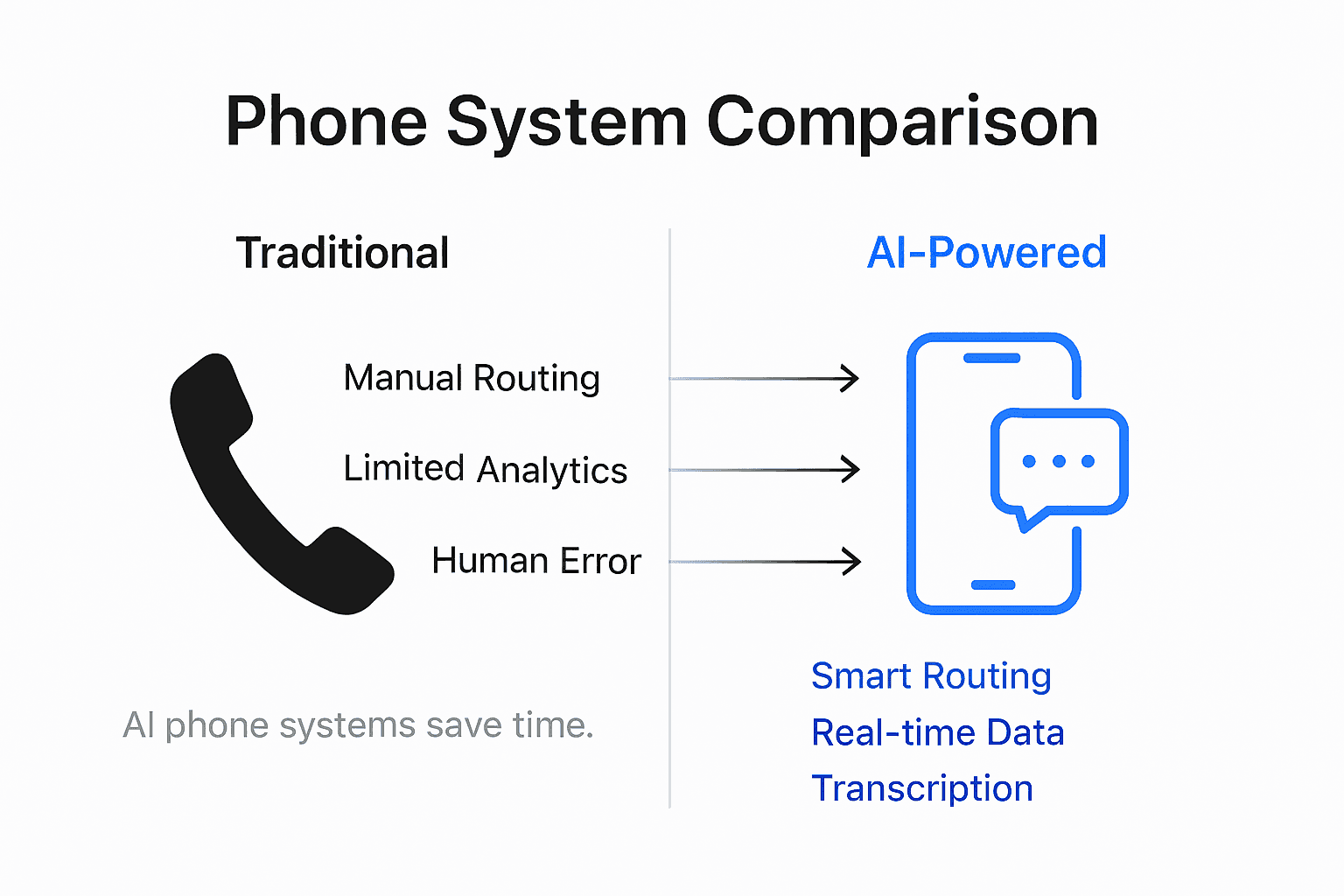
The following table summarizes how AI-powered and traditional phone systems differ in key areas:
| Aspect | Traditional Phone Systems | AI-Powered Phone Systems |
|---|---|---|
| Call Handling | Manual routing required | Intelligent, automated routing |
| User Insights | Minimal data capture | Contextual analysis, predictive features |
| Adaptability | Static features | Learns from communication patterns |
| Integration | Limited third-party support | Advanced CRM/tool integration |
| Language Support | Single language focus | Real-time multilingual support |
Core Features and Smart Capabilities
AI-powered phone systems for law firms are revolutionizing communication strategies through advanced technological capabilities that go far beyond traditional telephony. Law firms are increasingly adopting AI tools to transform operational workflows by integrating intelligent features that dramatically improve efficiency, accuracy, and client service delivery.

The core intelligent capabilities of these systems include sophisticated Natural Language Processing (NLP) and Machine Learning technologies that enable unprecedented communication management. These advanced systems can automatically transcribe conversations, analyze call sentiments, provide real-time language translations, and generate comprehensive call summaries that capture critical legal context and nuanced communication details.
Key smart capabilities specifically designed for legal environments encompass:
- Automated Call Routing based on caller context and lawyer specialization
- Intelligent Transcription with legal terminology recognition
- Client Interaction Analytics to track communication patterns
- Compliance Monitoring for recording and archiving communications
- Predictive Communication Insights that anticipate client needs
Pro tip: When implementing AI-powered phone systems, prioritize platforms that offer granular customization options and seamless integration with existing legal practice management software.
Types of AI Integration in Telephony
AI integration in telephony represents a sophisticated approach to transforming communication technologies, moving far beyond traditional phone system capabilities. Artificial intelligence systems integration involves creating interoperable software components that work seamlessly to enhance communication efficiency, intelligent routing, and contextual understanding.
Law firms are experiencing a radical transformation through strategic AI integration types that address multiple communication dimensions. These integration approaches typically fall into distinct categories, each serving a specific functional purpose in enhancing telephony performance. Modern AI-powered phone systems leverage sophisticated modules that can understand, process, and respond to communication complexities with unprecedented accuracy.
The primary types of AI integration in telephony include:
- Natural Language Processing (NLP) Integration
- Real-time speech-to-text conversion
- Contextual understanding of conversation intent
- Multilingual communication support
- Predictive Analytics Integration
- Call routing optimization
- Client interaction pattern recognition
- Proactive communication suggestions
- Machine Learning Decision Support
- Automated response generation
- Communication workflow optimization
- Continuous system performance improvement
Pro tip: When evaluating AI telephony solutions, assess the depth of integration capabilities and ensure the system can adapt to your specific organizational communication requirements.
Compliance Requirements for Law Firms
Law firms integrating AI-powered phone systems must navigate a complex landscape of regulatory and ethical requirements that protect client confidentiality and professional standards. Law firms adopting AI must address client data privacy, ethical obligations, and regulatory compliance with meticulous attention to detail and proactive governance strategies.
The compliance framework for AI telephony in legal environments encompasses multiple critical dimensions, including data protection, client consent, and professional responsibility. Ethical AI deployment requires comprehensive protocols that ensure transparent communication, secure information handling, and rigorous verification of AI-generated outputs. Law firms must establish robust internal mechanisms to monitor and validate the accuracy and reliability of AI-powered communication tools.
Key compliance requirements for law firms include:
- Data Privacy Protocols
- Encrypt all client communication records
- Implement strict access control mechanisms
- Ensure compliance with HIPAA and GDPR standards
- Ethical AI Usage Guidelines
- Develop clear policies for AI system oversight
- Require human verification of critical communications
- Maintain comprehensive audit trails
- Professional Responsibility Standards
- Protect client confidentiality
- Obtain informed client consent for AI technologies
- Maintain transparent communication about AI tool usage
Pro tip: Conduct regular compliance audits and create a dedicated team to review and update AI communication protocols to stay ahead of evolving legal and technological standards.
Cost Savings and Operational Benefits
AI-powered phone systems represent a transformative technological investment for law firms, delivering substantial financial and operational advantages that extend far beyond traditional communication infrastructure. AI technologies contribute to productivity growth by automating knowledge work and facilitating quicker decision-making, enabling legal professionals to optimize their time and resources more strategically.
The economic impact of implementing AI-powered communication systems is profound, with law firms experiencing significant cost reductions across multiple operational dimensions. By automating routine administrative tasks, these intelligent systems dramatically reduce labor costs, minimize human error, and create opportunities for reallocation of professional resources toward high-value legal work. The precision and efficiency inherent in AI-driven phone systems translate directly into tangible financial benefits and enhanced firm performance.
Key cost savings and operational benefits include:
- Personnel Cost Reduction
- Minimize administrative support requirements
- Automate call routing and screening
- Reduce manual communication management
- Productivity Enhancement
- Accelerate client communication processes
- Enable faster information retrieval
- Support seamless remote collaboration
- Resource Optimization
- Reallocate staff toward strategic activities
- Decrease technology infrastructure expenses
- Improve overall operational efficiency
Pro tip: Conduct a comprehensive cost-benefit analysis before implementation, focusing on measurable productivity metrics and potential long-term operational improvements.
Here’s a quick reference of typical operational impacts from AI-powered phone systems:
| Business Area | Impact | Example Outcome |
|---|---|---|
| Administrative Time | Significant reduction | Fewer hours spent on call handling |
| Data Security | Enhanced monitoring | Encrypted client communications |
| Cost Efficiency | Lower ongoing expenses | Reduced need for support staff |
| Client Service Quality | Personalized interactions | Responsiveness tailored to client needs |
Risks, Limitations, and Common Pitfalls
AI-powered phone systems, while transformative, present significant challenges that law firms must carefully navigate to ensure responsible and effective implementation. Legal AI applications carry critical risks related to ethical concerns, potential misinformation, and security vulnerabilities, demanding rigorous assessment and proactive management strategies.
The most substantial risks emerge from potential technological limitations and unintended consequences that could compromise legal professional standards. AI system reliability remains a critical concern, with potential issues including algorithmic bias, incomplete or inaccurate information processing, and unpredictable decision-making patterns. Law firms must recognize that AI tools are sophisticated assistants, not infallible replacements for human judgment and expertise.
Key risks and limitations include:
- Technological Vulnerabilities
- Potential algorithmic bias
- Incomplete data interpretation
- Security and privacy risks
- Operational Constraints
- Limited contextual understanding
- Inability to handle complex legal nuances
- Potential communication misinterpretations
- Ethical and Professional Risks
- Compromising client confidentiality
- Potential unauthorized information disclosure
- Reduced personal client interactions
Pro tip: Implement comprehensive monitoring protocols and maintain human oversight to validate AI-generated communications and mitigate potential technological risks.
Elevate Your Law Firm Communication with Voipcom’s AI-Powered Phone Systems
The article highlights critical challenges faced by law firms such as managing complex client communications, ensuring compliance, and optimizing operational efficiency through AI-powered phone systems. If you are seeking solutions that offer intelligent call routing, automated transcription with legal terminology recognition, and secure, compliant communication tools, Voipcom has you covered. Our cloud-based phone systems are designed to replace outdated technology with scalable, flexible platforms that empower law firms to meet rigorous data privacy and ethical AI standards while reducing administrative burdens.

Discover how embracing Voipcom’s AI-driven voice and telephony solutions can transform your firm’s workflow and client engagement. Start lowering costs without sacrificing quality and gain the productivity advantage that modern AI integrations bring. Visit our AI-powered calling solutions page and experience local, fully managed support dedicated to your success. Don’t let legacy systems hold you back schedule your consultation at Voipcom today and harness the power of AI for your practice.
Frequently Asked Questions
What are AI-powered phone systems?
AI-powered phone systems are advanced communication technologies that use artificial intelligence to improve call handling, optimize interactions, and enhance operational efficiency beyond traditional telephony.
How do AI-powered phone systems improve law firm operations?
These systems enhance law firm operations by automating routine communication tasks, providing real-time analytics, and offering intelligent features like automated call routing and transcription, which significantly increase efficiency and client service.
What are the key features of AI-powered phone systems for legal environments?
Key features include natural language processing (NLP), intelligent call routing, automated transcription with legal terminology, compliance monitoring, and predictive communication insights that help track client interaction patterns.
What compliance considerations should law firms keep in mind when using AI-powered phone systems?
Law firms must ensure data privacy, obtain client consent for AI technologies, and establish ethical guidelines for AI usage. This includes encrypting communications and maintaining transparency about AI tool usage.