
Reaching customers quickly can make the difference between a missed appointment and a satisfied client for businesses across Arizona and Colorado. As mobile phones remain ever-present, using SMS marketing means your message lands directly in their pocket—no waiting, no clutter. With SMS proven to deliver 98 percent open rates, companies gain an immediate, personal way to share updates, offers, and reminders. This article outlines why text messaging is redefining business communication and how to select compliant, cost-effective solutions tailored for your region.
Table of Contents
- Defining SMS Marketing for Modern Businesses
- Types of SMS Campaigns and Strategies
- How SMS Marketing Platforms Work
- Compliance, Privacy, and Legal Requirements
- Risks, Costs, and Common Pitfalls
Key Takeaways
| Point | Details |
|---|---|
| SMS Marketing Effectiveness | SMS marketing boasts a 98% open rate, providing immediate and personalized communication with customers. |
| Campaign Strategies | Companies should implement various types of SMS campaigns, including promotional, transactional, and engagement efforts to achieve diverse business objectives. |
| Compliance Importance | Adhering to legal protocols, including obtaining opt-in consent and maintaining data privacy, is crucial for successful SMS marketing. |
| Risk Management | Businesses must proactively address security vulnerabilities and potential financial risks to protect their reputation and customer trust. |
Defining SMS Marketing for Modern Businesses
SMS marketing represents a dynamic digital communication strategy that leverages text messaging to connect businesses directly with their customers. Short messaging technologies have transformed how companies engage with audiences, offering unprecedented immediacy and personalization.
At its core, SMS marketing involves sending targeted text messages to mobile devices for various business purposes:
- Promotional offers and discounts
- Appointment reminders
- Event notifications
- Customer service updates
- Authentication and security alerts
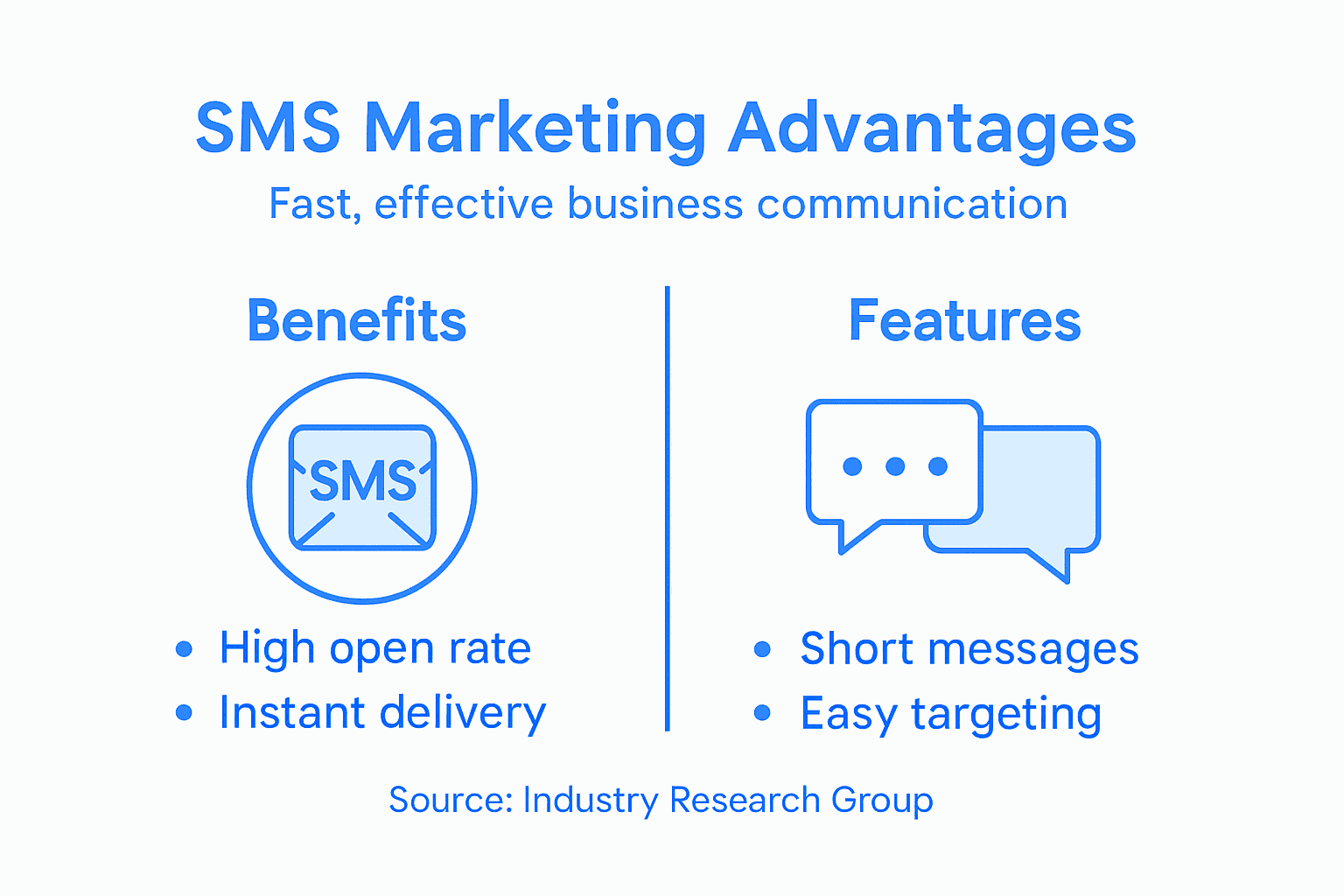
The technology behind SMS marketing relies on mobile network infrastructure that enables rapid, reliable message transmission. Unlike traditional communication channels, SMS provides remarkable engagement metrics, with studies showing 98% open rates and significantly faster reading times compared to email.
Businesses across industries are adopting SMS marketing because of its unique advantages. The protocol allows for concise, direct communication that cuts through digital noise, reaching customers instantly on their most personal device – their mobile phone. By integrating SMS into broader digital marketing strategies, companies can create more responsive, interactive customer experiences.
Pro tip: Segment your SMS marketing lists by customer preferences and behaviors to increase message relevance and engagement rates.
Types of SMS Campaigns and Strategies
SMS marketing campaigns are strategic communication efforts that leverage text messaging to achieve specific business objectives. Marketing strategies reveal distinct approaches businesses can employ to maximize their text message engagement and effectiveness.
Companies can implement several core types of SMS campaigns:
- Promotional Campaigns
- Flash sales announcements
- Discount code distribution
- Limited-time offers
- Transactional Campaigns
- Order confirmations
- Shipping updates
- Appointment reminders
- Engagement Campaigns
- Customer feedback requests
- Survey invitations
- Event notifications
Multi-channel marketing strategies emphasize integrating SMS within broader communication frameworks. This approach allows businesses to create cohesive customer experiences that extend beyond single-channel interactions, enhancing overall marketing effectiveness.
Here’s a summary of the main SMS campaign types and their business objectives:
| SMS Campaign Type | Key Objective | Typical Use Case |
|---|---|---|
| Promotional | Drive sales and awareness | Announcing limited-time deals |
| Transactional | Boost service efficiency | Confirming appointments |
| Engagement | Increase customer interaction | Collecting feedback |
Successful SMS campaigns require careful audience segmentation, personalized messaging, and strategic timing. By understanding customer preferences and behaviors, businesses can craft targeted communications that resonate with specific demographic groups and drive meaningful engagement.
Pro tip: Implement A/B testing on your SMS campaign messages to continuously optimize open rates and customer response.
How SMS Marketing Platforms Work
SMS marketing platforms are sophisticated technological ecosystems that enable businesses to send targeted text messages efficiently. SMS messaging infrastructure relies on complex network protocols that ensure reliable message transmission across mobile networks.
The core components of SMS marketing platforms include:
- Message Origination System
- Campaign management dashboard
- Contact list management
- Message composition tools
- Routing Mechanisms
- Short Message Service Centers (SMSCs)
- Protocol translation services
- Delivery tracking
- Recipient Interaction Tracking
- Read receipt monitoring
- Response collection
- Engagement analytics
End-to-end messaging protocols enable these platforms to validate subscriber status, manage message queuing, and confirm successful delivery. This intricate process involves multiple network checkpoints that validate and route messages with remarkable precision.

Modern SMS marketing platforms go beyond simple message sending. They integrate advanced features like audience segmentation, personalized messaging, and real-time analytics that transform text messaging from a basic communication tool into a sophisticated marketing instrument.
This table compares core features of SMS marketing platforms and their benefits for businesses:
| Platform Feature | What It Does | Business Impact |
|---|---|---|
| Campaign Dashboard | Manages and schedules messages | Streamlines outreach |
| Delivery Tracking | Monitors message status | Ensures high delivery rates |
| Audience Segmentation | Targets audience groups | Increases message relevance |
| Analytics Integration | Tracks performance metrics | Guides strategy improvement |
Pro tip: Select an SMS marketing platform that offers robust analytics and integration capabilities to maximize your communication strategy.
Compliance, Privacy, and Legal Requirements
Business SMS marketing demands rigorous adherence to complex legal frameworks that protect consumer privacy and communication rights. Commercial electronic message regulations establish critical guidelines businesses must follow when implementing text message campaigns.
Key legal compliance requirements include:
- Consent Protocols
- Explicit opt-in permission
- Clear communication of messaging frequency
- Accessible opt-out mechanisms
- Message Content Standards
- Truthful subject lines
- Accurate sender identification
- No deceptive marketing language
- Data Protection Measures
- Secure contact information storage
- Limited data usage permissions
- Regular privacy policy updates
U.S. privacy law frameworks govern electronic communications through multiple statutes that mandate responsible data handling and consumer protection. These regulations require businesses to implement robust consent management, maintain transparent communication practices, and protect individual privacy rights.
Noncompliance can result in significant financial penalties and potential legal action, making it essential for businesses to develop comprehensive SMS marketing strategies that prioritize legal and ethical communication standards.
Pro tip: Consult with a legal professional specializing in digital communication regulations to ensure your SMS marketing strategy fully complies with current federal and state requirements.
Risks, Costs, and Common Pitfalls
SMS marketing campaigns require careful navigation of potential risks and challenges that can undermine business communication strategies. Text message scam vulnerabilities represent a significant threat to businesses and consumers alike, demanding proactive risk management approaches.
Common risks and pitfalls in SMS marketing include:
- Security Vulnerabilities
- Unauthorized data access
- Potential credential misuse
- Unsecured communication channels
- Financial Risks
- High campaign costs
- Low message engagement
- Inefficient targeting
- Reputation Damages
- Customer trust erosion
- Spam perception
- Regulatory non-compliance penalties
Mobile communication security risks highlight the critical importance of implementing robust security protocols. Businesses must develop comprehensive strategies that protect both their operational integrity and customer data privacy.
Effective risk mitigation involves continuous monitoring, regular security audits, and maintaining transparent communication practices that prioritize customer trust and regulatory compliance.
Pro tip: Invest in comprehensive security training and regularly update your SMS marketing platform to minimize potential vulnerabilities and protect your business reputation.
Enhance Your SMS Marketing with Voipcom’s Modern Communication Solutions
The article highlights the power of SMS marketing to boost business communication efficiency but also points out challenges such as ensuring message relevance, managing compliance, and integrating messaging within broader digital strategies. If you are facing difficulties with high campaign costs, lack of audience segmentation, or unreliable delivery, Voipcom offers a comprehensive messaging platform designed for businesses like yours. Our SMS & MMS services combined with tools like custom landing pages enable highly targeted campaigns that increase engagement while simplifying management.

Take control of your SMS marketing strategy today by switching to a flexible, cloud-based communication solution from Voipcom. With fully managed setup, local support, and scalable features including AI-powered calling and Microsoft Teams integration, we help you avoid common pitfalls like security risks and regulatory compliance failures. Start maximizing your marketing impact now by visiting Voipcom’s messaging solutions or explore our Voice & Telephony services to enrich your communication channels. Don’t wait—streamline your business communication and boost customer engagement with Voipcom.
Frequently Asked Questions
What is SMS marketing, and how does it benefit businesses?
SMS marketing is a digital strategy that uses text messaging to connect businesses with customers. It offers high engagement rates, immediate communication, and personalized messaging, helping businesses effectively reach their audiences.
What are the different types of SMS marketing campaigns?
There are three main types of SMS marketing campaigns: promotional (driving sales), transactional (confirming orders or appointments), and engagement (collecting feedback or sending notifications). Each serves distinct business objectives and enhances customer interaction.
How do SMS marketing platforms work?
SMS marketing platforms function through a message origination system that manages campaigns, routing mechanisms for message delivery, and tracking recipient interactions for analytics, ensuring efficient and effective communication with customers.
What are the legal requirements for SMS marketing compliance?
Business SMS marketing must comply with regulations regarding consent, message content standards, and data protection measures. This includes obtaining explicit opt-in permission, providing clear messaging frequency, and ensuring secure handling of customer data.