

Switching to a new phone or messaging system can feel risky for any Healthcare Office Manager balancing cost and strict compliance requirements. Protecting patient data is more than a technical checkbox—it is a legal necessity directly tied to the integrity of your Arizona or Colorado practice. A comprehensive security risk analysis uncovers vulnerabilities and shapes smarter decisions for HIPAA-compliant solutions that keep sensitive information safe while helping you maintain operational efficiency.
Table of Contents
- Step 1: Assess Current Communication Systems For HIPAA Risks
- Step 2: Implement Secure, HIPAA-Compliant Phone And Messaging Solutions
- Step 3: Establish Access Controls And Staff Training Procedures
- Step 4: Monitor System Activity And Respond To Potential Breaches
- Step 5: Review And Update Compliance Measures Regularly
Quick Summary
| Key Insight | Explanation |
|---|---|
| 1. Conduct Comprehensive Assessments | Regularly evaluate communication systems for HIPAA risks to identify vulnerabilities and improve security measures. |
| 2. Implement Secure Communication Tools | Use encrypted platforms designed for healthcare to protect patient information and ensure regulatory compliance. |
| 3. Establish Strict Access Controls | Develop tailored access permissions and authentication processes to limit exposure of protected health information. |
| 4. Monitor Systems Continuously | Implement automated tracking systems to detect suspicious activity and allow for timely incident responses. |
| 5. Review Compliance Regularly | Engage in ongoing audits and updates to ensure compliance with evolving regulations and security threats. |
Step 1: Assess current communication systems for HIPAA risks
Healthcare organizations must systematically evaluate their electronic communication infrastructure to protect patient data and maintain regulatory compliance. Performing a comprehensive security risk analysis helps identify potential vulnerabilities in how protected health information (ePHI) is handled and transmitted.
Start by conducting a thorough review of your existing communication systems. Security risk assessment requires examining all electronic platforms including email, messaging apps, phone systems, and file sharing tools. Document each system’s current security measures, looking specifically for potential points of unauthorized access or data exposure. This means analyzing software configurations, hardware setups, network architecture, and user access protocols.
Key areas to scrutinize include user authentication processes, encryption standards, data storage practices, and transmission security. Pay special attention to mobile devices, cloud services, and remote work technologies that might introduce additional risks. Documenting these findings creates a baseline for understanding your current security landscape and developing targeted improvement strategies.
Pro tip: Create a comprehensive inventory of all communication technologies before starting your risk assessment to ensure no potential vulnerability goes unexamined.
Here is a summary of common HIPAA security vulnerabilities and their typical business impacts:
| Vulnerability Type | Example Risk | Business Impact |
|---|---|---|
| Weak authentication | Shared passwords | Unauthorized data access |
| Poor encryption | Unencrypted transmissions | Loss of patient confidentiality |
| Gaps in device security | Unmanaged mobile devices | Increased breach likelihood |
| Inadequate user training | Phishing susceptibility | Higher risk of data compromise |
Step 2: Implement secure, HIPAA-compliant phone and messaging solutions
Healthcare organizations must strategically deploy communication technologies that protect patient data while maintaining efficient workflows. Implementing secure phone and messaging solutions requires a comprehensive approach that addresses both technological and operational requirements.
Secure communication platforms must incorporate robust encryption, access controls, and comprehensive audit logging capabilities. This means selecting communication tools specifically designed for healthcare environments that can verify user identities, restrict sensitive information transmission, and automatically document all interactions. Focus on solutions that provide end-to-end encryption for text messages, voicemails, and file transfers while enabling granular user permissions that limit data access to authorized personnel only.

Training your staff becomes equally critical in this implementation process. Develop clear protocols for using secure communication platforms, emphasizing the importance of identity verification, avoiding public discussions of patient information, and maintaining detailed communication records. Regularly review and update these protocols to align with evolving HIPAA regulations and technological advancements.
Pro tip: Conduct periodic security assessments of your communication platforms to identify and address potential vulnerabilities before they become compliance risks.
Step 3: Establish access controls and staff training procedures
Healthcare organizations must develop comprehensive strategies to protect patient data through robust access management and continuous staff education. This critical step involves creating a multilayered approach to information security that balances technological solutions with human awareness.
Administrative safeguards for HIPAA require implementing strict access controls that limit protected health information exposure. This means developing a systematic approach to user authentication, including creating unique user identification credentials, establishing role-based access permissions, and implementing automatic session timeouts. Each staff member should have precisely defined access levels matching their specific job responsibilities, ensuring they can only view or interact with patient information directly relevant to their work functions.
Training becomes the cornerstone of your access control strategy. Develop a comprehensive training program that goes beyond simple policy review and creates a culture of data protection. Conduct regular workshops that simulate potential security scenarios, teach employees how to recognize potential data breach risks, and reinforce the legal and ethical implications of improper PHI handling. Include practical demonstrations of secure communication protocols, password management techniques, and the proper use of secure messaging platforms.
Pro tip: Create a mandatory annual recertification process for all staff that includes updated training modules and a comprehensive knowledge assessment to ensure ongoing HIPAA compliance awareness.
Step 4: Monitor system activity and respond to potential breaches
Healthcare organizations must develop a proactive approach to detecting and addressing potential security vulnerabilities in their electronic protected health information systems. Continuous monitoring provides the critical early warning mechanism to prevent and mitigate potential data breaches before they escalate.
System activity monitoring requires implementing comprehensive automated tracking and alert systems that continuously analyze user interactions and system access patterns. This involves deploying advanced logging technologies that capture detailed records of every user action, including login attempts, data access, file modifications, and communication transmissions. Configure your monitoring systems to generate immediate alerts for suspicious activities such as multiple failed login attempts, access from unusual geographic locations, or attempts to access information outside a user’s standard job responsibilities.
Developing a robust incident response plan is equally critical. Create a detailed protocol that outlines specific steps for investigating potential breaches, including immediate containment strategies, forensic analysis procedures, and notification requirements. Establish a dedicated response team with clearly defined roles and responsibilities, ensuring they can quickly assess and address any potential security incidents. This team should conduct regular tabletop exercises to simulate various breach scenarios, helping to refine response capabilities and ensure all staff members understand their critical responsibilities during a potential data security event.
Pro tip: Implement a quarterly comprehensive review of your monitoring logs and incident response procedures to identify potential improvements and emerging security trends.
The following table compares key elements of system monitoring and incident response for HIPAA compliance:
| Component | System Monitoring | Incident Response |
|---|---|---|
| Primary Purpose | Detect suspicious activity | Investigate and contain breaches |
| Methods Used | Automated alerts, logging | Forensic analysis, root cause ID |
| Staff Involvement | IT & security teams | Dedicated response team |
| Review Frequency | Continuous tracking | Quarterly and event-driven |
Step 5: Review and update compliance measures regularly
Healthcare organizations must recognize that HIPAA compliance is not a one-time achievement but an ongoing process of continuous improvement and adaptation. Staying current with regulatory requirements and emerging security challenges requires a proactive and systematic approach to reviewing and updating your compliance infrastructure.
Periodic risk analysis serves as the cornerstone of maintaining effective HIPAA compliance. Establish a comprehensive annual review process that thoroughly examines all administrative, physical, and technical safeguards. This involves conducting detailed audits of your current policies, technology systems, staff training programs, and access control mechanisms. Carefully document any identified vulnerabilities or potential improvement areas, creating a clear roadmap for addressing emerging risks and strengthening your overall security posture.
Develop a structured update mechanism that includes regular staff training refreshers, technology security assessments, and policy reviews. Engage external compliance experts periodically to provide an objective assessment of your current practices and recommend potential improvements. Pay special attention to changes in healthcare technology, emerging cybersecurity threats, and updates to federal and state regulations that might impact your compliance requirements. Create a flexible framework that allows for rapid implementation of necessary updates and ensures your organization remains at the forefront of patient data protection.
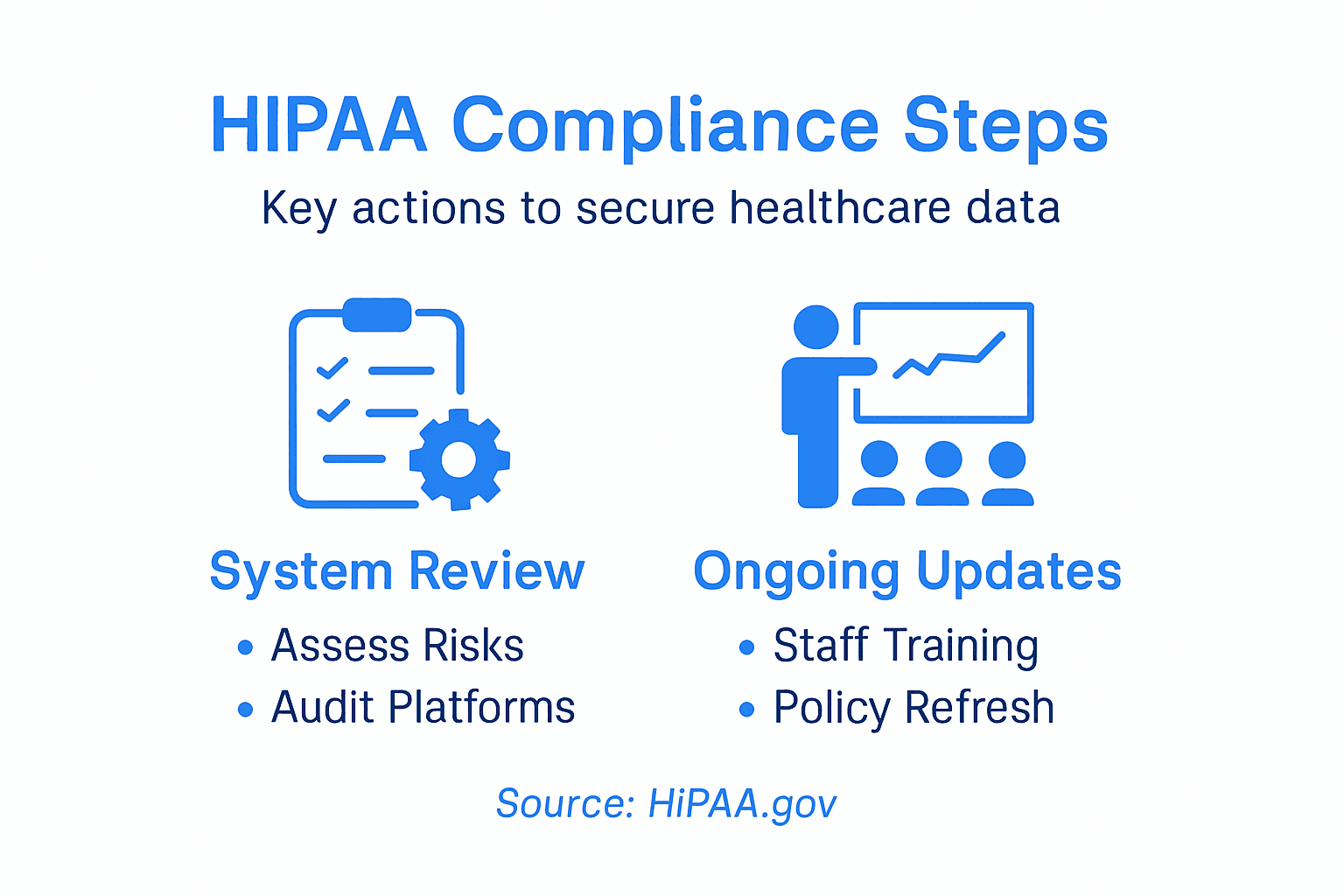
Pro tip: Designate a dedicated compliance review team with members from IT, legal, and operations to ensure comprehensive and multidisciplinary oversight of your HIPAA compliance strategy.
Secure Your Healthcare Communications with Voipcom Today
Ensuring HIPAA compliance means addressing complex challenges like securing communication platforms, implementing strict access controls, and continuously monitoring for risks. The article highlights critical steps such as using encrypted messaging solutions and robust user authentication to prevent unauthorized access and data breaches. If you are managing healthcare communications, your goal is to protect patient data while maintaining seamless workflows without the headaches of outdated or insecure systems.
Voipcom offers cloud-based phone and messaging solutions designed with these exact needs in mind. Our hosted PBX systems, secure SMS and MMS services, and compliance management tools help you meet HIPAA requirements effortlessly. Combine this with our managed IT and cybersecurity services plus local, live support, and you get a partner committed to simplifying your compliance journey and boosting your operational efficiency.

Don’t wait until a compliance issue disrupts your business. Experience the peace of mind that comes with fully managed, HIPAA-ready communications. Explore all the ways Voipcom can support your organization now by visiting Voipcom Solutions. Start your secure communication transformation today with Secure Business Phone & Messaging and learn how our dedicated compliance management puts your data protection first.
Frequently Asked Questions
What are the first steps to assess HIPAA compliance for business communications?
Begin by reviewing your current electronic communication systems for potential risks. Conduct a thorough security risk analysis to identify vulnerabilities in how protected health information is handled and transmitted, ensuring all platforms—including email and messaging apps—are evaluated.
How can I implement secure communication solutions that comply with HIPAA?
Select communication tools specifically designed for healthcare that offer robust encryption and access controls. Focus on platforms that allow for end-to-end encryption and comprehensive audit logging, ensuring that personal health information is securely transmitted and documented.
What should I include in staff training for HIPAA compliance?
Create a comprehensive training program that covers secure communication protocols and the importance of protecting patient data. Include practical demonstrations and regular workshops to reinforce policies, ensuring staff understand their role in maintaining compliance.
How do I monitor system activity for HIPAA compliance?
Establish automated tracking systems to continuously analyze user interactions and access patterns. Configure these systems to generate alerts for suspicious activities such as unauthorized login attempts or unusual data access, allowing for quick response.
How often should I review and update my HIPAA compliance measures?
Conduct comprehensive reviews of your compliance measures annually, assessing all aspects of your security infrastructure. Regularly update your policies and technology assessments to address emerging risks and changes in regulations, ensuring you remain compliant.
What is a mandatory recertification process for staff regarding HIPAA compliance?
Implement an annual recertification process that requires all staff to undergo updated training and knowledge assessment. This will help ensure ongoing awareness of HIPAA regulations and secure communication practices, minimizing the risk of data breaches.