


Modern legal and medical offices face increasing pressure to maintain secure and flexible communication as client demands and regulatory standards grow stricter in states like Arizona and Colorado. Relying on outdated phone systems can tie your team to the office and expose sensitive data to unnecessary risks. By adopting cloud communications solutions, practices gain reliable, HIPAA-compliant tools that support secure messaging, easy integration across devices, and cost-effective operations—helping you focus less on IT headaches and more on client care.
Key Takeaways
| Point | Details |
|---|---|
| Cloud Communications Solutions Replace Traditional Systems | These solutions utilize internet connectivity to manage calls, messaging, and collaboration, eliminating the need for physical phone systems. |
| Types and Deployment Models Matter | Assess whether public, private, or hybrid cloud models align better with your operational needs and compliance requirements. |
| Security and Compliance Are Paramount | Prioritize platforms adhering to regulations like HIPAA to ensure the safety of sensitive information. |
| Cost Savings Are Significant | Transitioning to cloud communications can reduce upfront costs and maintenance expenses, providing predictable monthly billing. |
What Are Cloud Communications Solutions?
Cloud communications solutions represent a transformative approach to business telecommunications, moving organizations from traditional phone systems to internet-based communication platforms. These advanced systems leverage cloud technology to host voice, messaging, and data communications entirely online, eliminating the need for complex on-site telephone infrastructure.
Comparing providers? See business VoIP in Eloy, AZ and VoIP phone service in Fort Collins, or explore business VoIP services in Phoenix and Denver.
At their core, cloud communications platforms enable businesses to manage calls, video conferences, messaging, and collaboration tools through internet-connected devices. Unlike traditional phone systems that require physical hardware and dedicated phone lines, cloud solutions operate through software applications accessible from smartphones, laptops, desktop computers, and tablets. This flexibility allows law firms and medical practices to maintain professional communication channels regardless of physical location.
Key features of cloud communications solutions typically include:
- Unified communication channels
- Mobile device integration
- Advanced call routing
- Video conferencing capabilities
- Real-time collaboration tools
- Scalable infrastructure that grows with your business
Pro Tip: Before migrating to a cloud communications system, conduct a comprehensive audit of your current communication infrastructure to identify specific needs and potential integration challenges.
Cloud Communications Types and Key Features
Cloud communications solutions are structured around several core service delivery models, each offering unique capabilities for law and medical practices. These models range from Infrastructure as a Service (IaaS) to Platform as a Service (PaaS) and Software as a Service (SaaS), providing businesses with flexible options for managing their communication infrastructure.
In the context of professional services like law and medical practices, cloud communication types can be categorized into distinct deployment models. Public cloud solutions offer cost-effective, scalable options where services are hosted on shared infrastructure. Private cloud deployments provide enhanced security and compliance, crucial for healthcare and legal organizations handling sensitive patient or client information. Hybrid cloud approaches combine public and private infrastructure, allowing businesses to balance performance, security, and cost-effectiveness.
Here’s how different cloud communications deployment models compare for law and medical practices:
| Deployment Model | Security Level | Scalability | Typical Use Case |
|---|---|---|---|
| Public Cloud | Moderate | Highly flexible | General office communication |
| Private Cloud | High | Customizable | Sensitive legal or healthcare data |
| Hybrid Cloud | Balanced | Easily adjustable | Mix of secure and open communications |
Key features of modern cloud communication systems include:
- Unified communication channels
- End-to-end encryption
- Seamless device integration
- Automatic software updates
- Scalable user licensing
- Compliance with industry regulations
- Advanced analytics and reporting
Pro Tip: When evaluating cloud communication solutions, prioritize platforms that offer HIPAA and legal industry compliance certifications to ensure data protection and regulatory adherence.
Security, Compliance, and Legal Obligations
Cloud communications for law and medical practices demand rigorous attention to cybersecurity regulatory requirements. Specialized industries like healthcare and legal services must navigate complex compliance landscapes that protect sensitive client and patient information while maintaining technological efficiency.
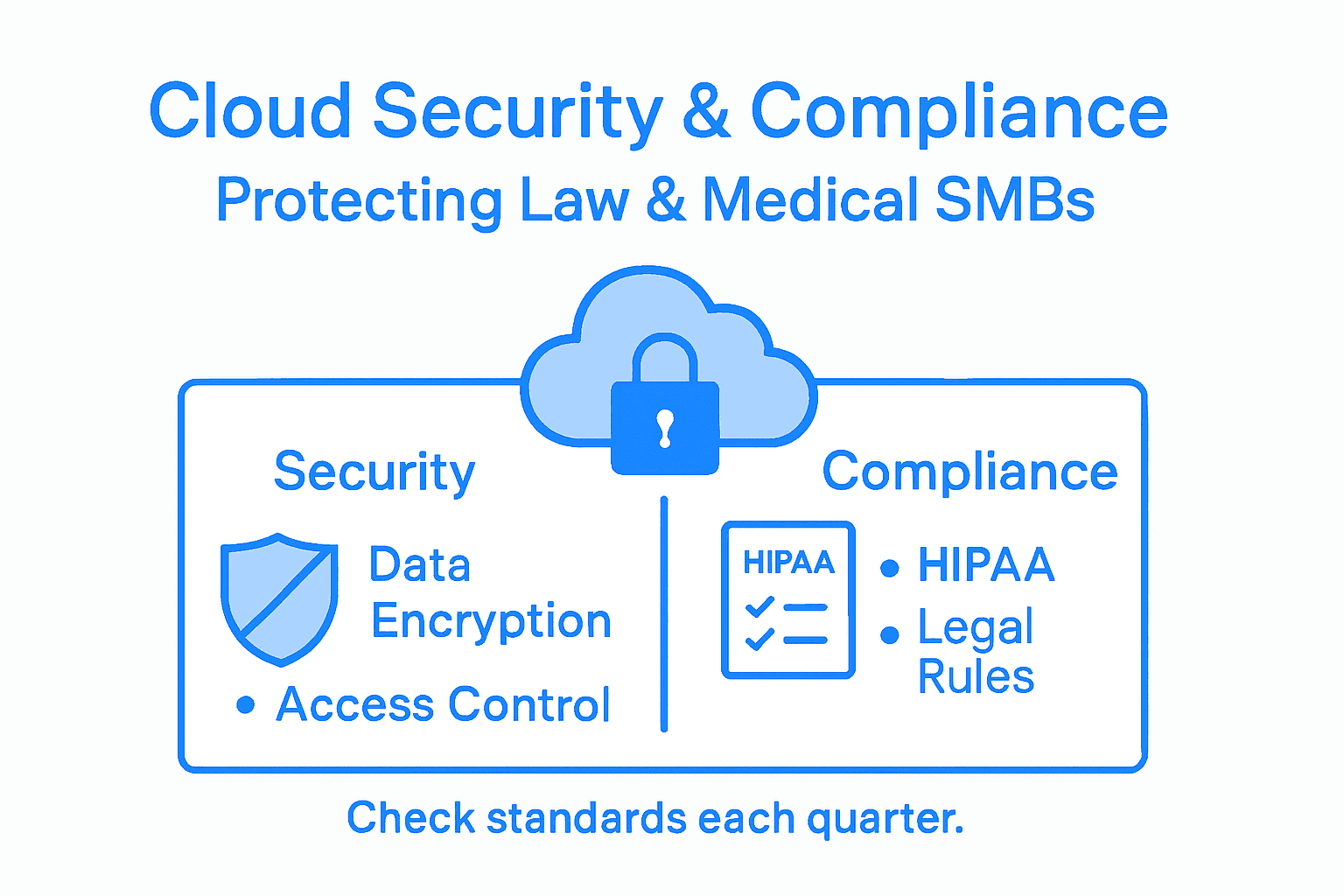
The regulatory framework for cloud communications involves multiple critical compliance standards. HIPAA regulations mandate strict protection of patient health information, requiring encrypted communication channels, secure data storage, and comprehensive access controls. Legal practices similarly must ensure client confidentiality through robust security protocols that prevent unauthorized data access or potential breaches. These requirements extend beyond simple technological implementations and represent fundamental legal obligations for professional service providers.
Key compliance and security considerations include:
- End-to-end data encryption
- Multi-factor authentication
- Detailed access logging
- Regular security audits
- Comprehensive disaster recovery planning
- Role-based access controls
- Continuous vulnerability monitoring
Pro Tip: Conduct quarterly comprehensive security assessments and maintain detailed documentation of your cloud communication system’s compliance measures to proactively address potential regulatory challenges.
Operational Benefits for Law and Medical Offices
Cloud communications have transformed operational efficiency for law and medical practices through AI-driven productivity tools. These advanced technologies enable small and medium-sized offices to streamline workflows, enhance collaboration, and dramatically reduce administrative overhead while maintaining high professional standards.

In medical offices, cloud communication platforms revolutionize patient management and administrative processes. Real-time scheduling systems, integrated communication channels, and secure data sharing allow healthcare providers to optimize patient flow, improve coordination between departments, and reduce time spent on manual administrative tasks. Similarly, law firms benefit from cloud solutions that facilitate remote case management, secure document sharing, and seamless client communication across multiple devices and locations.
Key operational benefits include:
- Reduced administrative workload
- Enhanced remote collaboration capabilities
- Improved client and patient communication
- Flexible work environment support
- Simplified appointment and case management
- Cost-effective technology infrastructure
- Scalable communication solutions
Pro Tip: Implement a comprehensive staff training program to maximize the potential of cloud communication technologies and ensure smooth adoption across your organization.
Cost Savings Compared to Legacy Systems
Cloud communications offer substantial financial advantages for law and medical small and medium businesses through innovative pricing models. Traditional phone systems require significant upfront capital investment in hardware, installation, and ongoing maintenance, whereas cloud-based solutions dramatically reduce these expenses by transitioning to a flexible, scalable operational cost structure.
The financial transformation happens through multiple cost reduction mechanisms. Instead of purchasing expensive on-premises telephone infrastructure, businesses can leverage cloud communication platforms that charge predictable monthly rates based on actual usage. This pay-as-you-go approach eliminates substantial capital expenditures, allowing law firms and medical practices to allocate resources more strategically. Cloud systems also minimize additional costs associated with hardware upgrades, technical support, and system maintenance, which are typically handled by the service provider.
The following table summarizes major financial advantages cloud communications provide over legacy phone systems:
| Expense Category | Legacy Systems | Cloud Communications |
|---|---|---|
| Upfront Cost | High hardware investment | Minimal setup fees |
| Maintenance | Frequent technician visits | Provider-managed remotely |
| Monthly Fees | Variable and complex | Predictable billing per user |
| Upgrade Costs | Costly periodic updates | Included in subscription |
Key cost-saving elements include:
- Elimination of physical hardware investments
- Reduced maintenance and upgrade expenses
- Predictable monthly billing
- Scalable per-user pricing
- Lower telecommunications infrastructure costs
- Minimal on-site technical support requirements
- Consolidated communication platform expenses
Pro Tip: Calculate your potential savings by comparing your current communication infrastructure costs with a detailed cloud communications proposal, focusing on both direct and indirect expense reductions.
Mistakes to Avoid When Migrating
Cloud communication migrations can quickly become complex for law and medical practices without proper preparation. Comprehensive migration strategies are essential to prevent costly disruptions and ensure a smooth technological transition that maintains professional service standards.
Many small and medium businesses make critical errors during cloud communication migrations that can compromise operational efficiency and data security. Common mistakes include rushing the migration process without thorough assessment, failing to create detailed dependency maps of existing communication systems, and neglecting comprehensive staff training. Legal and medical offices must prioritize understanding their specific workflow requirements, ensuring compatibility with existing software, and maintaining strict compliance with industry regulations throughout the transition.
Key migration mistakes to avoid include:
- Inadequate initial technology assessment
- Overlooking compliance requirements
- Insufficient staff training
- Neglecting data migration security
- Choosing inappropriate cloud deployment models
- Failing to establish clear migration objectives
- Underestimating integration complexity
- Ignoring potential scalability needs
Pro Tip: Conduct a comprehensive internal audit of your current communication infrastructure and create a detailed migration roadmap at least three months before initiating any cloud communication system transition.
Elevate Your Law or Medical Office Communications Today
If your law or medical practice struggles with costly legacy phone systems or compliance challenges, cloud communications offer the flexibility and security you need. From unified channels to HIPAA-compliant solutions, the article highlights critical pain points like complex migrations and unpredictable expenses. Voipcom specializes in simplifying your cloud migration while providing scalable, fully managed voice and messaging services designed especially for small to medium sized businesses.

Discover how our proven solutions reduce costs and improve collaboration across remote and hybrid work environments. Act now to replace outdated phone infrastructure with our transparent pricing, integrated AI calling features, and local support. Visit Voipcom now and see how we seamlessly handle your cloud communication needs. Explore our Voice & Telephony and Managed IT & Cybersecurity services to ensure your business meets all regulatory requirements with ease.
Frequently Asked Questions
What are the main benefits of cloud communications for law and medical small and medium businesses?
Cloud communications offer several benefits, including reduced administrative workload, enhanced collaboration capabilities, improved client and patient communication, and cost-effective technology infrastructure that scales with the business.
How do cloud communications improve security and compliance for law and medical practices?
Cloud communications platforms provide end-to-end data encryption, multi-factor authentication, and compliance with industry regulations like HIPAA, which protects sensitive client and patient information.
What are the different deployment models for cloud communications, and which is best for legal and medical practices?
Deployment models include public cloud, private cloud, and hybrid cloud. Public clouds are cost-effective and flexible, private clouds offer high security for sensitive data, while hybrid clouds balance both performance and security, making them suitable for various needs of law and medical practices.
What mistakes should be avoided when migrating to a cloud communications system?
Common mistakes include inadequate initial technology assessment, overlooking compliance requirements, insufficient staff training, and neglecting data migration security. Carefully planning the migration process is crucial to ensure smooth transition and maintain operational efficiency.
Recommended
- Why Switch to Cloud Phone for Law Firms – Voipcom
- VoIP Security: Protecting Law Firm Communications – Voipcom
- 7 Top Telephony Features for Law Firms in 2025 – Voipcom
- 7 Top Features of Modern Phone Systems for Law Firms – Voipcom
Upgrade your phone system: See Voipcom business VoIP & cloud phone systems.