

Switching from outdated phone systems presents daily headaches for law firms in Arizona and Colorado, especially when the stakes include client privacy and healthcare-related compliance. For IT managers, finding communication tools that marry HIPAA-compliant security with advanced mobility and integration is more than an upgrade—it is essential for protecting sensitive information and staying competitive. This article unpacks how managed voice solutions deliver secure, efficient, and unified communications purpose-built for legal professionals navigating complex regulatory demands.
Table of Contents
- Managed Voice Solutions Defined for Law Firms
- Security, Compliance, and HIPAA Requirements
- Essential Features: AI, Integration, Mobility
- Real-World Applications in Legal Practice
- Risks, Costs, and Common Pitfalls
- Comparing Managed and Legacy Systems
Key Takeaways
| Point | Details |
|---|---|
| Managed Voice Solutions | These integrated platforms enhance communication and operational efficiency within law firms, facilitating better collaboration and client interaction. |
| Security and Compliance | Robust security measures and compliance with regulations like HIPAA are crucial for protecting client data and maintaining trust. |
| Technological Integration | Successful implementation of managed voice solutions requires seamless integration with existing software and mobile access to promote flexibility. |
| Risks and Financial Considerations | Awareness of potential risks and hidden costs associated with legacy systems is essential when transitioning to modern managed communication infrastructure. |
Managed Voice Solutions Defined for Law Firms
Managed voice solutions represent a comprehensive communication strategy designed specifically for legal professionals seeking streamlined, secure, and efficient technological infrastructure. These integrated platforms go beyond traditional phone systems, offering law firms advanced communication capabilities that transform how legal teams collaborate, communicate with clients, and manage daily operational workflows.
According to research from the American Bar Association Law Practice Division, managed voice solutions are becoming increasingly critical for law firms across different scales of operation. The key components of these solutions include:
- Integrated Communication Platforms: Unified systems connecting voice, video, messaging, and collaborative tools
- AI-Powered Transcription: Automatic speech-to-text capabilities for depositions and meetings
- Secure Call Routing: Advanced systems that protect client confidentiality
- Remote Accessibility: Enabling lawyers to connect from anywhere with professional-grade communication tools
- Compliance Management: Built-in features ensuring communication meets legal industry standards
Mid-sized law firms are leading the adoption of these technologies, recognizing that managed voice solutions provide strategic advantages in operational efficiency. These systems leverage cloud technologies and artificial intelligence to streamline routine tasks, reduce administrative overhead, and enhance overall firm productivity.
Here’s how managed voice solution features directly benefit law firms:
| Technology Feature | Primary Function | Impact on Law Practice |
|---|---|---|
| AI Transcription | Converts speech to text automatically | Speeds up documentation and review |
| Secure Call Routing | Directs calls securely to intended recipients | Protects client confidentiality |
| Integration Capability | Syncs with case management and legal software | Improves workflow and information flow |
| Remote Access | Enables mobile, location-independent communication | Supports flexible work arrangements |
| Compliance Management | Ensures communication meets industry regulations | Reduces risk of legal penalties |
Technological Integration is at the heart of modern managed voice solutions. By combining voice communication with advanced features like real-time transcription, secure messaging, and intelligent call routing, law firms can create more responsive and client-centered practices.

Pro tip: When evaluating managed voice solutions, prioritize systems that offer seamless integration with your existing case management software and provide robust security protocols.
Security, Compliance, and HIPAA Requirements
Law firms operate in a landscape of stringent data protection requirements, where maintaining client confidentiality is not just an ethical obligation but a legal mandate. Comprehensive security policies are essential to safeguarding sensitive information and preventing potential cybersecurity breaches.
Understanding HIPAA compliance for law firms requires nuanced comprehension of regulatory frameworks. While law firms are not automatically considered covered entities, they can become business associates when handling protected health information (PHI) for healthcare clients. Key compliance considerations include:
- Implementing robust data encryption protocols
- Developing secure communication channels
- Creating comprehensive staff training programs
- Establishing strict access control measures
- Maintaining detailed audit trails of information access
- Executing formal business associate agreements
The legal implications of non-compliance are severe. Law firms that mishandle protected health information can face significant financial penalties, potential litigation, and reputational damage. Modern managed voice solutions provide critical infrastructure to help firms navigate these complex regulatory landscapes by offering:
- Automatic data encryption
- Secure call routing
- Comprehensive access logging
- Multi-factor authentication
- HIPAA-compliant communication channels
Protecting client data is not just a technical requirement—it’s a fundamental professional responsibility that directly impacts a law firm’s credibility and trustworthiness.
Technological Integration plays a crucial role in maintaining compliance. By leveraging advanced communication platforms with built-in security features, law firms can proactively protect sensitive information while streamlining their operational workflows.
Pro tip: Conduct quarterly security audits and maintain updated business associate agreements to ensure continuous HIPAA compliance and minimize potential legal risks.
Essential Features: AI, Integration, Mobility
Modern law firms require sophisticated communication technologies that go beyond traditional phone systems. AI-powered managed voice solutions are transforming how legal professionals collaborate, communicate, and manage complex workflows.
The core technological pillars of these advanced communication platforms include artificial intelligence, seamless integration, and enhanced mobility. These features collectively enable law firms to operate with unprecedented efficiency and flexibility. Key capabilities encompass:
- Automated document drafting and review
- Real-time communication transcription
- Intelligent call routing and management
- Secure mobile access to firm communication systems
- Predictive client interaction analytics
- Instant case-related information retrieval
Artificial intelligence represents a game-changing innovation for legal communication technologies. By leveraging machine learning algorithms, managed voice solutions can:
- Analyze communication patterns
- Identify potential compliance risks
- Streamline administrative tasks
- Provide actionable insights from communication data
- Enhance overall operational efficiency
Technological innovation is not about replacing human expertise, but empowering legal professionals to work smarter and more strategically.
Technological Integration goes beyond simple communication tools. Modern managed voice solutions create comprehensive ecosystems that connect case management software, client relationship platforms, and communication channels into a unified, intelligent system.
Pro tip: Evaluate managed voice solutions by testing their AI capabilities, integration flexibility, and mobile performance before full implementation to ensure they meet your firm’s specific workflow requirements.
Real-World Applications in Legal Practice
Modern legal practices are experiencing a transformative shift through advanced communication technologies. AI-driven legal applications are revolutionizing how attorneys manage cases, interact with clients, and streamline complex workflows.
Practical applications of managed voice solutions span multiple critical areas of legal practice:
-
Case Research and Discovery
- Rapid document scanning and analysis
- Intelligent information retrieval
- Automated legal research compilation
-
Client Communication
- Real-time transcription services
- Secure messaging platforms
- Automated appointment scheduling
- Intelligent call routing
-
Administrative Efficiency
- Automated time tracking
- Workflow documentation
- Compliance monitoring
- Electronic file management
By integrating artificial intelligence with communication platforms, law firms can dramatically reduce administrative overhead and focus more energy on strategic legal work. These technologies enable attorneys to access critical information instantly, communicate more effectively, and maintain comprehensive documentation with minimal manual intervention.
Technology in legal practice is not about replacing human expertise, but amplifying an attorney’s ability to deliver exceptional client service.
The most sophisticated managed voice solutions go beyond simple communication tools. They create intelligent ecosystems that understand context, predict needs, and provide actionable insights that can significantly impact case strategy and client relationships.
Pro tip: Implement a phased approach when adopting new communication technologies, starting with pilot programs in specific practice areas to measure effectiveness and user adoption.
Risks, Costs, and Common Pitfalls
Implementing managed voice solutions in legal practices involves navigating complex technological and regulatory landscapes. Comprehensive security protocols are critical to mitigating potential risks and avoiding costly mistakes.
Law firms must be acutely aware of the following potential risks:
-
Data Security Vulnerabilities
- Unauthorized system access
- Potential data breaches
- Inadequate encryption mechanisms
- Compromised client confidentiality
-
Compliance Challenges
- HIPAA regulation violations
- Incomplete business associate agreements
- Insufficient staff training
- Inconsistent privacy protocols
-
Financial Implications
- Unexpected implementation costs
- Potential legal liability expenses
- Reputational damage recovery
- Ongoing system maintenance investments
The financial stakes of mismanaging voice communication technologies are significant. A single security incident can result in substantial legal penalties, client trust erosion, and potential malpractice claims that far exceed the initial investment in robust communication infrastructure.
Technology adoption is not just about features, but about creating a secure, reliable ecosystem that protects your firm’s most valuable asset: client trust.
Technological Vigilance requires continuous monitoring, regular security audits, and proactive risk management strategies. Law firms must view managed voice solutions as dynamic systems that demand ongoing attention and strategic refinement.
Pro tip: Conduct quarterly comprehensive security assessments and maintain detailed documentation of your communication technology’s compliance measures to minimize potential legal and financial risks.
Comparing Managed and Legacy Systems
The technological landscape for law firm communications has dramatically transformed, with modern communication solutions rendering traditional phone systems increasingly obsolete. Legacy systems represent a bygone era of technological infrastructure that cannot meet the complex demands of contemporary legal practice.
Key differences between managed and legacy systems include:
Legacy Systems Limitations:
- Rigid hardware configurations
- Limited integration capabilities
- High maintenance costs
- Minimal scalability
- Complex manual upgrades
- Restricted remote access
Managed Voice Solutions Advantages:
- Cloud-based flexibility
- Seamless software integration
- AI-powered automation
- Scalable infrastructure
- Automatic system updates
- Comprehensive mobility support
- Advanced security protocols
The financial implications of maintaining legacy systems extend beyond direct hardware costs. Law firms frequently encounter hidden expenses related to system inefficiencies, increased downtime, and limited technological adaptability. Modern managed voice solutions transform communication from a cost center to a strategic business asset.
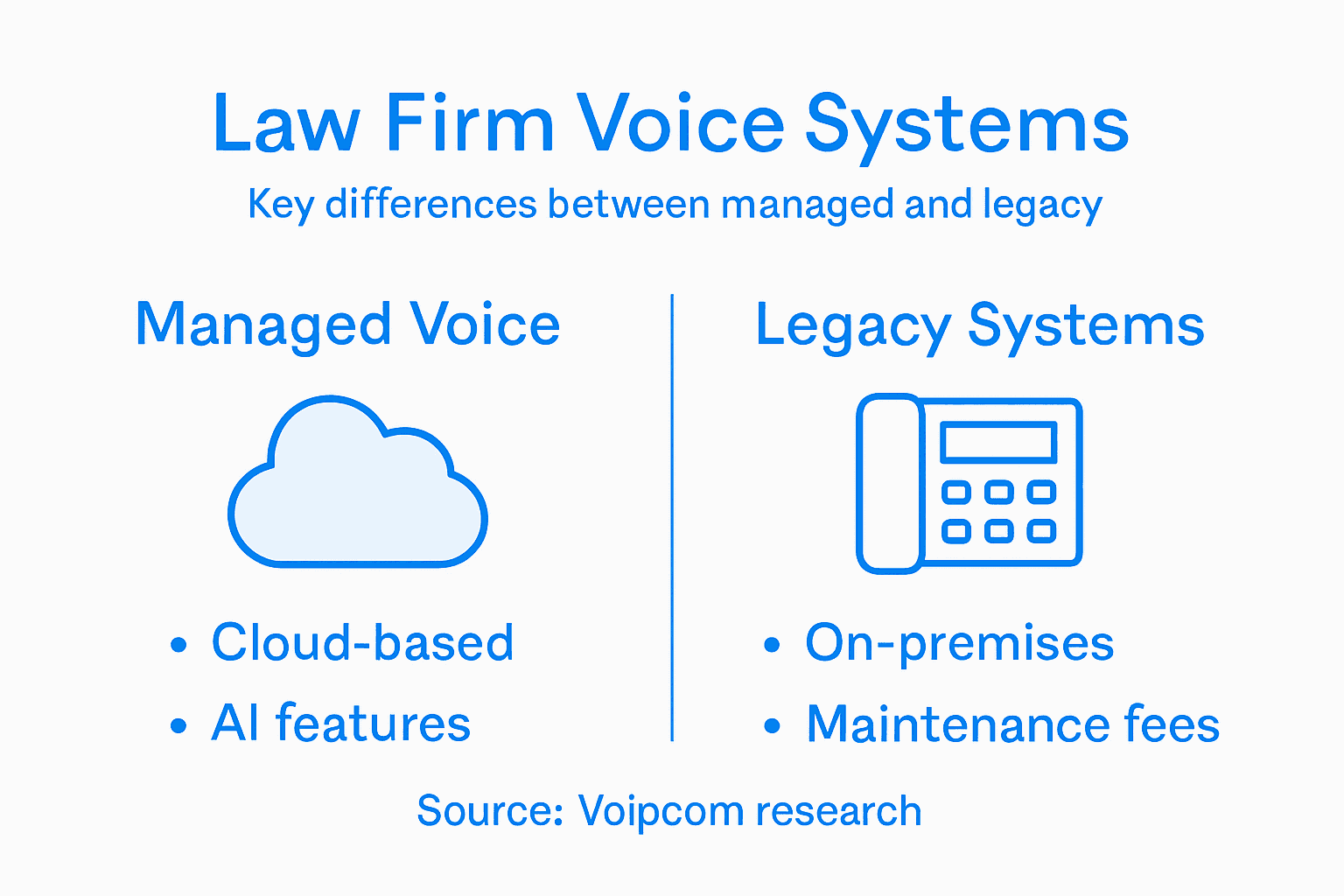
Compare legacy systems to modern managed voice solutions at a glance:
| Aspect | Legacy Systems | Managed Voice Solutions |
|---|---|---|
| Integration Options | Limited, manual | Broad, automatic software integration |
| Scalability | Restricted, hardware-dependent | Flexible, cloud-based |
| Security Measures | Basic password protection | Advanced encryption and access control |
| Ongoing Costs | High due to maintenance | Lower, predictable subscription fees |
| Remote Work Support | Minimal | Comprehensive mobile/web access |
Technology is not an expense, but an investment in your firm’s operational excellence and competitive capability.
Technological Evolution demands that law firms view their communication infrastructure as a dynamic, adaptable ecosystem. Managed voice solutions provide the agility needed to respond quickly to changing business requirements and emerging technological opportunities.
Pro tip: Conduct a comprehensive total cost of ownership analysis when comparing legacy and managed systems, considering not just hardware expenses but potential productivity gains and operational efficiencies.
Elevate Your Law Firm’s Communication with Voipcom Managed Voice Solutions
Law firms face critical challenges like protecting client confidentiality, ensuring HIPAA compliance, and managing communication workflows efficiently. This article highlights how managed voice solutions integrated with AI and secure call routing can streamline your operations while safeguarding sensitive information. If you are frustrated with outdated phone systems or concerned about compliance risks, Voipcom offers cloud-based, scalable communication platforms tailored specifically for legal professionals.
Experience modern features such as AI-powered calling, Microsoft Teams integration, and fully managed setups with no hidden fees. Our solutions empower your legal team to stay connected anywhere with robust security and seamless integration, supporting mobility and remote work without compromising client trust.
Take control of your firm’s communication and compliance today Discover Voipcom managed voice solutions.

Ready to replace your legacy phone system and enhance your firm’s productivity and security? Visit Voipcom now to schedule a consultation and learn how we can fully manage your firm’s voice and IT needs with transparent pricing and expert local support.
Frequently Asked Questions
What are managed voice solutions for law firms?
Managed voice solutions are integrated communication platforms that enhance how legal professionals collaborate, communicate with clients, and manage their daily operations. They include features like AI transcription, secure call routing, and remote accessibility, ensuring efficient communication tailored for the legal industry.
How do managed voice solutions improve compliance for law firms?
Managed voice solutions include built-in features that ensure communication meets legal industry standards. They provide automatic data encryption, secure call routing, and comprehensive access logging, all essential for maintaining client confidentiality and adhering to regulatory requirements like HIPAA.
What benefits do AI-powered managed voice solutions offer to legal practices?
AI-powered managed voice solutions streamline administrative tasks, provide real-time communication transcription, and offer intelligent call routing. These features enable law firms to operate more efficiently by reducing manual work and allowing attorneys to focus on strategic client service.
What differentiates managed voice solutions from legacy systems for law firms?
Managed voice solutions are cloud-based, offering seamless software integration and superior scalability compared to legacy systems. While legacy systems are rigid and costly to maintain, managed voice solutions provide advanced security protocols and lower ongoing expenses, transforming communication into a strategic asset for law firms.
Recommended
- Boosting Legal Firm Productivity with VoIP and Managed IT Services – Voipcom
- VoIP Security: Protecting Law Firm Communications – Voipcom
- 7 Top Features of Modern Phone Systems for Law Firms – Voipcom
- Why Switch to Cloud Phone for Law Firms – Voipcom
- Cyber Security Explained – Safeguarding Brisbane Legal Firms – IT Start