
VoIP Security: Protecting Law Firm Communications
Discover VoIP security, common threats, legal compliance such as HIPAA, and practical best practices for secure business phone systems in law firms.
By Voipcom

More than 60 percent of American law firms face security gaps in their VoIP systems that could put confidential client data at risk. For IT managers in Arizona and Colorado, secure communication is not only about keeping conversations private but also meeting strict HIPAA guidelines that protect sensitive legal and health information. This article breaks down the real threats, common mistakes, and proven strategies to help your law firm strengthen VoIP security while boosting productivity.
Table of Contents
- Defining VoIP Security And Common Misconceptions
- Types Of VoIP Threats Facing Law Firms
- Key VoIP Security Features And How They Work
- Legal Compliance Requirements For VoIP Systems
- Risks, Costs, And Mistakes To Avoid
- Best Practices For Secure VoIP Deployment
Key Takeaways
| Point | Details |
|---|---|
| Understanding VoIP Security | Law firms must adopt specialized cybersecurity measures to protect sensitive client communications against unique VoIP vulnerabilities. |
| Common Misconceptions | Many professionals incorrectly believe standard firewalls are sufficient; comprehensive countermeasures are essential for effective protection. |
| Threat Landscape | Major VoIP threats include eavesdropping, spoofing, and DoS attacks, which require multilayered security strategies to mitigate risks. |
| Legal Compliance Requirements | VoIP systems must comply with strict data protection standards, including encryption and regular security audits to ensure confidentiality and legal adherence. |
Defining VoIP Security and Common Misconceptions
Understanding Voice over Internet Protocol (VoIP) security requires moving beyond traditional telephony assumptions. VoIP telephony introduces unique communication vulnerabilities that law firms must comprehensively address to protect sensitive client information and maintain professional confidentiality.
In the legal sector, VoIP security encompasses more than standard network protection. Unlike traditional phone systems that transmitted voice signals through dedicated circuits, VoIP converts voice communications into digital data packets transmitted across internet networks. This fundamental technological shift means attorneys must implement robust cybersecurity measures specifically designed for packet-based communication systems. Potential risks include unauthorized interception, call tampering, identity spoofing, and potential network intrusions that could compromise confidential legal communications.
Common misconceptions about VoIP security often lead law firms to underestimate their technological vulnerabilities. Many professionals assume that standard network firewalls provide sufficient protection. However, secure implementation requires comprehensive countermeasures addressing multiple potential attack vectors. These include encryption protocols, secure signaling, robust authentication mechanisms, and continuous monitoring for potential network intrusions.
Pro tip: Conduct a comprehensive VoIP security audit at least quarterly to identify and address potential vulnerabilities before they become critical security risks.
Types of VoIP Threats Facing Law Firms
Law firms face a complex landscape of cybersecurity threats specifically targeting Voice over Internet Protocol (VoIP) communication systems. Sophisticated cyber vulnerabilities threaten legal communication infrastructure in ways traditional phone systems never experienced, creating unprecedented risks for confidential legal interactions.
The primary VoIP security threats confronting law firms include several critical attack vectors. Eavesdropping represents a significant risk, where unauthorized actors intercept and monitor attorney-client communications. Spoofing allows malicious actors to impersonate legitimate phone numbers, potentially tricking staff into revealing sensitive information. Denial of Service (DoS) attacks can completely disable communication infrastructure, preventing lawyers from connecting with clients, courts, or critical support networks during time-sensitive legal proceedings.
Additionally, law firms must defend against complex multi-stage cyber attacks that exploit VoIP system vulnerabilities. Phishing attempts can use compromised VoIP systems to launch social engineering campaigns, while malware can infiltrate network communications through seemingly innocent voice packets. Network-level attacks might target signaling protocols, attempting to manipulate call routing, intercept communication metadata, or inject fraudulent communication streams that appear legitimate.
Here’s how common VoIP threats differ in their impact and mitigation strategies:
| Threat Type | Primary Impact | Example Mitigation |
|---|---|---|
| Eavesdropping | Loss of client confidentiality | End-to-end encryption |
| Spoofing | Unauthorized access, data leaks | Caller ID authentication |
| Denial of Service | Communication disruption, downtime | Network redundancy plans |
| Malware | Compromised systems, data theft | Real-time threat detection |
| Phishing via VoIP | Social engineering, access breaches | User awareness training |
Pro tip: Implement a comprehensive VoIP security strategy that combines technical safeguards, regular vulnerability assessments, and continuous staff cybersecurity training to create a multi-layered defense against evolving communication threats.
Key VoIP Security Features and How They Work
Law firms require robust communication security frameworks that go beyond traditional network protections. Advanced encryption protocols safeguard legal communications by creating multiple layers of defense against potential cybersecurity threats.

Key VoIP security features operate through sophisticated technological mechanisms designed to protect sensitive communication channels. Session Border Controllers (SBCs) function as critical guardians, monitoring and filtering communication traffic to prevent unauthorized access. Transport Layer Security (TLS) encrypts signaling protocols, ensuring that connection negotiations remain confidential, while Secure Real-Time Transport Protocol (SRTP) provides end-to-end encryption for voice data packets, preventing potential eavesdropping and interception attempts.
The comprehensive security approach includes multiple defensive strategies. Network segmentation isolates VoIP traffic from other network communications, reducing potential attack surfaces. Advanced authentication mechanisms like multi-factor authentication and robust user verification processes prevent unauthorized system access. Intrusion detection systems continuously monitor network traffic, identifying and blocking suspicious communication patterns in real-time, providing law firms with proactive defense against sophisticated cyber threats.
The table below summarizes key VoIP security features and the business benefits for law firms:
| Security Feature | Function | Business Benefit |
|---|---|---|
| Session Border Controller | Monitors, filters call traffic | Blocks unauthorized access |
| Transport Layer Security | Encrypts signaling protocols | Protects call setup details |
| Secure RTP | Encrypts voice data packets | Prevents call interception |
| Network Segmentation | Isolates VoIP traffic | Reduces attack surfaces |
| Multi-factor Authentication | Requires extra verification | Prevents illegal entry |
Pro tip: Implement a comprehensive security audit that tests all VoIP communication channels quarterly, simulating potential breach scenarios to identify and address vulnerabilities before they can be exploited.
Legal Compliance Requirements for VoIP Systems
Law firms must navigate a complex landscape of legal compliance requirements specific to VoIP communication systems. Comprehensive cybersecurity regulations govern communication protocols for organizations handling sensitive legal and client information, demanding rigorous security standards beyond traditional communication frameworks.
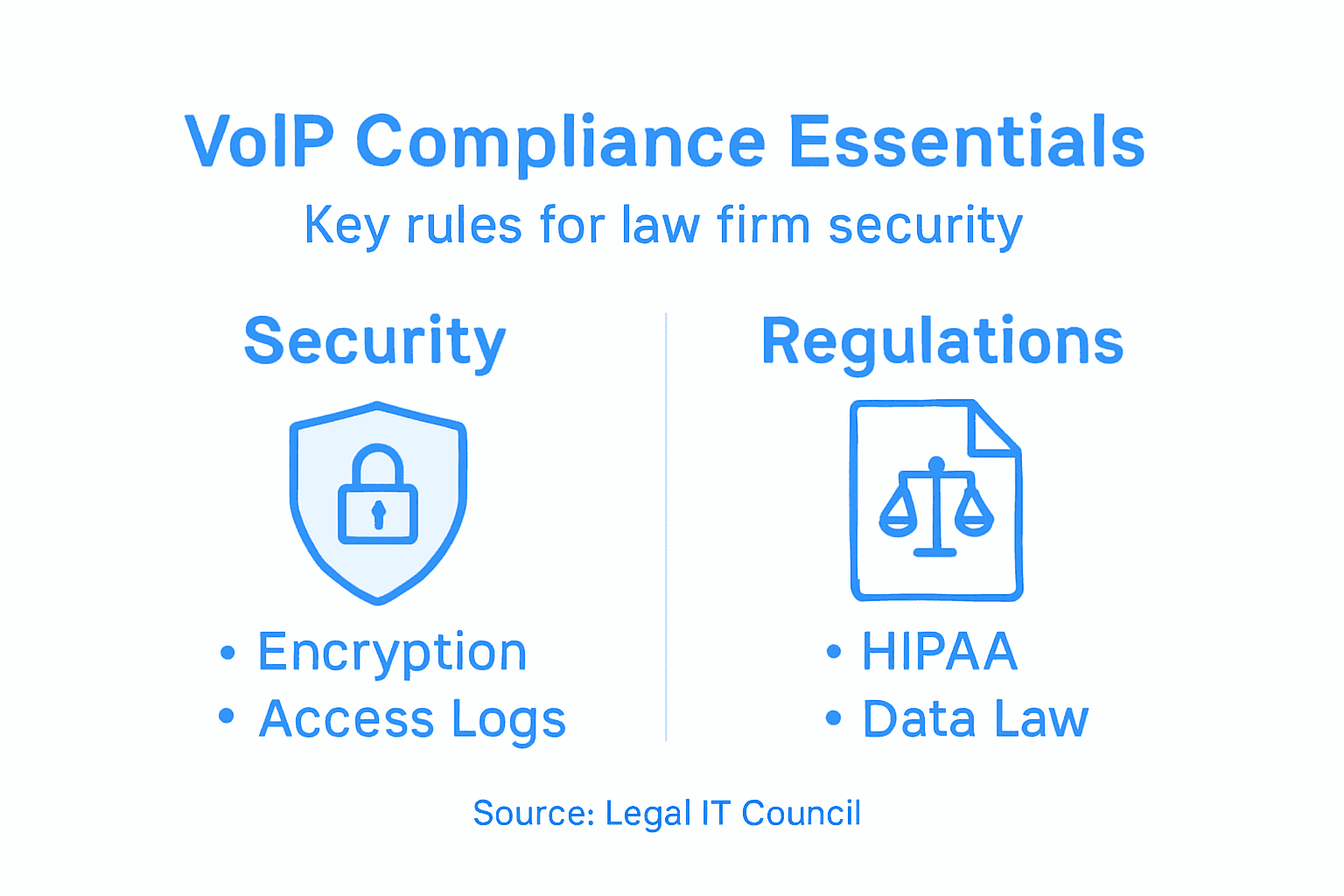
The primary legal compliance requirements for VoIP systems center around several critical dimensions. Data Protection Standards mandate comprehensive encryption of all communication channels, ensuring client confidentiality is maintained throughout transmission. HIPAA Compliance requires law firms to implement stringent access controls, audit trails, and secure transmission protocols that prevent unauthorized access to protected health and legal information. Organizations must also demonstrate continuous monitoring capabilities, with documented procedures for managing potential security incidents and maintaining comprehensive communication logs.
Beyond technical requirements, legal compliance demands a holistic approach to communication security. This includes developing robust Incident Response Plans that outline precise steps for addressing potential breaches, conducting regular vulnerability assessments, and maintaining detailed documentation of all security measures. Law firms must implement multi-factor authentication, restrict administrative access, and ensure that all VoIP systems undergo regular security audits and updates to meet evolving regulatory standards.
Pro tip: Create a dedicated compliance tracking system that automatically logs and validates your VoIP security measures, generating quarterly reports that demonstrate ongoing regulatory adherence.
Risks, Costs, and Mistakes to Avoid
Law firms implementing VoIP systems must navigate a minefield of potential technological vulnerabilities that can dramatically impact operational security and financial stability. Critical VoIP system vulnerabilities threaten organizational integrity through sophisticated attack vectors that exploit communication infrastructure weaknesses.
The primary risks emerge from multiple technological and human-factor vulnerabilities. Configuration Mistakes represent the most substantial risk, where default settings, weak authentication protocols, and improper network segmentation create exploitable entry points for cybercriminals. Potential financial consequences include service disruptions, potential data breaches, and unauthorized communication interceptions that could compromise client confidentiality. Law firms might face significant legal and reputational damages from a single security compromise, with potential costs ranging from immediate incident response expenses to long-term client trust erosion.
Specific mistakes law firms must proactively prevent include neglecting regular software updates, using weak password practices, and failing to implement comprehensive employee cybersecurity training. Sophisticated threats like caller ID spoofing, spam over internet telephony, and denial of service attacks can be mitigated through layered security approaches. Advanced protection strategies involve continuous monitoring, robust authentication mechanisms, encrypted communication channels, and developing comprehensive incident response protocols that address potential security breaches swiftly and comprehensively.
Pro tip: Develop a mandatory quarterly cybersecurity training program that simulates real-world VoIP security threats, ensuring your entire legal team remains vigilant and prepared against evolving technological risks.
Best Practices for Secure VoIP Deployment
Law firms implementing VoIP systems must adopt a comprehensive and strategic approach to communication security. Advanced cybersecurity protocols protect critical legal communications by establishing robust defensive frameworks that safeguard sensitive information against evolving technological threats.
The foundation of secure VoIP deployment involves implementing multiple layers of technological and operational safeguards. Network Segmentation emerges as a critical strategy, where VoIP traffic is isolated from other network communications to minimize potential breach surfaces. Multi-Factor Authentication becomes essential, requiring multiple verification steps beyond traditional password protection. Law firms should implement comprehensive access controls that include biometric verification, hardware tokens, and dynamic authentication protocols that adapt to changing security landscapes.
Deploying secure VoIP systems requires a holistic approach that combines technological solutions with human-centric security practices. This includes developing rigorous employee training programs that educate staff about potential cyber risks, implementing continuous monitoring systems that track and analyze communication patterns, and establishing clear incident response protocols. Session border controllers, advanced encryption mechanisms, and regular security audits form the technical backbone of a robust VoIP security strategy. Organizations must also maintain detailed logs, conduct periodic vulnerability assessments, and stay updated on the latest cybersecurity developments specific to communication technologies.
Pro tip: Conduct monthly simulated security breach exercises to test and refine your VoIP security protocols, ensuring your team remains prepared and responsive to potential technological vulnerabilities.
Secure Your Law Firm Communications with Voipcom Today
Protecting sensitive client information from interception, spoofing, and denial of service attacks is critical for law firms moving to VoIP technology. Traditional phone systems simply do not offer the necessary safeguards to prevent these sophisticated cyber threats. Voipcom understands these challenges and delivers fully managed, cloud-based VoIP solutions that combine robust encryption, multi-factor authentication, and continuous network monitoring designed specifically to keep your legal communications confidential and compliant with regulations like HIPAA.

Don’t let configuration mistakes or outdated security measures put your firm at risk. Explore our complete portfolio of voice, messaging, and cybersecurity services including Microsoft Teams integration and AI-powered calling features. Act now to simplify management, reduce costs, and gain peace of mind with local support focused on your unique needs. Start protecting your law firm by visiting Voipcom and discover how our secure hosted PBX and compliance management solutions can safeguard your communications immediately.
Frequently Asked Questions
What are the main security threats to VoIP systems in law firms?
Law firms face several security threats including eavesdropping, spoofing, denial of service attacks, malware, and phishing attempts. These threats can compromise client confidentiality and disrupt communication.
How can law firms ensure their VoIP communications are secure?
Law firms should implement a combination of advanced encryption protocols, session border controllers, multi-factor authentication, network segmentation, and continuous monitoring to protect their VoIP systems from potential cyber threats.
What legal compliance requirements do law firms need to consider for VoIP systems?
Law firms must adhere to data protection standards, HIPAA regulations if handling protected health information, and ensure continuous monitoring and incident response capabilities are in place for their VoIP systems.
What best practices should law firms follow when deploying VoIP systems?
Best practices include implementing network segmentation, utilizing multi-factor authentication, conducting regular employee training on cybersecurity, performing security audits, and maintaining detailed communication logs to safeguard VoIP communications.
Recommended
- Boosting Legal Firm Productivity with VoIP and Managed IT Services – Voipcom
- Why Switch to Cloud Phone for Law Firms – Voipcom
- Zero-Trust Architecture in 2025 – Why Legal Firms Must Adopt a Zero-Trust Model – Voipcom
- Complete Guide to Team Communication Improvement Tips – Blog
- Transparency in Legal Services: Impact on Trust and Compliance