
Why Switch to Cloud Phone for Law Firms
Learn why law firms should switch to cloud phones: lower costs, remote flexibility, security, and compliance. Discover features and pitfalls to avoid.
By Voipcom

Over half of American law firms struggle with outdated phone systems that drive up IT costs and limit flexibility. For IT managers in Arizona and Colorado, this creates daily headaches when trying to support attorneys across remote and office locations. Exploring cloud communication solutions can help cut expenses, improve client access, and equip your practice for secure mobile work—making sure your firm keeps up with industry demands and avoids common pitfalls as technology evolves.
Table of Contents
- Cloud Phone Systems Defined For Law Firms
- Comparing Cloud Phones Vs Legacy Systems
- Essential Features Supporting Legal Workflows
- Security, Compliance, And It Integration
- Cost Savings And Predictable Pricing
- Avoiding Common Switching Mistakes
Key Takeaways
| Point | Details |
|---|---|
| Cloud Phone Systems Offer Flexibility | Law firms can utilize cloud phone systems to communicate seamlessly across devices while supporting remote work and client accessibility. |
| Cost-Effective Solution | Transitioning to cloud systems reduces capital expenditures and monthly communication expenses, allowing for easier budget management. |
| Enhanced Security and Compliance | These systems provide robust security features that meet industry regulations, ensuring client communications remain confidential. |
| Strategic Transition Planning is Crucial | Comprehensive training and careful migration planning are essential to avoid common pitfalls during the switch to cloud phone systems. |
Cloud phone systems defined for law firms
Cloud phone systems represent a transformative technology that fundamentally reimagines communication infrastructure for legal practices. At their core, these systems leverage internet protocols to replace traditional telephone hardware, enabling attorneys and support staff to communicate seamlessly across multiple devices and locations. UC Berkeley Law explores how these emerging digital tools are revolutionizing legal communication.
For law firms, cloud phone systems function as sophisticated digital communication platforms that transcend traditional telephony limitations. Unlike legacy phone systems confined to physical office spaces, cloud systems allow legal professionals to make and receive calls from laptops, smartphones, and tablets – effectively creating a mobile communication ecosystem. This flexibility is critical for modern law firms that require remote work capabilities, client accessibility, and robust communication channels.
The technical architecture of cloud phone systems involves routing voice communications through secure internet connections rather than traditional copper telephone lines. Key features specifically beneficial for law firms include:
- Advanced call routing and management
- Secure voicemail-to-email transcription
- Multi-device call handling
- Professional call queuing systems
- Enhanced privacy and encryption protocols
Legal practices can leverage these systems to streamline client communication, reduce infrastructure costs, and create more agile communication workflows that adapt to evolving business needs.
Pro tip: When evaluating cloud phone systems, request a comprehensive security audit and ensure the platform meets legal industry compliance standards for client confidentiality.
Comparing cloud phones vs legacy systems
Law firms face a critical technological crossroads when evaluating communication systems, with legacy phone systems representing an increasingly obsolete approach to business communication. Harvard Law School highlights the technological limitations of traditional telephony infrastructure, noting how on-premises systems restrict operational flexibility and scalability.
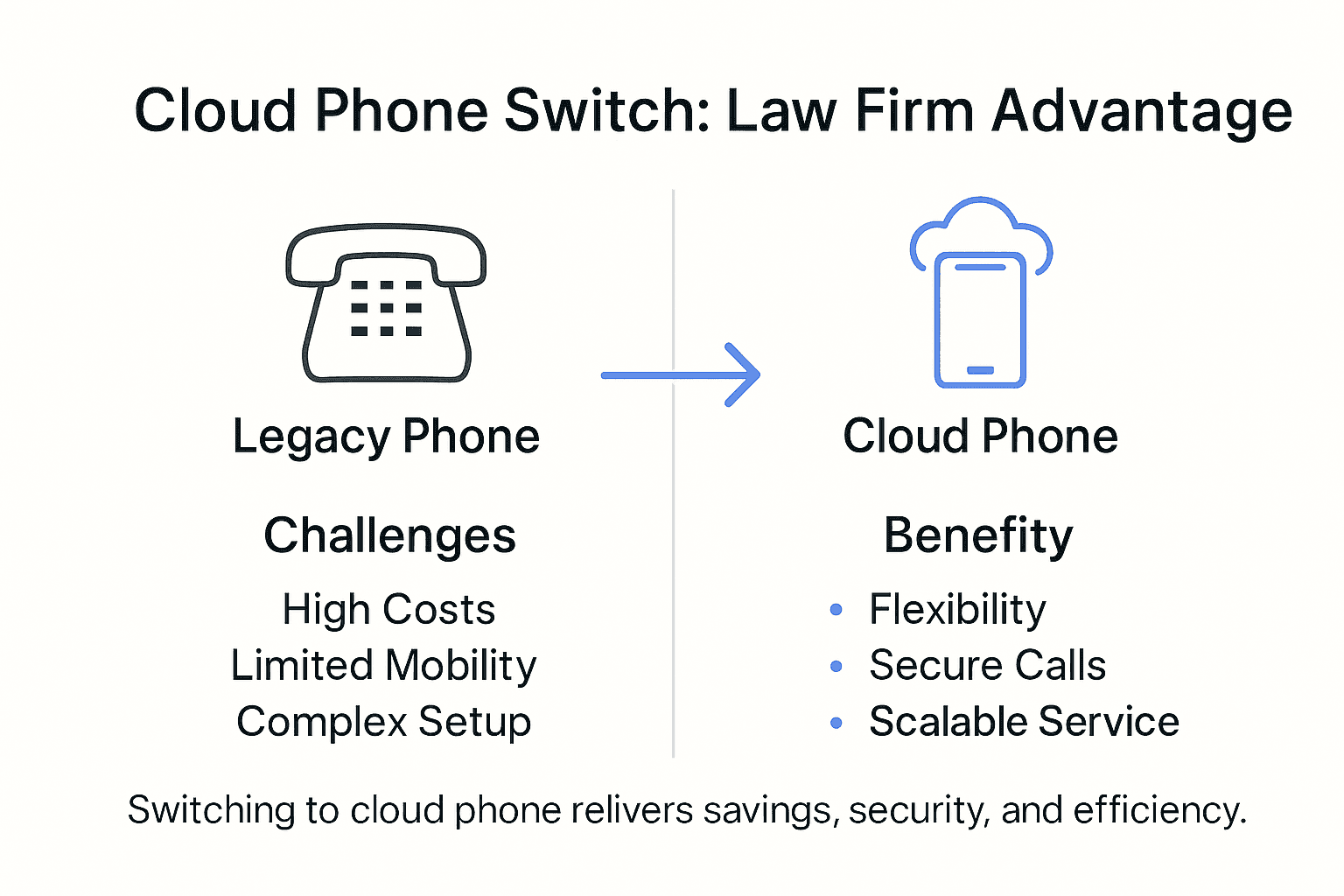
Traditional legacy phone systems are characterized by physical hardware installations that require significant upfront investment and ongoing maintenance. These systems typically involve complex on-site equipment, dedicated phone lines, and limited integration capabilities. In contrast, cloud phone systems leverage Voice over Internet Protocol (VoIP) technology to create a more dynamic, flexible communication environment that adapts to modern legal practice requirements.
Key differences between cloud phones and legacy systems include:
-
Infrastructure
- Legacy: Requires physical hardware and on-site maintenance
- Cloud: Hosted remotely with minimal physical equipment
-
Scalability
- Legacy: Expensive and complex to expand
- Cloud: Easily scalable with minimal additional investment
-
Cost Structure
- Legacy: High upfront costs and recurring maintenance expenses
- Cloud: Predictable monthly subscription with reduced hardware expenditures
-
Mobility
- Legacy: Limited to physical office phone locations
- Cloud: Accessible from multiple devices anywhere with internet connectivity
-
Technology Updates
- Legacy: Requires manual hardware replacements
- Cloud: Automatic software updates and continuous feature improvements
Legal practices transitioning to cloud phone systems can expect improved communication efficiency, reduced operational costs, and enhanced flexibility in managing client interactions across diverse work environments.
Here’s a strategic comparison of how cloud phone systems and legacy systems impact law firm efficiency:
| Category | Cloud Phone Systems | Legacy Phone Systems | Business Impact |
|---|---|---|---|
| Device Flexibility | Access on phones, tablets, laptops | Restricted to office hardware | Enables remote work |
| Cost Management | Predictable subscriptions | High upfront and maintenance fees | Easier budget planning |
| Security Measures | Advanced encryption, audit trails | Basic call logs, limited protection | Strengthens client trust |
| Integration Ability | Syncs with legal software easily | Difficult to link with other systems | Streamlines operations |
Pro tip: Conduct a comprehensive audit of your current communication infrastructure before migrating to ensure seamless integration and minimal disruption to daily operations.
Essential features supporting legal workflows
Cloud phone systems have revolutionized communication strategies for law firms, offering a comprehensive suite of features designed to enhance professional workflows. Harvard Law’s research highlights the critical technological integrations that support modern legal practice, emphasizing how advanced communication tools can dramatically improve operational efficiency.

The most sophisticated cloud phone systems for law firms go beyond simple voice communication, providing robust tools that address the unique challenges of legal professionals. Secure communication features are paramount, including end-to-end encryption, call recording capabilities, and comprehensive compliance documentation mechanisms. These functionalities ensure that sensitive client communications remain protected while maintaining a comprehensive record of interactions.
Key essential features supporting legal workflows include:
-
Compliance and Documentation
- Automatic call recording
- Voicemail-to-email transcription
- Secure file sharing during communications
-
Client Management
- Intelligent call routing
- Priority-based communication queuing
- Multi-device synchronization
-
Productivity Enhancement
- Integration with case management software
- Billing system synchronization
- AI-powered communication tracking
-
Security Protocols
- End-to-end encryption
- Secure access controls
- Comprehensive communication audit trails
Modern cloud phone systems transform legal communication from a simple telephony tool into a strategic business asset, enabling law firms to streamline operations, enhance client responsiveness, and maintain the highest standards of professional communication.
This summary highlights how cloud phone system features support core legal workflows:
| Workflow Area | Key Cloud System Feature | Operational Benefit |
|---|---|---|
| Case Management | Integration with case files | Efficient data access |
| Billing | Call tracking automation | Accurate client invoicing |
| Communications | Intelligent call routing | Faster client response times |
| Security & Privacy | End-to-end call encryption | Protects confidential information |
Pro tip: Prioritize cloud phone systems that offer seamless integration with your existing case management and billing platforms to maximize workflow efficiency.
Security, compliance, and IT integration
Law firms operate in an environment where communication security is not just a preference but a professional mandate. Harvard’s cybersecurity research underscores the critical importance of robust communication infrastructure that meets stringent professional conduct and confidentiality standards. Compliance frameworks have become increasingly complex, requiring sophisticated technological solutions that protect sensitive client information while enabling seamless professional communication.
Modern cloud phone systems represent a comprehensive approach to addressing the multifaceted security challenges faced by legal practices. These advanced platforms integrate multiple layers of protection, including virtualization technologies, secure network protocols, and comprehensive access management systems. The goal extends beyond simple data protection to creating an integrated ecosystem that supports legal workflows while maintaining the highest standards of professional confidentiality.
Key security and compliance considerations include:
-
Regulatory Compliance
- American Bar Association rule adherence
- Client confidentiality protection
- Comprehensive audit trail generation
-
Data Security Protocols
- End-to-end encryption
- Secure network virtualization
- Multi-factor authentication
-
IT Integration Features
- Seamless software ecosystem connections
- Centralized communication management
- Real-time compliance monitoring
-
Access Control
- Role-based permissions
- Granular user access management
- Automatic activity logging
By adopting cloud phone systems with robust security architectures, law firms can transform their communication infrastructure from a potential vulnerability into a strategic technological asset that enhances operational efficiency and client trust.
Pro tip: Conduct quarterly comprehensive security audits of your communication systems to ensure ongoing compliance and identify potential technological vulnerabilities.
Cost savings and predictable pricing
Law firms increasingly recognize the financial advantages of transitioning to cloud phone systems, a shift that fundamentally transforms technology spending models. Stanford Law’s technology research highlights the substantial cost reductions achieved through cloud communication platforms, demonstrating how modern telecommunications can dramatically improve financial efficiency.
The subscription-based pricing model of cloud phone systems represents a revolutionary approach to managing communication expenses. Unlike traditional phone systems requiring significant upfront capital investments and ongoing maintenance costs, cloud solutions offer predictable monthly expenses that align precisely with law firm budgetary constraints. These platforms eliminate expensive hardware purchases, reduce IT support requirements, and provide transparent, scalable pricing structures that adapt to organizational needs.
Key financial benefits include:
-
Capital Expenditure Reduction
- No hardware purchase requirements
- Elimination of infrastructure maintenance costs
- Reduced technology refresh expenses
-
Operational Cost Management
- Flat-rate monthly subscription models
- Flexible user-based pricing
- Pay-as-you-grow scalability
-
Communication Expense Optimization
- Lower long-distance call charges
- Bundled communication services
- Predictable monthly telecommunications budget
-
Indirect Cost Savings
- Reduced energy consumption
- Minimized IT support overhead
- Enhanced operational efficiency
By strategically adopting cloud phone systems, law firms can transform their communication infrastructure from a cost center into a flexible, financially intelligent investment that supports business growth and technological adaptability.
Pro tip: Request a comprehensive total cost of ownership analysis when evaluating cloud phone systems to understand the full financial impact beyond monthly subscription fees.
Avoiding common switching mistakes
Transitioning to cloud phone systems requires strategic planning and awareness of potential pitfalls that can undermine successful implementation. Stanford’s research warns about the critical challenges law firms face when adopting new communication technologies, emphasizing the importance of comprehensive preparation and thorough understanding of new system capabilities.
One of the most significant risks during cloud phone system migration involves inadequate staff training and technological adaptation. Organizational readiness is a crucial factor that many law firms overlook, potentially leading to reduced productivity, user frustration, and inefficient system utilization. The complexity of new communication platforms demands a structured approach to learning and integration, ensuring that lawyers and support staff can leverage the full potential of cloud-based technologies.
Common switching mistakes to avoid include:
-
Training Deficiencies
- Insufficient user onboarding
- Lack of comprehensive system tutorials
- Minimal hands-on practice opportunities
-
Security and Compliance Risks
- Incomplete vendor security assessments
- Inadequate data migration protocols
- Overlooking regulatory compliance requirements
-
Infrastructure Integration Challenges
- Poor compatibility with existing systems
- Insufficient network infrastructure preparation
- Lack of comprehensive migration strategy
-
Cost and Performance Miscalculations
- Underestimating total implementation expenses
- Failing to conduct performance benchmarking
- Neglecting scalability considerations
Successful cloud phone system adoption requires a holistic approach that balances technological capabilities, organizational culture, and strategic implementation planning.
Pro tip: Develop a comprehensive migration roadmap that includes staged implementation, extensive staff training, and regular performance evaluations to ensure smooth technological transition.
Upgrade Your Law Firm’s Communication With Voipcom’s Cloud Phone Solutions
The article highlights the challenges law firms face with legacy phone systems such as limited mobility, high costs, and security concerns. If your firm is struggling with outdated telephony infrastructure that restricts remote work and reliable client communication, Voipcom offers a modern, cloud-based alternative that aligns perfectly with these needs. Our solutions deliver scalable, secure, and cost-effective communication platforms featuring advanced call routing, encryption, and integration with tools like Microsoft Teams and case management software.
Experience increased flexibility and stronger client confidentiality with Voipcom. Our fully managed service includes setup, maintenance, and live, local support so your team can transition smoothly without disruption. Whether you want to reduce costs or empower your remote workforce with AI-powered calling and mobile apps, our offering fits your firm’s goals.
Discover how our cloud phone systems can modernize your legal workflows

Looking to simplify communication, improve security, and gain predictable pricing for your firm? Visit Voipcom’s cloud phone solutions to schedule a consultation. Take action now and transform your law firm’s communication infrastructure today.
Frequently Asked Questions
What are the main benefits of switching to a cloud phone system for law firms?
Cloud phone systems offer enhanced flexibility, mobility, and scalability compared to legacy systems. They allow lawyers to make and receive calls from various devices, reduce infrastructure costs, and improve communication efficiency through advanced features.
How do cloud phone systems improve security for communication in law firms?
Cloud phone systems utilize encryption, secure network protocols, and compliance documentation to protect sensitive client information. This multi-layered security approach meets legal industry standards, ensuring client confidentiality and data integrity.
What features should law firms consider when selecting a cloud phone system?
Essential features include end-to-end encryption, call recording capabilities, intelligent call routing, integration with case management software, and compliance documentation mechanisms. These features enhance workflow efficiency and communication effectiveness.
What are the common mistakes to avoid when transitioning to a cloud phone system?
Common mistakes include insufficient staff training, inadequate security and compliance assessments, challenges with existing infrastructure integration, and underestimating total implementation costs. A well-planned migration roadmap can help mitigate these issues.