

Every IT manager knows the struggle of untangling complicated communication tools while teams work both onsite and remotely. With 98% of American adults now owning a mobile device, keeping staff connected across Arizona and Colorado has become both an expectation and a challenge. This guide highlights how modern business phone solutions combine mobility, advanced features, and compliance, giving your business the tools to stay connected and flexible in a rapidly changing environment.
Table of Contents
- Understanding Mobility In Business Phones Today
- Types Of Mobile Business Phone Solutions
- Key Features For Remote And Hybrid Teams
- Security, Compliance, And Management Challenges
- Comparing Mobility With Traditional Phone Systems
Key Takeaways
| Point | Details |
|---|---|
| Mobility is Essential | Modern business communication relies heavily on mobile technology for flexibility and connectivity. Organizations should embrace mobility as a core component of their communication strategy. |
| Diverse Solutions Available | Various mobile business phone solutions cater to different organizational needs, from traditional cellular plans to advanced VoIP systems. Companies must evaluate their specific requirements to select the best option. |
| Focus on Remote Team Support | Remote and hybrid teams thrive on advanced communication technologies, requiring seamless integration of video, messaging, and collaboration tools. Ensuring secure and efficient communication is vital for productivity and cohesion. |
| Security is Crucial | With increasing reliance on mobile phones, safeguarding communication infrastructure against vulnerabilities is essential. Implementing multi-layered security measures will ensure the integrity of organizational data. |
Understanding Mobility in Business Phones Today
In today’s fast-paced business environment, mobility has transformed from a luxury to an absolute necessity. Smartphones now power business communication across industries, enabling professionals to stay connected regardless of physical location. Modern business phone systems have evolved far beyond traditional desk phones, integrating sophisticated mobile technologies that support flexible work arrangements.
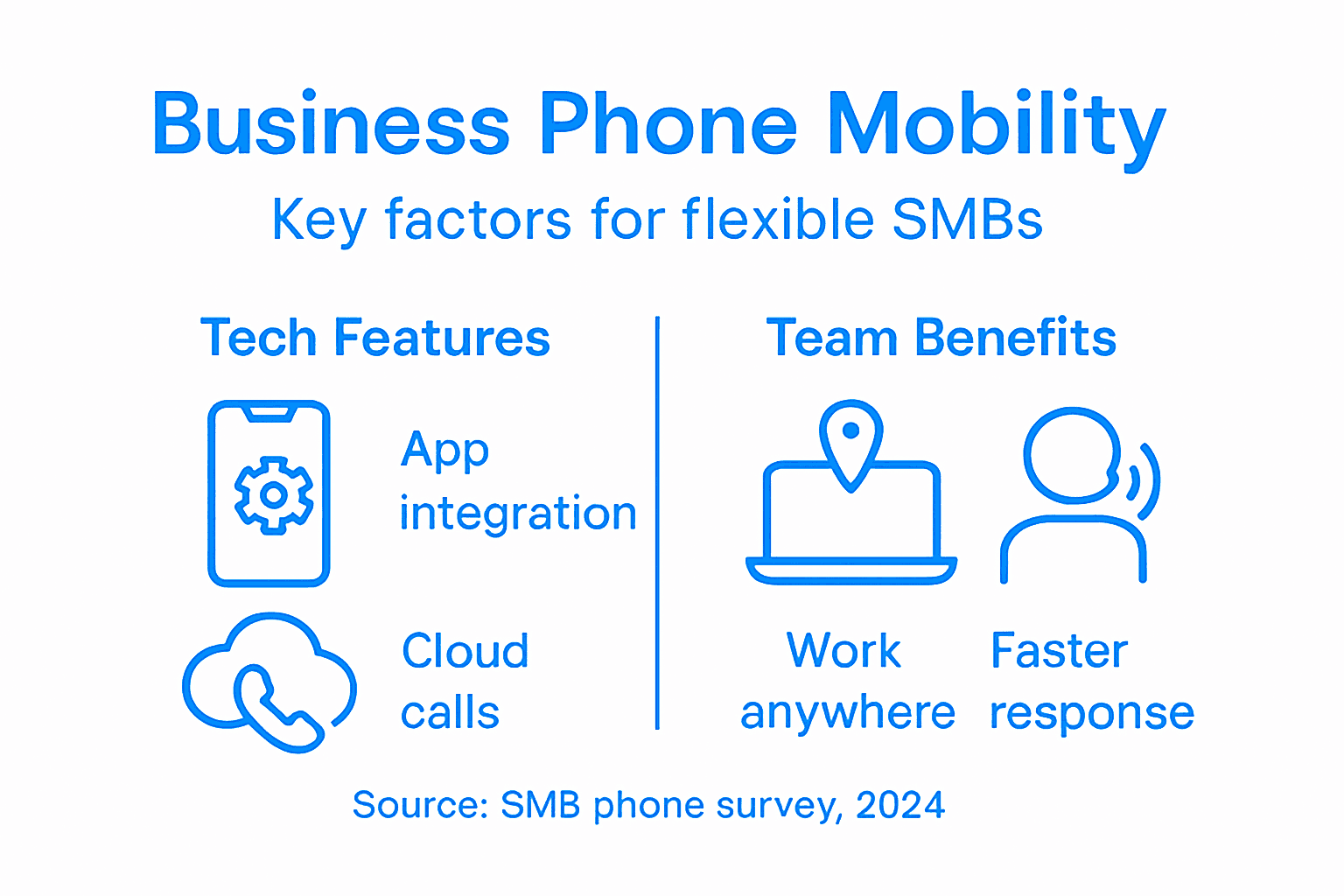
The core of business phone mobility centers on several key technological capabilities:
- Seamless Device Integration: Connecting smartphones, tablets, and laptops into a unified communication ecosystem
- Cloud-Based Phone Systems: Enabling call routing, voicemail, and messaging across multiple devices
- Advanced Mobile Applications: Providing full phone system functionality through intuitive smartphone interfaces
- Remote Work Support: Allowing employees to maintain professional communication standards from anywhere
Statistics underscore this technological shift. 98% of U.S. adults now own mobile devices, fundamentally reshaping how businesses communicate. This near-universal adoption means companies must implement mobility strategies that leverage smartphones as powerful professional tools.
Technological Evolution: Business phones are no longer stationary communication endpoints. They now function as dynamic, intelligent platforms that adapt to individual worker needs, supporting video conferencing, instant messaging, collaborative document sharing, and real-time communication across global teams.
Pro tip: Evaluate your current business phone system’s mobile capabilities and identify potential gaps in remote work communication infrastructure.
Types of Mobile Business Phone Solutions
Business phone solutions have dramatically evolved, offering multiple communication technologies to meet diverse organizational needs. Business phone systems now range from traditional landlines to advanced VoIP platforms, providing companies with unprecedented flexibility in communication strategies.
The primary types of mobile business phone solutions include:
- Traditional Cellular Plans: Standard mobile carrier packages with voice and text capabilities
- Voice over IP (VoIP) Systems: Cloud-based phone solutions enabling communication across multiple devices
- Hybrid Phone Systems: Combining landline reliability with mobile and internet communication features
- Softphone Applications: Software-based phone systems that operate through computer and smartphone interfaces
Small businesses have particularly compelling options when selecting mobile communication solutions. Business phone plans offer diverse features like unlimited talk, robust data packages, and integrated collaboration tools. These solutions enable companies to customize communication infrastructure based on specific operational requirements.
Here’s a summary of major mobile business phone solutions and their ideal use cases:
| Solution Type | Best For | Key Benefit |
|---|---|---|
| Traditional Cellular | On-the-go professionals | Reliable nationwide coverage |
| VoIP Systems | Fully remote teams | Integrates devices and locations |
| Hybrid Systems | Businesses with legacy needs | Smooth transition, high reliability |
| Softphone Applications | Tech-forward organizations | Reduces hardware, increases agility |
Technological Considerations: When evaluating mobile business phone solutions, organizations must assess factors like scalability, cost-effectiveness, integration capabilities, and mobile workforce support. The right solution should seamlessly adapt to changing business communication needs.
Pro tip: Conduct a comprehensive audit of your current communication workflows before selecting a mobile business phone solution to identify precise technological requirements.
Key Features for Remote and Hybrid Teams
Remote and hybrid teams require sophisticated communication technologies that transcend traditional office boundaries. Successful hybrid work depends on clear communication policies, enabling businesses to maintain productivity and team cohesion across diverse work environments.
Key technological features for supporting remote and hybrid teams include:
- Seamless Video Conferencing: High-quality, low-latency video communication platforms
- Cloud-Based Collaboration Tools: Shared workspaces and real-time document editing
- Mobile Device Integration: Unified communication across smartphones, laptops, and tablets
- Secure Remote Access: VPN and multi-factor authentication systems
- Virtual Call Routing: Advanced phone systems that manage calls across multiple locations
Hybrid working models require robust technology strategies that address both technical infrastructure and human collaboration needs. Modern communication solutions must provide flexibility, security, and seamless connectivity to support distributed teams effectively.

Technological Infrastructure: Organizations must invest in comprehensive communication platforms that integrate voice, video, messaging, and collaborative tools into a unified ecosystem. This approach ensures that remote employees remain connected, engaged, and productive regardless of their physical location.
Pro tip: Regularly audit your communication technology stack to identify potential integration gaps and emerging collaboration tools that could enhance your remote team’s performance.
Security, Compliance, and Management Challenges
Modern business phone systems face increasingly complex security landscapes that demand sophisticated protection strategies. Mobile business phones confront significant security vulnerabilities, including potential data breaches, unauthorized access, and sophisticated malware threats that can compromise entire organizational communication networks.
Key security and compliance challenges include:
- Authentication Complexity: Implementing multi-factor verification across diverse devices
- Data Encryption: Protecting sensitive communication channels and stored information
- Regulatory Compliance: Maintaining adherence to industry-specific security standards
- Remote Access Management: Securing connections from multiple geographic locations
- Continuous Monitoring: Detecting and responding to potential security incidents in real-time
Governance, Risk Management, and Compliance frameworks are critical for developing comprehensive mobile communication security strategies. Organizations must develop holistic approaches that integrate technological solutions with robust policy management.
Technological Safeguards: Effective mobile phone security requires a multi-layered approach that combines advanced technical controls, comprehensive user training, and adaptive security protocols. Businesses must view security not as a one-time implementation but as an ongoing, dynamic process of risk assessment and mitigation.
Pro tip: Conduct quarterly security audits and maintain an updated inventory of all mobile communication devices to identify and address potential vulnerabilities proactively.
Comparing Mobility With Traditional Phone Systems
The landscape of business communication has dramatically transformed with the emergence of mobile phone technologies. Traditional phone systems increasingly struggle to meet modern business demands, presenting significant limitations in flexibility, scalability, and feature integration that modern businesses require.
Key differences between traditional and mobile phone systems include:
- Infrastructure Requirements: – Traditional: Physical wiring, complex hardware installations
- Mobile: Cloud-based, software-driven, minimal physical infrastructure
- Communication Flexibility:
- Traditional: Limited to specific locations
- Mobile: Accessible from anywhere with internet connectivity
- Feature Set:
- Traditional: Basic voice communication
- Mobile: Integrated video, messaging, collaboration tools
- Scaling Capabilities:
- Traditional: Expensive and time-consuming
- Mobile: Rapid, cost-effective, instant configuration
Small businesses particularly benefit from mobility solutions, which offer unprecedented communication capabilities without substantial upfront investments. Mobile phone systems enable remote work, provide advanced analytics, and support dynamic business environments more effectively than traditional telephony.
Compare how mobility and traditional phone systems affect business agility:
| Aspect | Traditional Systems | Mobile Phone Systems |
|---|---|---|
| Deployment Speed | Weeks to months | Hours or days |
| Remote Capability | Limited or unavailable | Seamless, global access |
| Upgrade Process | Hardware installation | Instant, software-based |
| Ongoing Costs | Higher maintenance | Lower, subscription-based |
Technological Evolution: Mobile phone systems represent a fundamental shift from communication as a fixed utility to a dynamic, intelligent platform that adapts to individual and organizational needs. They transform phones from simple voice transmission devices into comprehensive business communication ecosystems.
Pro tip: Conduct a comprehensive audit of your current communication infrastructure to identify specific mobility features that could immediately improve your business’s operational efficiency.
Unlock True Mobility for Your Small or Medium Business
The shift to mobile business phone solutions presents both opportunities and challenges for SMBs aiming to boost flexibility and streamline remote work. This article highlights common pain points like the need for seamless device integration, cloud-based communication, and secure remote access—essential features for any growing business navigating hybrid work models and evolving technology demands.
Voipcom understands these challenges and delivers comprehensive cloud-based phone systems designed to simplify your communication infrastructure while enhancing agility. With features like AI-powered calling, Microsoft Teams integration, and mobile app softphones, we empower your team to stay connected anywhere with reliable security and local expert support. Whether you are moving away from legacy systems or seeking a scalable solution tailored to remote and hybrid teams, Voipcom’s Hosted PBX business phone system offers a cost-effective, all-inclusive approach that lowers complexity and upfront costs.
Don’t let outdated phone systems hold your SMB back from true mobility and productivity. Explore how our solutions can transform your communication experience today. Visit Voipcom now to get started with a free consultation and join the many businesses elevating their flexibility through modern cloud communications.
Frequently Asked Questions
What are the key technological capabilities that define mobility in business phones?
Mobility in business phones is characterized by seamless device integration, cloud-based phone systems, advanced mobile applications, and robust remote work support. These features allow employees to communicate effectively from anywhere, enhancing productivity and flexibility.
How do mobile business phone solutions differ from traditional phone systems?
Mobile business phone solutions offer significant advantages over traditional phone systems, including cloud-based infrastructure, greater flexibility in communication, comprehensive feature sets (like video and messaging), and easier scalability. In contrast, traditional systems often require extensive physical infrastructure and are limited to specific locations.
What are the main types of mobile business phone solutions available?
The main types of mobile business phone solutions include traditional cellular plans, Voice over IP (VoIP) systems, hybrid phone systems, and softphone applications. Each type caters to different business needs, offering varying features and benefits.
What essential features should remote and hybrid teams look for in a mobile business phone system?
Remote and hybrid teams should prioritize seamless video conferencing, cloud-based collaboration tools, mobile device integration, secure remote access, and virtual call routing. These features ensure effective communication and collaboration, regardless of the team’s physical location.
Recommended
- Business Phone Mobility Explained: Impact on Healthcare SMBs – Voipcom
- 7 Key Advantages of VoIP for SMBs: Boost Efficiency Today – Voipcom
- Why Use Softphones for Modern Business Calls – Voipcom
- Seamless Mobility Redefined: Virtual Office Phone Service at Your Fingertips – Voipcom
- Vad är företagsnätverk – Effektiv IT för företag