

Most American companies now rely on digital communication platforms instead of old-fashioned phones. This shift matters because over 80 percent of businesses say that advanced telephony features directly increase productivity. The right business telephony system does more than handle calls. It powers smooth collaboration, keeps data secure, and scales as your team grows. Exploring the essentials can help your American organization choose communication tools that truly work for you.
Table of Contents
- Defining Business Telephony: Core Concepts
- Types of Business Phone Systems Explained
- Essential Telephony Features And Terminology
- Compliance, Security, And Regulatory Considerations
- Common Mistakes And How To Avoid Them
Key Takeaways
| Point | Details |
|---|---|
| Importance of Business Telephony | Business telephony leverages modern technologies to streamline communications, enhancing efficiency and flexibility for organizations. |
| Types of Systems | Selecting the right business phone system, including PBX, VoIP, or hybrid solutions, is crucial for meeting specific organizational needs. |
| Compliance and Security | Organizations must ensure their telephony systems comply with regulatory frameworks to protect sensitive information and maintain legal standing. |
| Avoiding Mistakes | Failing to consider scalability and integration needs often leads to costly communication bottlenecks and system replacements. |
Defining Business Telephony: Core Concepts
Business telephony represents the sophisticated communication infrastructure that enables organizations to manage voice interactions, data transmission, and collaborative workflows through integrated telecommunications technology. Unlike traditional phone systems, modern business telephony solutions leverage digital networks to provide seamless, scalable communication platforms that connect teams across different locations and devices.
At its core, business telephony encompasses a range of technologies and systems designed to streamline communication processes. Key communication technologies include Voice over Internet Protocol (VoIP), private branch exchange (PBX) systems, softphones, and cloud-based communication platforms. These technologies allow businesses to transition from rigid, hardware-dependent communication models to flexible, software-driven solutions that adapt to evolving workplace dynamics.
The evolution of business telephony reflects broader technological transformations in organizational communication. As businesses transition from traditional hard phones to softphones, they gain unprecedented flexibility and efficiency. Modern telephony systems now integrate multiple communication channels, including voice calls, video conferencing, instant messaging, and collaborative tools, creating unified communication ecosystems that support remote and hybrid work environments.
Understanding business telephony requires recognizing its multifaceted nature. These systems are not merely about making and receiving calls but about creating intelligent communication networks that enhance productivity, reduce operational costs, and provide robust connectivity. From small startups to enterprise-level organizations, business telephony solutions offer scalable infrastructure that can grow and adapt to changing business needs.
Types of Business Phone Systems Explained
Business phone systems have dramatically evolved from traditional landline setups to sophisticated communication platforms that integrate multiple technologies and communication channels. Businesses now have several strategic options when selecting communication infrastructure, each designed to meet specific organizational needs and technological requirements.
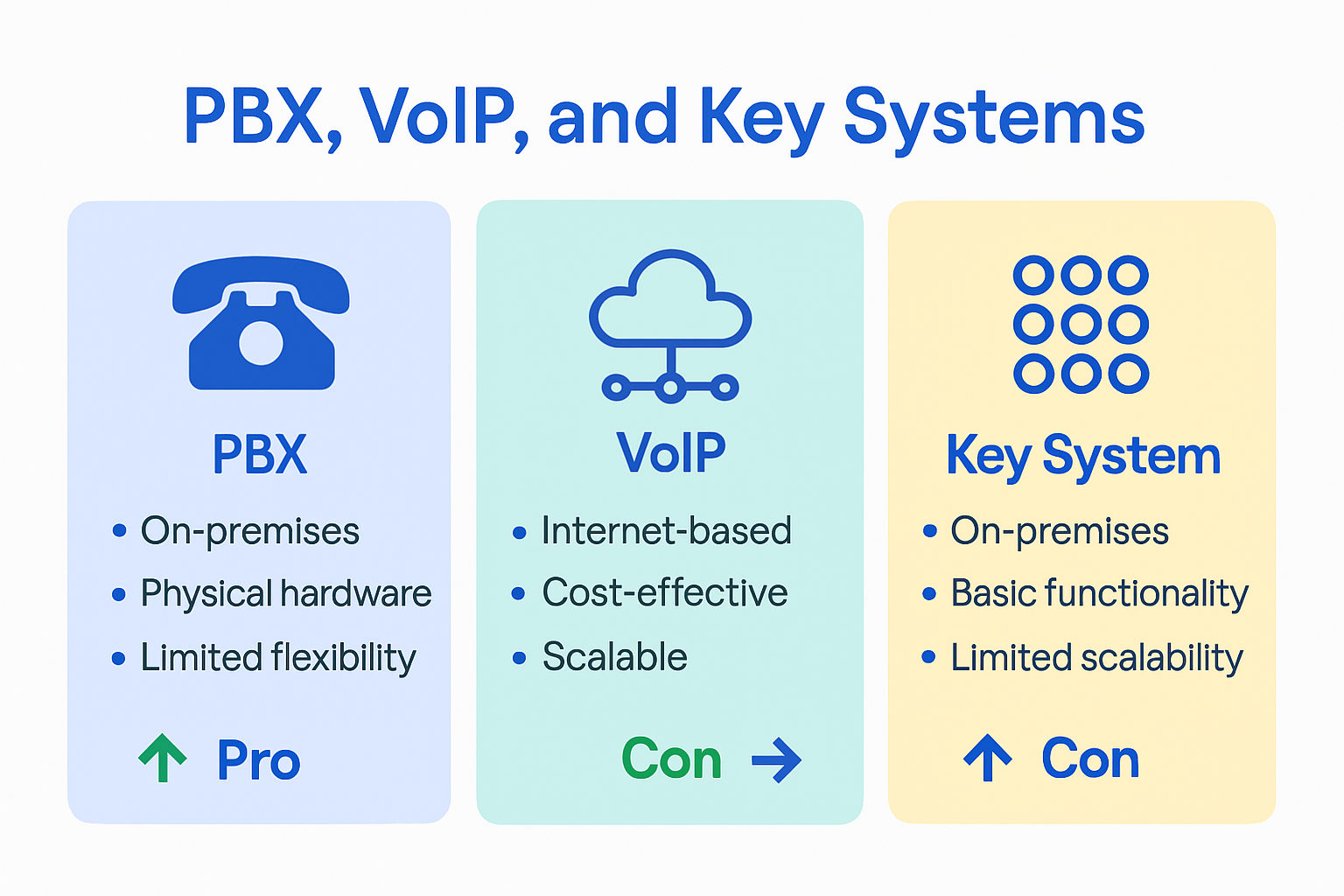
The primary types of business phone systems include Private Branch Exchange (PBX), Voice over Internet Protocol (VoIP), and hybrid solutions. Traditional PBX systems utilize physical hardware to route internal and external telephone calls, typically requiring significant upfront investment and maintenance. In contrast, VoIP systems leverage internet connectivity to transmit voice data, offering greater flexibility, scalability, and cost-effectiveness for modern businesses. Hybrid cloud networked solutions bridge the gap between legacy infrastructure and cutting-edge communication technologies, allowing organizations to transition smoothly while maintaining existing communication investments.

Modern business phone systems are characterized by their ability to integrate multiple communication channels beyond traditional voice calls. These advanced platforms support video conferencing, instant messaging, collaborative tools, and mobile device integration, creating comprehensive communication ecosystems. Businesses can now choose systems that align precisely with their operational complexity, workforce distribution, and technological infrastructure. Smaller organizations might prefer cloud-based VoIP solutions that offer low initial costs and minimal technical overhead, while larger enterprises might require more robust, customizable systems with advanced routing and reporting capabilities.
Understanding the nuanced differences between business phone system types is crucial for making informed technology investments. Key considerations include scalability, cost structure, feature set, integration capabilities, and long-term adaptability. By carefully evaluating these factors, organizations can select communication technologies that not only meet current needs but also provide flexibility for future growth and technological innovation.
Essential Telephony Features and Terminology
Modern business telephony has evolved into a complex ecosystem of advanced communication technologies, with each feature designed to enhance organizational efficiency and connectivity. Understanding the essential terminology and features is crucial for businesses seeking to optimize their communication infrastructure and leverage technology strategically.
Several core telephony features have become fundamental to contemporary business communication. Interactive Voice Response (IVR) systems automatically route incoming calls, allowing callers to navigate complex phone menus without human intervention. Computer Telephony Integration (CTI) represents another critical feature, seamlessly connecting telephone systems with computer software to provide comprehensive communication management. Advanced businesses now utilize voicemail-to-text technologies that automatically transcribe voice messages, enabling faster and more efficient communication processing.
Call management features represent the backbone of sophisticated telephony systems. These include auto attendants that professionally manage incoming calls, call routing mechanisms that direct communications to appropriate departments or individuals, and conference calling capabilities that support seamless multi-participant discussions. Modern telephony solutions also incorporate mobile device integration, allowing employees to access business communication tools from smartphones, tablets, and laptops, supporting increasingly flexible and distributed work environments.
The terminology and features of business telephony continue to expand rapidly, driven by technological innovation and changing workplace dynamics. From AI-powered call analytics to advanced call queuing systems, businesses now have unprecedented tools to streamline communication, improve customer interactions, and optimize operational efficiency. Selecting the right combination of features requires careful consideration of organizational size, industry requirements, and long-term communication strategy.
Compliance, Security, and Regulatory Considerations
Business telephony systems must navigate an increasingly complex landscape of regulatory requirements, particularly for industries handling sensitive information like healthcare, finance, and legal services. Maintaining rigorous compliance standards is no longer optional but a critical operational necessity that directly impacts an organization’s risk management and legal standing.
Key regulatory frameworks such as HIPAA for healthcare, PCI DSS for payment systems, and GDPR for data protection establish stringent guidelines for communication technologies. These regulations mandate comprehensive security protocols including end-to-end encryption, secure data transmission, access controls, and detailed audit trails. Telephony systems must implement multi-layered security mechanisms that protect against unauthorized access, prevent data breaches, and ensure the confidentiality of sensitive communications across voice, video, and messaging platforms.
Complex industries require specialized compliance approaches tailored to their unique regulatory environments. Medical practices, for instance, must ensure that all communication technologies adhere to HIPAA’s strict privacy rules, which cover everything from call recording to voicemail management. Financial institutions face equally demanding requirements from regulators like the Securities and Exchange Commission (SEC) and Financial Industry Regulatory Authority (FINRA), necessitating comprehensive communication monitoring and preservation systems that can withstand rigorous compliance audits.
The evolving technological landscape demands continuous adaptation to emerging security challenges. Modern telephony solutions must not only meet current regulatory standards but also provide flexible infrastructures that can rapidly adjust to new legal requirements. This means implementing robust cybersecurity measures, maintaining comprehensive documentation of communication processes, and developing proactive strategies for identifying and mitigating potential compliance risks before they become critical vulnerabilities.
Common Mistakes and How to Avoid Them
Business telephony implementation is fraught with potential pitfalls that can undermine an organization’s communication effectiveness and technological investment. Understanding common mistakes helps businesses make more informed decisions about their communication infrastructure, preventing costly missteps that could compromise operational efficiency.
One of the most significant errors organizations make is underestimating future scalability requirements. Businesses frequently select telephony systems based on their current workforce size and communication needs, neglecting potential growth and technological evolution. This myopic approach can lead to expensive system replacements or complex migrations when companies outgrow their initial infrastructure. Prudent organizations conduct comprehensive needs assessments that project communication requirements three to five years into the future, ensuring their telephony solutions can seamlessly expand alongside their operational demands.
Technological compatibility and integration represent another critical area where businesses often stumble. Many organizations fail to thoroughly evaluate how new telephony systems will integrate with existing software platforms, customer relationship management (CRM) tools, and enterprise resource planning (ERP) systems. Compatibility challenges can create significant communication bottlenecks, preventing smooth information flow and reducing overall operational productivity. Successful telephony implementations require meticulous planning, including detailed technical assessments of existing technological ecosystems and potential integration points.
Compliance and security considerations frequently represent blind spots in telephony system selection. Organizations, particularly those in regulated industries like healthcare and finance, must ensure their communication technologies meet stringent legal and regulatory standards. This means going beyond basic feature checklists and conducting comprehensive security audits, understanding data protection requirements, and implementing robust encryption and access control mechanisms. The most sophisticated businesses treat their telephony infrastructure as a critical security component, not merely a communication tool, thereby protecting sensitive organizational and client information from potential breaches.
Unlock the Power of Clear Business Telephony Terminology with Voipcom
Understanding complex business telephony terms like PBX, VoIP, IVR, and CTI is the first step toward transforming your communication system into a flexible, scalable, and secure asset. If you are struggling with outdated systems, confusing technical jargon, or uncertain how to implement scalable solutions that fit your growing team, Voipcom is here to simplify that journey. We specialize in cloud-based phone systems designed to integrate seamlessly with your current workflows and future-proof your business communication.
Our comprehensive solutions include hosted PBX, Microsoft Teams integration, AI-powered calling, and full compliance management so you never have to worry about security or regulatory risks. Whether you need seamless mobile user support, voicemail-to-email features, or a system that grows with your business, Voipcom delivers unmatched reliability, transparent pricing, and a local support team dedicated to your success.
Improve your communication today by exploring our Voice & Telephony services.

Ready to eliminate confusion and gain control over your business telephony? Visit Voipcom now to schedule your personalized consultation and see how easy modern communication can be. Take the first step toward a smarter, more productive phone system built for your business needs.
Frequently Asked Questions
What is business telephony?
Business telephony refers to the advanced communication infrastructure that enables organizations to manage voice interactions, data transmission, and collaborative workflows using integrated telecommunications technologies. It includes systems like VoIP, PBX, and cloud-based platforms.
What are the main types of business phone systems?
The primary types of business phone systems include Private Branch Exchange (PBX), Voice over Internet Protocol (VoIP), and hybrid solutions that combine both traditional and modern technologies, optimizing communication for various organizational needs.
What essential features should a business telephony system have?
A modern business telephony system should include features such as Interactive Voice Response (IVR), Computer Telephony Integration (CTI), voicemail-to-text, advanced call management, and mobile device integration to enhance communication efficiency and support remote work.
How do compliance and security affect business telephony systems?
Compliance and security are critical for business telephony systems, particularly for industries handling sensitive information. Organizations must ensure their systems adhere to regulatory requirements like HIPAA, PCI DSS, and GDPR, implementing robust security measures to protect data and communication privacy.