


Running a small business in Arizona or Colorado often means juggling customer relationships while coordinating a remote team. Finding ways to keep customers engaged without overspending feels challenging, especially when traditional marketing channels are crowded. Discover how a well-planned SMS campaign gives you a direct and personal line to your customers’ mobile devices, blending cost-effective communication with the agility your workforce demands.
Key Takeaways
| Point | Details |
|---|---|
| Effective SMS Campaigns Require Planning | Clear goals, defined audience segments, and compelling messages enhance the effectiveness of SMS campaigns. Proper timing is essential for maximizing customer engagement. |
| Understand Legal Compliance | Adhere to the CAN-SPAM Act and TCPA regulations to avoid legal issues and maintain customer trust. Ensure that opt-in consent is obtained before sending promotional messages. |
| Integration Increases Efficiency | Seamlessly integrate SMS with other communication channels to create a cohesive customer experience. This helps ensure consistent messaging and better customer interactions. |
| Analyze and Optimize Campaigns | Regularly monitor engagement metrics and customer responses to refine campaigns over time. Use A/B testing to determine the most effective messaging strategies. |
Defining SMS Campaigns for Business
SMS campaigns are structured, purposeful communication initiatives that use text messaging to reach and engage customers directly on their mobile devices. Unlike random text messages, a business SMS campaign is a coordinated attempt to inform or influence behavior across large customer groups within a defined timeframe. These campaigns combine careful planning, targeted messaging, and strategic timing to achieve specific business objectives such as driving sales, confirming appointments, delivering notifications, or building customer loyalty.
Voipcom delivers business SMS and phone service in Denver, CO and business texting for Phoenix companies from local offices. For the rest of the stack, see cloud phone service for Phoenix and Denver businesses.
Think of an SMS campaign as your direct line to customers’ pockets. When a customer’s phone buzzes with a text from your company, they notice it immediately. Unlike emails that sit in crowded inboxes for days, text messages get read within minutes of arrival. This immediacy makes SMS campaigns uniquely powerful for time-sensitive communications like flash sales, appointment reminders, or urgent service updates. For businesses across the Denver Tech Center managing fast-paced operations or Phoenix companies competing in the Silicon Desert marketplace, SMS campaigns bridge the gap between staying top of mind and respecting customer boundaries. A well-crafted SMS campaign feels personal and relevant, not intrusive.
The anatomy of an effective SMS campaign includes several key components. You need a clear goal (what do you want customers to do?), a defined audience segment (who should receive this message?), compelling message content (what makes them want to act?), and proper timing (when will they be most receptive?). Mobile campaigns now function as primary marketing tools rather than supporting players in your overall strategy. Whether you’re sending promotional offers, transactional confirmations, appointment reminders, or customer surveys, each SMS serves a specific purpose within your broader engagement plan. The constraint of SMS length (typically 160 characters) actually forces clarity. Your message cannot afford vague language or unclear calls to action.
What distinguishes business SMS campaigns from casual text messaging is the infrastructure behind them. You’re not manually texting customers one by one. You’re using a dedicated platform that handles delivery at scale, tracks engagement metrics, manages opt ins and opt outs, and maintains compliance with regulations like TCPA guidelines. This is why many businesses in Arizona and Colorado partner with telecommunications providers who understand both the technical requirements and the local business context. When you’re coordinating campaigns across multiple locations or managing remote teams, having SMS services integrated with your business phone system simplifies everything from message approval workflows to reporting on campaign performance.
Pro tip: Start by identifying one specific customer action you want to drive (booking an appointment, completing a purchase, attending an event), then design your SMS campaign around that single objective rather than trying to accomplish multiple goals in one message.
Types of SMS Campaigns and Their Uses
Not all SMS campaigns work the same way. Different business goals require different approaches, and understanding which campaign type fits your objective is crucial for success. The main categories break down into interactive campaigns, informational campaigns, and promotional campaigns, each serving distinct purposes in your customer engagement strategy. Interactive SMS campaigns invite customers to take an action directly within the message, such as voting, entering contests, or placing orders. Informational SMS campaigns deliver important updates like appointment reminders, delivery notifications, or account alerts. Promotional campaigns focus on driving sales through limited time offers, exclusive deals, or product announcements. For businesses operating across Denver’s Tech Center or Phoenix’s Roosevelt Row district, selecting the right campaign type can mean the difference between messages that get ignored and messages that drive real results.
Let’s explore the specific campaign types you can deploy. Text to Vote campaigns invite customers to participate in polls or entertainment contests by texting a code or keyword. A fitness studio in Denver might run a “Text VOTE to 12345 to choose our next class offering” campaign. Text to Win campaigns allow customers to enter sweepstakes or contests, generating excitement and opt in lists for future marketing. Click to Call campaigns embed a clickable phone number in your text, letting customers instantly call your business for more information or to schedule an appointment. Click to Order campaigns let customers request brochures, product information, or even complete purchases directly from the text message. These interactive SMS types give customers multiple ways to engage rather than just reading and deleting. Transactional campaigns send order confirmations, shipping updates, or password resets. Notification campaigns alert customers to important events like service outages, weather emergencies, or time sensitive offers. SMS campaigns adapt to different business communication needs, whether you’re in crisis communication, customer service, or growth marketing.
Here’s how different industries use SMS campaign types effectively. An Arizona healthcare provider might send appointment reminders and lab result notifications to reduce no shows and improve patient engagement. A Colorado retail chain uses promotional campaigns to announce flash sales, driving foot traffic to physical locations during slow periods. A professional services firm in Phoenix uses informational campaigns to deliver client updates and educational content that positions them as industry experts. A Denver restaurant group sends text to win campaigns offering free appetizers, building loyalty and encouraging repeat visits. A manufacturing company uses click to call campaigns during trade shows, allowing prospects to immediately schedule demos. The versatility of SMS means you can layer different campaign types throughout your customer journey from acquisition through retention.
Here’s a quick comparison of major SMS campaign types and their practical business benefits:
| Campaign Type | Typical Use Case | Key Business Benefit |
|---|---|---|
| Interactive | Polls, contests, direct responses | Boosts engagement and opt-in rates |
| Informational | Reminders, alerts, confirmations | Increases reliability and trust |
| Promotional | Flash sales, offers, announcements | Drives sales and customer acquisition |
| Transactional | Order updates, password resets | Improves customer satisfaction |
| Notification | Emergency/weather alerts, outages | Enhances safety and real-time response |
When selecting campaign types, consider your audience’s preferences and your measurable business outcome. Not every customer wants promotional blasts, but most appreciate timely information relevant to their needs. A customer who books an appointment at your Denver salon absolutely wants a reminder text 24 hours before. That same customer might appreciate a weekly “member exclusive” promotion, but probably not daily promotional messages. Start with transactional and notification campaigns that provide genuine value, then gradually introduce promotional campaigns to engaged segments. This builds trust before asking customers to take sales driven actions. The most successful SMS programs mix campaign types strategically, creating a rhythm of communication that feels helpful rather than intrusive.
Pro tip: Test one campaign type at a time with a small audience segment, measure engagement and response rates, then scale what works before launching your next campaign type to avoid overwhelming your customer base.
How SMS Messaging Platforms Work
When you hit send on an SMS campaign to your customers, a lot happens behind the scenes in just seconds. An SMS messaging platform acts as the bridge between your business application and the mobile networks that deliver texts to your customers’ phones. The platform handles everything from managing your contact lists and scheduling messages to tracking delivery status and collecting engagement metrics. For businesses in Denver managing operations across multiple locations or Phoenix companies coordinating campaigns across time zones, understanding how these platforms function helps you make better decisions about which features matter most for your specific needs. The core job of an SMS platform is simple: take your message, route it through the telecommunications network, and ensure it reaches the right person at the right time.
The technical backbone of SMS delivery relies on established network protocols and switching systems. When you send an SMS, it travels from your device or platform through a mobile switching center to a Short Message Service Center (SMSC), which acts as the hub for all message routing. Messages flow through mobile originated and mobile terminated processes that coordinate between your phone, the network infrastructure, and the recipient’s phone. The platform you use communicates with the SMSC using industry standard protocols like SMPP (Short Message Peer to Peer), which handles message submission, delivery confirmation, and error handling. This protocol layer ensures reliable transmission even when networks are congested or messages encounter routing complications. The SMPP protocol enables high volume messaging with features like delivery receipts that confirm when messages actually reached customer phones, plus support for longer messages through concatenation. Without these protocols working in the background, you would have no way to track whether your important appointment reminder actually made it to your customer’s inbox.

A business SMS platform abstracts away most of this complexity so you can focus on your campaign goals rather than network mechanics. Here’s what a typical platform provides. Message management lets you compose, schedule, and store templates for recurring campaigns. Contact database integration connects your customer lists, allowing you to segment audiences by location, purchase history, or engagement level. Delivery tracking shows you real time status on every message, distinguishing between sent, delivered, failed, and bounced messages. Two way messaging enables customers to reply to your texts, creating conversations rather than one directional broadcasts. API integration allows your SMS platform to talk to your CRM, appointment system, or e-commerce platform, automating messages based on customer actions. Compliance management ensures you maintain proper opt in records and follow regulations like TCPA requirements that govern business SMS in the United States. For a Denver tech startup or Phoenix professional services firm managing remote teams, these features mean you can automate appointment reminders without manually texting each customer or integrate SMS alerts into your existing business software stack.
When evaluating SMS platforms for your business, focus on reliability and integration capabilities rather than getting lost in technical specifications. A platform should offer 99.9 percent uptime guarantees since missing a delivery means missing a customer touchpoint. Look for platforms that provide comprehensive business messaging solutions integrated with your phone system and other tools you already use. The best platforms show you clear analytics on message delivery rates, open rates (where applicable), and response rates so you understand which campaigns actually drive results. Two way messaging capability becomes increasingly important if you want SMS to function as a customer service channel rather than just a broadcast tool. Finally, verify that the platform handles the character limits of SMS gracefully, either by helping you craft concise messages or by automatically breaking longer messages into multiple texts that still arrive as a single conversation.
To help you select an SMS platform, here’s a summary of essential features and their business advantages:
| Platform Feature | What It Enables | Why It Matters for Business |
|---|---|---|
| Delivery Tracking | Monitors sent/delivered messages | Ensures message reach and immediate action |
| Contact Segmentation | Targets specific customer groups | Improves message relevance and effectiveness |
| API Integration | Connects to other business tools | Automates workflows and saves staff time |
| Compliance Management | Maintains consent and opt-outs | Reduces legal risk and builds customer trust |
Pro tip: When choosing an SMS platform, ask specifically about delivery speed and uptime guarantees, then test with a small campaign to verify that messages arrive within seconds and that the platform’s reporting accurately reflects what your customers actually receive.
Compliance and Legal Rules for SMS Marketing
Sending SMS campaigns without understanding the legal requirements is like driving without checking traffic laws. You might get away with it for a while, but eventually you will face serious consequences. The United States has established clear regulations governing business SMS marketing, and ignoring them can result in hefty fines, lawsuits, and damaged business reputation. The primary regulation you need to know is the CAN-SPAM Act, which sets the baseline for all commercial electronic messaging including SMS. Beyond CAN-SPAM, additional rules like TCPA (Telephone Consumer Protection Act) regulations apply specifically to SMS and robocalls. For businesses operating in Denver and Phoenix, compliance is not just a legal requirement but also a competitive advantage. Customers trust businesses that respect their privacy and follow proper rules. Non-compliance signals that you cut corners, which erodes customer confidence faster than almost anything else.
The CAN-SPAM Act requires that your SMS marketing messages include several key elements. Commercial SMS must contain truthful header information and clear disclosure of commercial intent, meaning recipients must immediately understand they are receiving a promotional message. Your business name or identifier must appear in the message itself or be immediately obvious from context. You must include a valid physical business address so customers can find you if they have complaints. Your messages must include clear, easy to follow opt out instructions. A customer should be able to text back “STOP” and be removed from your list. Your business must honor opt out requests within ten business days. The CAN-SPAM Act also prohibits deceptive subject lines or sender information. Do not try to disguise a promotional message as transactional. This transparency requirement actually works in your favor because it builds customer trust when people feel respected rather than manipulated.
The TCPA adds another layer of requirements specific to SMS and automated calling. Under TCPA regulations, you generally need prior express written consent before sending promotional SMS to cell phones. This means a customer should actively opt in to receive your messages, not just fail to opt out. The consent document should clearly disclose that they are agreeing to receive SMS marketing. You must maintain detailed records of when and how customers consented. You cannot use automated systems to send SMS without proper consent. You must respect the National Do Not Call Registry and the National Consumer Do Not Text Registry. Respecting consumer preferences and maintaining opt in consent helps you avoid legal liability and protects your business reputation. For a Denver e-commerce company or Phoenix healthcare provider, this means your sign-up forms should explicitly ask customers to check a box confirming they want SMS marketing. Do not pre-check that box or hide it in fine print.
Practical compliance means building these requirements into your SMS infrastructure from the start. Your SMS platform should make it easy to manage consent records, track when customers opted in, and process opt out requests automatically. When you send campaigns, include your business name and a clear opt out mechanism in every message. Keep SMS messages professional and truthful. Do not make false claims or exaggerate benefits. If you are sending time sensitive transactional messages like appointment reminders or delivery notifications, these are treated differently from promotional campaigns and have less stringent requirements. The key distinction is intent. If your primary purpose is to promote a product or service, it is promotional and requires full CAN-SPAM and TCPA compliance. If your purpose is to confirm a transaction or provide information about a service the customer already requested, it is transactional. Many businesses use SMS for both purposes. Keep them separate and manage compliance accordingly. When you work with an SMS platform provider, verify that they maintain proper compliance infrastructure and support your ability to document consent.
Pro tip: Document customer consent in writing (screenshots of opt in forms work) and keep records for at least three years, then conduct quarterly audits of your SMS lists to ensure people who opted out are actually removed and that your messaging practices remain compliant with current regulations.
Integrating SMS With Business Communications
SMS does not live in isolation. The most effective customer engagement strategies treat SMS as one channel within a broader communication ecosystem that includes email, phone, chat, social media, and in-person interactions. When SMS integrates seamlessly with your other business communications, you create a cohesive experience where customers can reach you however they prefer and receive consistent messages across all touchpoints. A customer might start a conversation via email, continue it through SMS, and finish it with a phone call, all without repeating information or feeling like they are talking to different companies. For businesses in Denver managing fast-paced client relationships or Phoenix companies coordinating across multiple departments, this integrated approach transforms SMS from a marketing tool into a comprehensive communication platform that strengthens customer relationships.
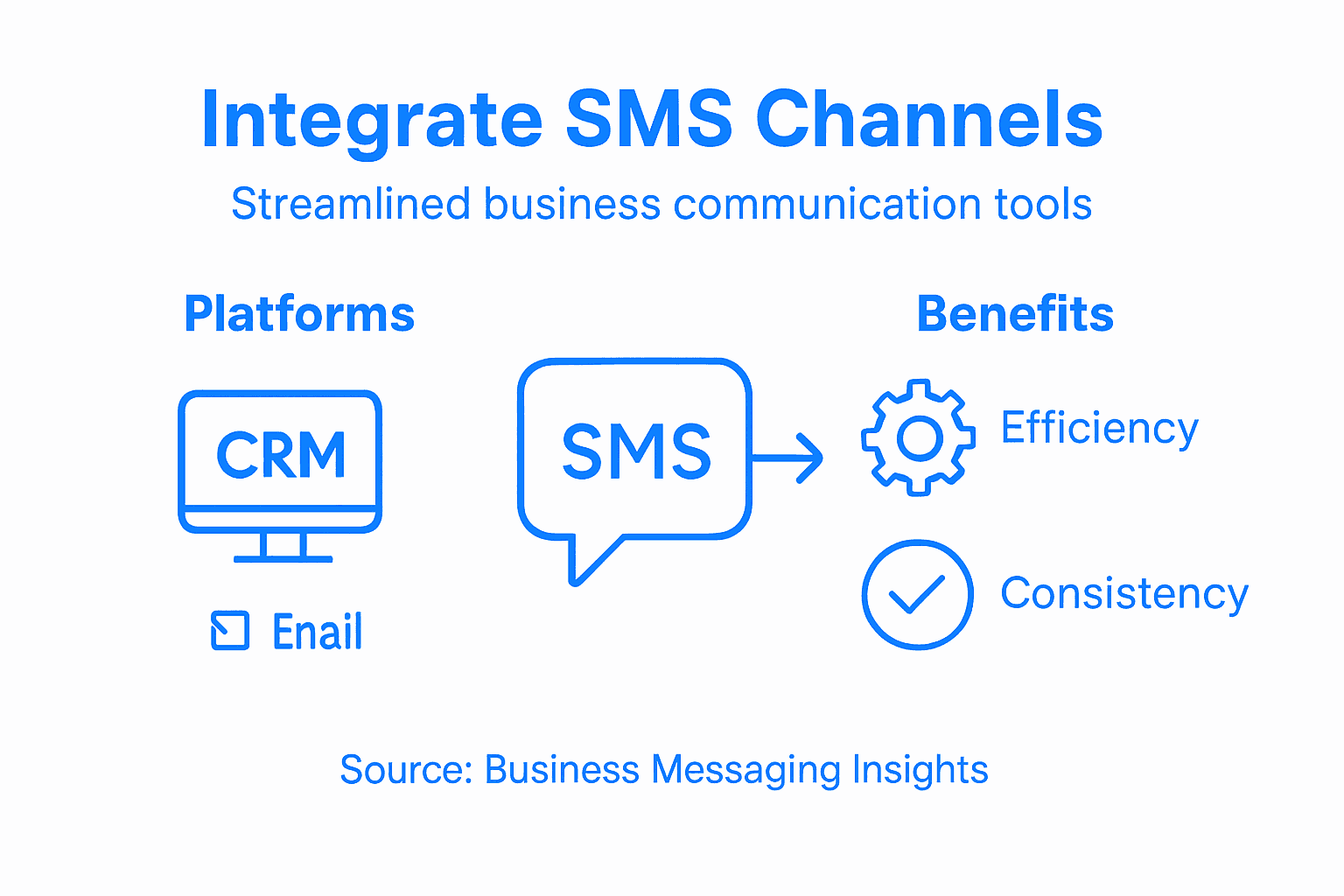
Modern business communication systems are designed with integration in mind. SMS services now integrate across fixed networks and internet platforms, enabling businesses to include SMS within broader communication infrastructures. Your SMS platform should connect with your Customer Relationship Management (CRM) system so that every text message gets logged in a customer’s communication history alongside emails and calls. This integration means your sales team can see that a customer received a promotional SMS three days ago when they follow up by phone. Your customer service team can see the full conversation thread even if part of it happened via text. Your marketing team can segment audiences based on SMS engagement metrics. When SMS integrates with your phone system, incoming text replies can route to the right department automatically. A customer texting “Cancel my appointment” should reach your scheduling team, not your sales department. SMS’s role as a versatile communication tool complements digital strategies by providing direct, timely messaging that feels personal and immediate.
Integration creates operational efficiency and better customer experiences simultaneously. Start with the basics: ensure that your SMS platform exports data to your CRM and that customer consent records sync automatically. Many businesses benefit from integration with appointment systems, so SMS reminders pull real time data directly from your calendar. E-commerce businesses integrate SMS with order management systems to send automated shipping updates without manual intervention. Customer service teams integrate SMS with helpdesk software so SMS inquiries create tickets automatically. Marketing automation platforms integrate with SMS so that triggered campaigns can include SMS messages alongside emails. Two way SMS integration is particularly powerful because customer replies can trigger workflows. A customer responding “Yes” to an appointment reminder can automatically confirm their slot. A customer responding “Help” to a promotional message can automatically escalate to your customer service queue. A customer replying with a question can trigger an autoresponse with relevant resources before a human agent gets involved.
The technical setup does not need to be complicated. Most SMS platform providers offer API documentation and pre built integrations with popular business tools. If your existing phone system or communication platform does not offer native SMS integration, look for solutions that bridge the gap using standard protocols. When evaluating SMS providers, ask specifically about integration capabilities with your existing tech stack. Can they connect with your specific CRM? Do they offer API access for custom integrations? How do they handle two way messaging flows? Can they export data in formats your team actually uses? The goal is to eliminate manual data transfer and create workflows that handle routine communications without human intervention. This frees your team to focus on customers who genuinely need personal attention while automation handles high volume transactional messages. In Denver, where tech talent is scarce and expensive, automation gains become even more valuable. In Phoenix, where rapid growth stretches teams thin, integration reduces the manual work that slows you down.
Pro tip: Map out your complete customer journey before selecting an SMS provider, identify the critical integration points where SMS should connect with other tools, then verify that your chosen platform can actually support those integrations through native features or API access.
Mistakes That Undermine SMS Campaign Success
Even well intentioned SMS campaigns can fail spectacularly when businesses make preventable mistakes. Some errors are obvious, like sending messages at inconvenient times or writing unclear calls to action. Others are subtler but equally damaging, like failing to track what actually works or ignoring the cultural context of your audience. The worst mistakes often stem from treating SMS like an old marketing channel that never changed instead of adapting to how customers actually engage with text messages today. For businesses in Denver and Phoenix where competition is fierce and customers have plenty of alternatives, mistakes in SMS strategy can cost you loyalty faster than you realize. Understanding what goes wrong helps you avoid the same pitfalls that trap many businesses into ineffective campaigns that waste time and money.
One critical mistake is poor message security and authentication. Failure to secure messaging platforms enables malicious impersonation attacks where scammers pose as your business to steal customer information or money. Your customers receive fraudulent texts appearing to come from you, they get scammed, then they blame your business for the breach. This destroys trust faster than almost anything else. Prevent this by using reputable SMS platforms that offer message authentication, implementing multi factor authentication on your SMS account, and educating your customers to verify sender identity. Another major mistake is sending too many messages too frequently. You might think daily promotional texts will drive more sales, but the opposite happens. Customers get annoyed, mark your messages as spam, and unsubscribe en masse. Most successful SMS programs send between two and four messages per week, with careful attention to timing. A third common mistake is ignoring opt in consent requirements. Businesses that buy contact lists or add customers to SMS lists without explicit consent face TCPA fines and legal liability. Fourth, many businesses send generic messages that could apply to any customer. SMS works best when personalized with customer name, purchase history, or location specific information. A generic “Check out our sale” message gets ignored. A message saying “Hi Sarah, 20 percent off running shoes you browsed last week” gets opened and often converts.
Another set of mistakes involves poor measurement and evaluation. Relying solely on process metrics without assessing behavioral change undermines your ability to improve campaigns over time. You might track that 500 people received a message, but that tells you nothing about whether those people actually took action. Measure what matters: click through rates, conversion rates, appointment bookings, repeat purchases. Track which customer segments respond best to which message types. Identify the days and times that generate highest engagement. Many businesses make the mistake of A B testing nothing, sending the same message format repeatedly without experimenting. Try different subject lines, different call to action buttons, different send times. Even small improvements compound over months and years. Another critical mistake is failing to integrate SMS with your other communication channels. If a customer receives an SMS promotion but your website does not reflect that offer, they feel confused and manipulated. If you send an SMS reminder but your email system sends the same reminder five minutes later, you look disorganized. Ensure that SMS campaigns align with your email, social media, and in-person messaging.
The final category of mistakes involves poor segmentation and targeting. Sending the same message to all customers regardless of their preferences, location, or purchase history wastes messages and damages engagement. A new customer in Phoenix does not need the same message as a long term customer in Denver. A customer who bought once needs different messaging than a repeat buyer. Segment your audience and craft messages specific to each group. Many businesses also make the mistake of having unclear calls to action in their SMS. Your message is 160 characters. Every word matters. Do not waste words on vague instructions. Say exactly what you want the customer to do: “Reply YES to confirm” or “Click here to book” or “Text STOP to unsubscribe.” Finally, do not underestimate the importance of timing. Sending SMS at 2 AM guarantees low open rates. Sending during business hours when people are busy at work also performs poorly. Test early morning (7-8 AM), lunch time (12-1 PM), and evening (5-7 PM) to find your audience’s sweet spot.
Pro tip: Start a campaign testing spreadsheet where you document message content, send time, audience segment, and key metrics, then review results monthly to identify which approaches drive real business outcomes rather than just vanity metrics.
Elevate Your Business SMS Campaigns with Voipcom
Running effective SMS campaigns requires more than just sending messages. As discussed, challenges like managing compliance, ensuring timely delivery, segmenting customer lists, and integrating SMS with your broader communications can be overwhelming. If you want to avoid common mistakes such as ignoring opt-in requirements or missing critical analytics, it is vital to partner with a platform designed to simplify these complexities while boosting engagement.
Voipcom offers modern, cloud-based SMS & messaging services that empower your business to plan, execute, and track campaigns seamlessly. Our solutions come with robust compliance management, real-time delivery tracking, and deep integration capabilities with your existing phone systems and CRM. Whether your goal is to send promotional offers, appointment reminders, or interactive campaigns, our fully managed service helps you deliver personalized messages your customers actually want to receive.
Discover how Voipcom’s messaging solutions can strengthen your customer connections and drive results quickly. Visit Voipcom Messaging Solutions to learn more and start transforming your SMS campaigns. Take control now and experience the difference of reliable, scalable business communications with Voipcom.
Frequently Asked Questions
What is an SMS campaign for businesses?
An SMS campaign for businesses is a structured and purposeful communication initiative that uses text messaging to engage customers directly. It aims to inform or influence customer behavior within a defined timeframe and includes strategies for targeted messaging and timing to achieve specific business objectives.
How can I measure the success of my SMS campaigns?
You can measure the success of your SMS campaigns by tracking key metrics such as delivery rates, open rates, click-through rates, and conversion rates. Analyzing these metrics helps you understand customer engagement and the effectiveness of your messaging.
What types of SMS campaigns can I use for my business?
There are several types of SMS campaigns, including interactive campaigns (like polls and contests), informational campaigns (such as appointment reminders), promotional campaigns (focused on sales and offers), and transactional campaigns (like order confirmations). Each type serves a distinct purpose and can enhance customer engagement in different ways.
How can I ensure compliance with SMS marketing regulations?
To ensure compliance with SMS marketing regulations, you should obtain prior express written consent from customers before sending promotional messages. It’s also essential to provide clear opt-out instructions, maintain accurate records of consent, and abide by the guidelines outlined in the CAN-SPAM Act and TCPA regulations.
Recommended
- What Is SMS for Business? Complete Overview – Voipcom
- Unleashing the Power of SMS Marketing Services – Voipcom
- Role of SMS in Business Success and Growth – Voipcom
- Business SMS Explained: Key Benefits and Functionality – Voipcom
- Applications Mobiles iOS & Android | IT INNOVE – À partir de 8 980€
Texting for your business: Voipcom VoIP texting & business SMS puts two-way SMS and MMS on your main line.